
Anti-Aging Skincare for Men: What Actually Works
The Complete Anti-Aging Skincare Guide for Men: What Actually Works at 35, 50 and Beyond
By Jerome Henry | Dapper & Groomed | Updated 2026 Reading time: approximately 8 minutes
Disclosure: Some links in this post are affiliate links. As an Amazon Associate I earn from qualifying purchase. I only ever recommend products I have personally tested and genuinely rate.
Why Most Men Start Too Late — And What To Do About It
I started paying serious attention to my skin in the late 1990s. Not because I had a dramatic wake-up moment in front of the mirror, but because my background in pharmacy had taught me something most men never learn: the products you use in your thirties directly determine how your skin behaves in your fifties. Prevention is always cheaper than correction — in medicine and in skincare.
That principle shapes everything I write on this site.
Over the past 13 years at Dapper & Groomed, I have personally tested well over 1,000 skincare products. I have read every ingredient list. I have used things that worked brilliantly, things that disappointed, and plenty that were expensive nonsense dressed up in clever packaging. What I am giving you in this guide is the distillation of all of that — combined with a professional understanding of how ingredients actually interact with skin at a biological level.
How Men's Skin Ages — And Why It's Different
Before we talk about what to put on your skin, it helps to understand what is actually happening to it. Men's skin ages differently from women's, and most skincare advice ignores that entirely.
Men's skin is on average about 25% thicker than women's, with higher collagen density in younger years. This is why men often look younger than women of the same age in their thirties — but it also means the visible signs of ageing can appear more suddenly and dramatically when they do arrive.
Here is what is happening inside your skin as you move through your thirties, forties and fifties:
Collagen production slows. From around the age of 25, your body produces roughly 1% less collagen per year. By your mid-forties that is a 20% reduction from your peak. Collagen is the structural protein that keeps skin firm and plump. When it thins, you see it as deeper lines around the mouth, looser skin at the jaw, and a general loss of that solid quality skin has in youth.
Cell turnover decelerates. Young skin renews itself approximately every 28 days. By your fifties, that cycle can extend to 45–60 days. Slower turnover means dead skin cells accumulate on the surface for longer, which contributes to dullness, uneven texture, and congested pores.
Sebum production changes. Men's skin generally produces more sebum than women's throughout life — which offers some protective benefits — but production patterns shift with age. Some men find their skin becomes drier and more sensitive after forty, particularly around the eyes and jaw.
Cumulative UV damage becomes visible. Sun damage does not show up immediately. The dark spots, uneven tone, and textural changes you see at 45 are often the result of sun exposure from your thirties and earlier. This is the most preventable form of skin ageing — and the most commonly ignored by men.
Understanding these mechanisms matters because it tells you why certain ingredients work, not just that they work. That is a distinction I care about.
The Five Ingredients That Are Actually Proven to Work
The men's skincare market is flooded with products making extraordinary claims. My pharmacy background makes me genuinely useful here — I know which actives have real evidence behind them and which ones are marketing.
These five are the ones worth building your routine around.
1. Retinol (and Bio-Retinol Alternatives)
Retinol is the most comprehensively studied anti-ageing ingredient in existence. It is a derivative of Vitamin A and works by accelerating cell turnover, stimulating collagen production, and improving the way skin cells communicate at a molecular level.
In plain terms: it genuinely reverses visible signs of ageing. Not just masks them — actually reverses them.
The challenge for men is that retinol requires patience and a careful introduction. It causes an initial adjustment period — sometimes called "retinol uglies" — where skin can appear dry, slightly red, and more sensitive than usual. This lasts two to four weeks and is entirely normal. The mistake most men make is giving up at this stage.
I started using retinol at 0.025% concentration three nights a week, building slowly over three months to 0.1% nightly. The difference in my skin texture and the depth of expression lines around my eyes was visible to other people — not just to me examining myself in the mirror.
Start low. Build slowly. Be patient.
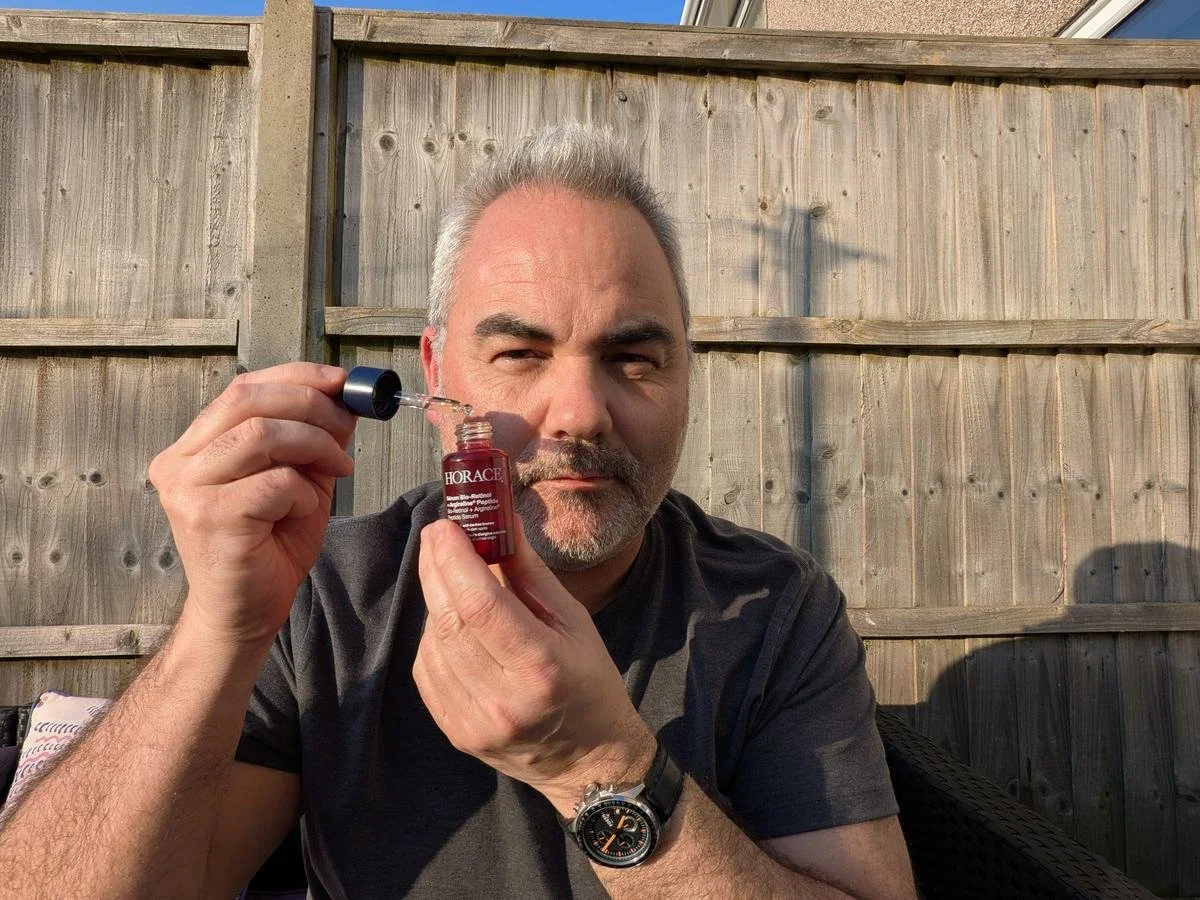
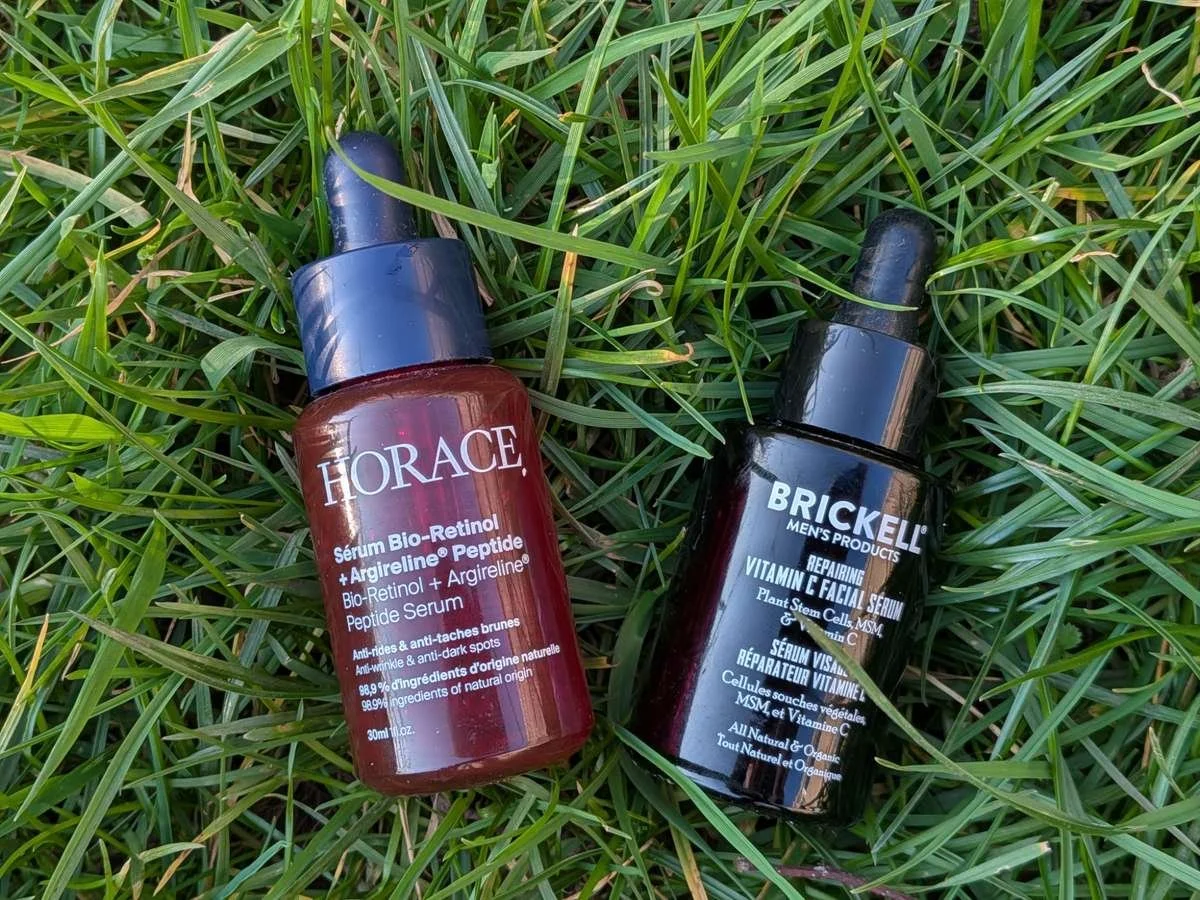
If you have sensitive skin or have tried retinol before and found it too harsh, the Horace Bio-Retinol + Argireline® Peptide Serum is a genuinely useful alternative. It uses a bio-retinol derived from micro-algae rather than traditional Vitamin A retinol — which means it targets fine lines, dark spots, and loss of firmness more gently. I want to be clear: it is not the same as pharmaceutical retinol and the evidence base is less extensive. But for men whose skin does not tolerate traditional retinol well, this is a great option.
In my testing the texture was lightweight and well-absorbed, with no irritation whatsoever. Over eight weeks I found it held up well as a daily serum used morning and evening.
One important note: the full ingredient list is 98.9% natural origin, silicone-free, and suitable for all skin types including sensitive.
2. Vitamin C (L-Ascorbic Acid)
Vitamin C is a powerful antioxidant that does two important jobs: it neutralises free radical damage caused by UV exposure and pollution, and it actively brightens skin by inhibiting the enzyme responsible for melanin production.
This makes it particularly effective for men dealing with uneven skin tone, dark spots from past sun damage, and general dullness.
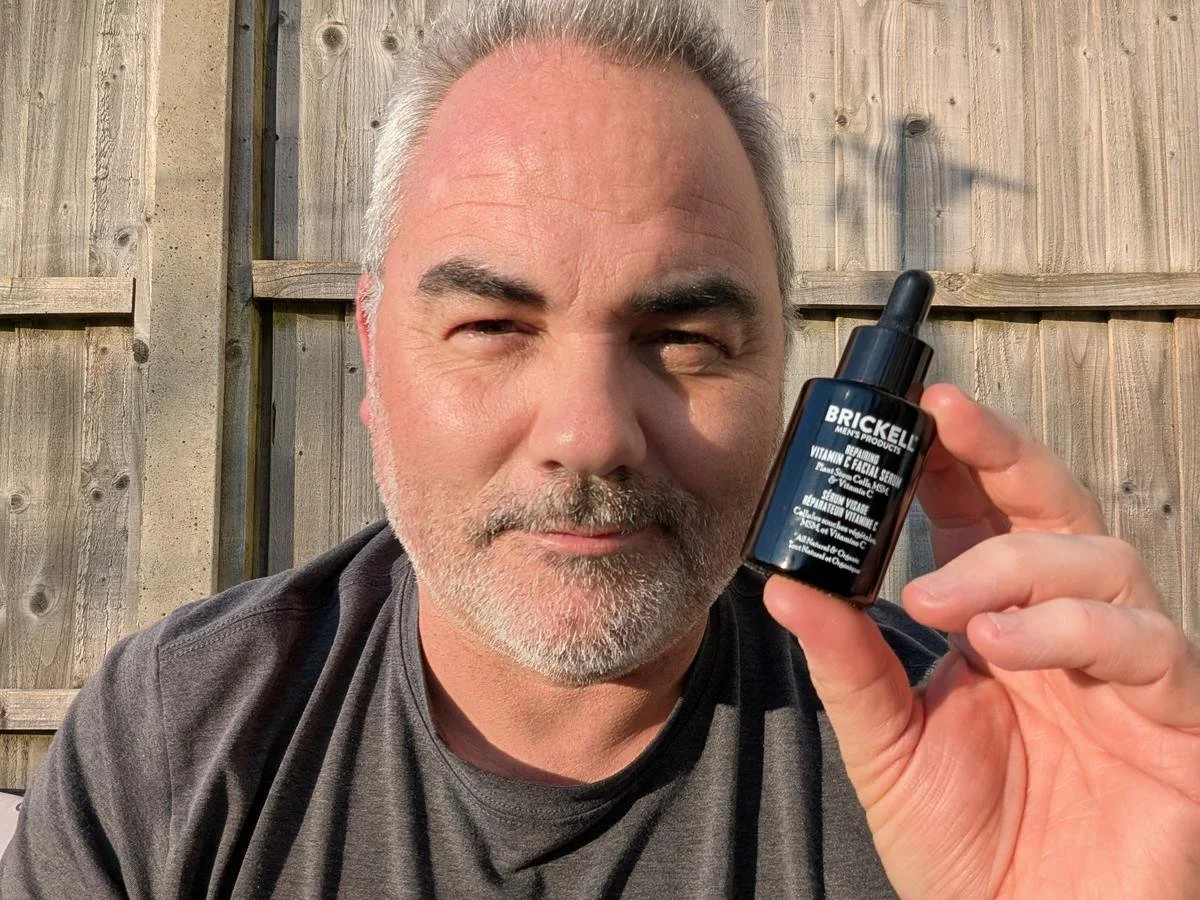
I tested the Brickell Vitamin C Facial Serum over eight weeks — daily application, morning routine. The formulation uses Sodium ascorbyl phosphate (SAP, for short): a stable, water-soluble form of vitamin C alongside hyaluronic acid. The improvement in overall skin brightness was genuine and measurable by week four. It remains one of the Vitamin C products I recommend most consistently for men who want results without a complicated routine.
3. SPF — The Anti-Aging Product Most Men Skip
If you only change one thing after reading this guide, make it this.
Broad-spectrum SPF is the single most effective anti-ageing intervention available. More effective than retinol. More effective than Vitamin C. More effective than anything else in this guide. UV radiation is responsible for approximately 80% of visible facial ageing — the lines, the spots, the uneven texture. And unlike collagen loss or slower cell turnover, UV damage is almost entirely preventable.
Men are dramatically worse than women at using SPF consistently. I understand why — most traditional sunscreens are thick, greasy, and leave a white cast that makes you look like you have applied wall filler. Modern formulations have largely solved this problem, but the reputation persists.
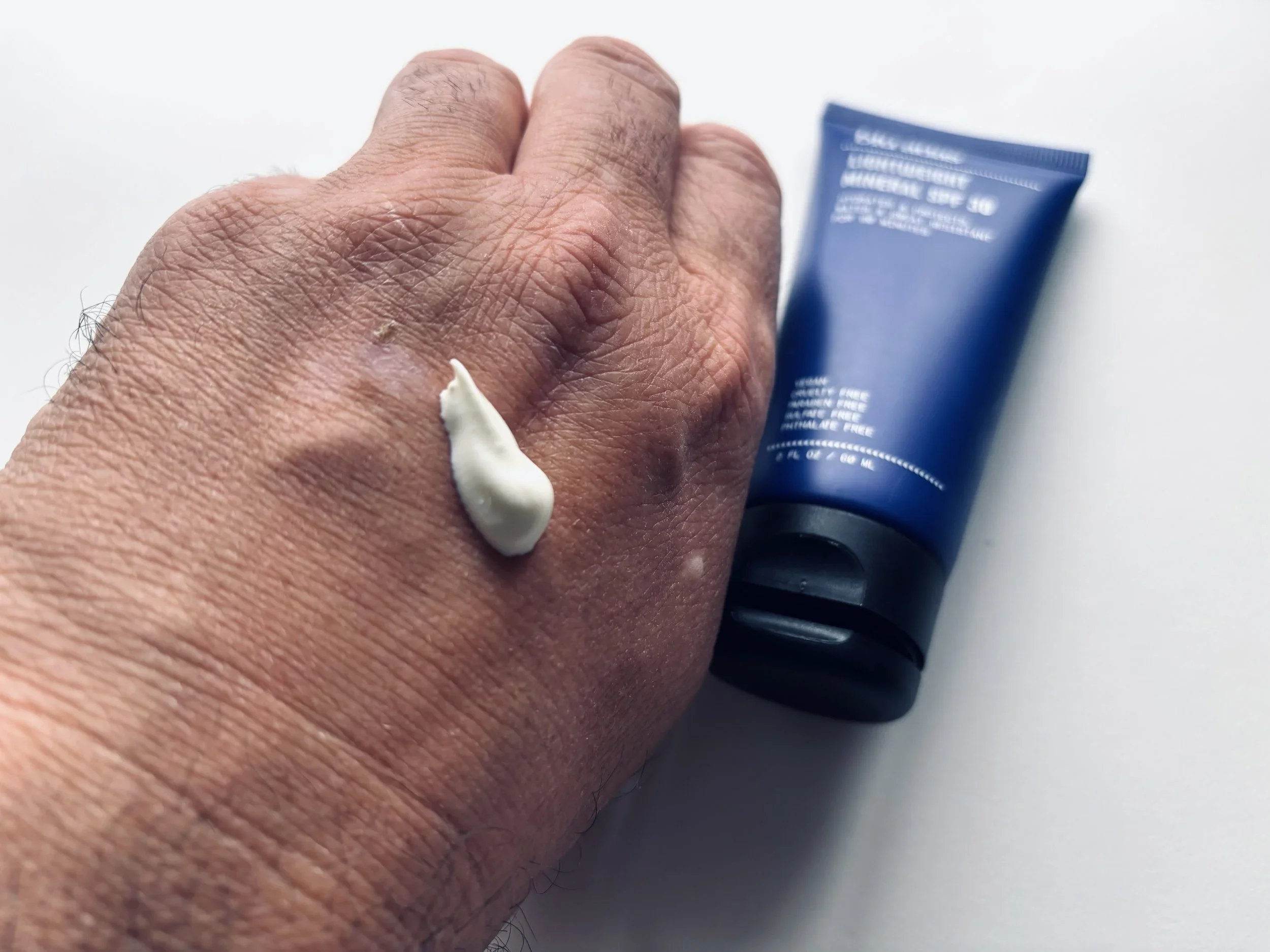
My current recommendation for men who have resisted sunscreen because of texture is the Blu Atlas Lightweight Mineral SPF 30. The active filter is zinc oxide at 15.7% — a mineral ingredient that sits on top of the skin rather than being absorbed, which makes it a better option for sensitive or reactive skin types. In practice, it applies cleanly without the white cast that put men off mineral SPFs for years, and the supporting ingredients — shea butter, aloe, hyaluronic acid, lavender — mean it doubles as a decent morning moisturiser on lighter days.
It is also reef-safe, free from parabens, silicones and sulphates, and water and sweat-resistant for up to 80 minutes — which makes it genuinely practical for men who are active or spend time outdoors. I have used it as my daily SPF step and the texture sits well on its own. It genuinely does not feel like sunscreen.
Use it every single morning, year-round, regardless of whether you expect to be in direct sun. The incidental UV exposure from driving, walking to your car, and sitting near windows adds up to significant cumulative damage over decades.
This is not optional skincare. This is the foundation.
4. Salicylic Acid — The Exfoliant Men Over 35 Actually Need
Most men associate salicylic acid with teenage acne treatments. That association has unfairly limited its reputation — because it is one of the most genuinely useful ingredients in a mature man's skincare routine, for reasons that have nothing to do with spots.
As cell turnover slows in your thirties and forties, dead skin cells accumulate on the surface for longer. This contributes to dullness, uneven texture, and congested pores. Physical scrubs — the kind with gritty particles — are too abrasive for skin that is already losing some of its structural resilience. Salicylic acid, a Beta Hydroxy Acid, dissolves the bonds between dead skin cells and penetrates the pore lining to clear debris from the inside. It exfoliates intelligently rather than aggressively.
At a concentration of 0.5–2%, used two to three times per week, it will noticeably improve skin clarity, texture, and brightness over six to eight weeks. For men who still experience congestion or oily patches in midlife — more common than most guides acknowledge — it addresses both concerns simultaneously.
The Horace Salicylic Acid + Niacinamide Serum handles this well. The pairing of ingredients is well thought through: the salicylic acid exfoliates while the Niacinamide calms redness and helps regulate sebum production — a sensible combination for men dealing with mixed-concern skin that is simultaneously beginning to show signs of ageing and still prone to congestion in certain areas.
One rule that is non-negotiable: do not use salicylic acid on the same evening as retinol. Both are actives and layering them significantly increases the risk of irritation. Alternate nights, or use salicylic acid in the morning and retinol in the evening on different days.
5. Peptides — The Long Game
Peptides are short chains of amino acids — essentially fragments of proteins — that signal to skin cells to produce more collagen. They do not work as dramatically or as quickly as retinol, but they are significantly gentler, making them a good option for men whose skin does not tolerate retinol well, or as a complementary ingredient alongside it.
The evidence for peptides is solid if less spectacular than retinol. Look for Matrixyl 3000 (palmitoyl pentapeptide-4), Argireline (acetyl hexapeptide-3), or copper peptides on the ingredients list. The Argireline in the Horace Bio-Retinol serum mentioned above is one example already covered — but peptides earn their place again as the foundation of a good night moisturiser.
For a dedicated evening moisturiser, the Brickell Revitalizing Anti-Aging Cream is one I return to consistently. It is formulated specifically as a night cream, which matters — its key actives work best during the skin's overnight repair cycle. DMAE (Dimethylethanolamine) helps tighten the underlying facial muscle structure that contributes to sagging over time. MSM (Methylsulfonylmethane) addresses the pigmentation issues that show up as uneven tone and age spots. Matrixyl 3000 peptides boost skin elasticity and support collagen repair. Hyaluronic Acid ties it together with deep overnight hydration.
In my testing I found the texture rich without being heavy — it absorbs fully rather than sitting on top of the skin, which is exactly what you want from a night cream. Use it after your retinol has fully dried, or on the evenings you alternate away from retinol.
Building Your Routine by Age Group
There is no universal routine. What your skin needs at 35 is genuinely different from what it needs at 52. Here is how to approach each stage.
If You Are 35–45
Your priorities are prevention and early correction.
Your collagen decline has started but is not dramatic yet. Your primary goals are protecting what you have, addressing early sun damage, and building habits that will pay dividends a decade from now.
Morning: Gentle cleanser → Brickell Vitamin C Facial Serum → Blu Atlas Lightweight Mineral SPF 30
Evening (alternating): Gentle cleanser → Horace Bio-Retinol + Argireline® Serum (3 nights per week, building gradually) → Brickell Revitalizing Anti-Aging Cream
2–3 evenings per week (not on retinol nights): Gentle cleanser → Horace Salicylic Acid + Niacinamide Serum → light moisturiser
That is it. The temptation is always to do more. Resist it. A simple routine done consistently every day will outperform an elaborate routine done occasionally.
If You Are 45–55
Your priorities shift toward correction and targeted treatment.
Cell turnover has slowed noticeably. You may be seeing more obvious lines, dark spots from earlier sun damage, and some loss of firmness particularly at the jaw.
Morning: Gentle cleanser → Brickell Vitamin C Facial Serum → eye cream → Blu Atlas Lightweight Mineral SPF 30
Evening: Gentle cleanser → Horace Bio-Retinol + Argireline® Serum (nightly if tolerated, or traditional retinol at 0.05–0.1%) → Brickell Revitalizing Anti-Aging Cream
2–3 times per week (swap for retinol on those nights): Horace Salicylic Acid + Niacinamide Serum before your night cream
At this stage, adding a dedicated eye cream in the morning is worthwhile. The skin around the eyes is the thinnest on the face — approximately 0.5mm compared to 2mm elsewhere — and it shows age earliest and most visibly.
If You Are 55 and Beyond
Your priorities are hydration, barrier support, and consistency.
The skin barrier — its ability to retain moisture and protect against environmental aggressors — becomes less efficient with age. This is why many men find their skin becomes drier and more sensitive in later life even if they never had those issues before.
Morning: Cleanser → Brickell Vitamin C Facial Serum (if tolerated) → Blu Atlas Lightweight Mineral SPF 30 → eye cream
Evening: Oil or balm cleanser → Horace Bio-Retinol + Argireline® Serum (gentler option if traditional retinol causes irritation) → Brickell Revitalizing Anti-Aging Cream
Twice per week: Horace Salicylic Acid + Niacinamide Serum in place of the retinol serum step — exfoliation remains important but frequency can reduce
At this stage, look for ceramides on ingredient lists. They are lipid molecules that form part of the skin's natural barrier structure. Declining ceramide levels are a significant contributor to the dryness and sensitivity many men experience in their mid-fifties and beyond.
What Doesn't Work — An Honest Assessment
I promised you no marketing hype, so here it is.
Collagen creams. Collagen molecules are too large to penetrate the skin when applied topically. A cream with "marine collagen" is not delivering collagen to your dermis — it is delivering a moisturising film. It may be a decent moisturiser, but the collagen claim is irrelevant to its performance. Oral collagen supplements show more promising early evidence, but the research is still limited and product quality varies enormously.
Most "anti-ageing" eye creams under £15. I have tested many. The delivery systems required to get active ingredients into the periorbital area are expensive. Very cheap eye creams are generally moisturisers in small packaging. They will hydrate the surface. They will not meaningfully address lines or dark circles.
Overly complicated multi-step routines. More products does not mean better results. Layering eight products creates interaction risks, increases the likelihood of irritation, and makes it impossible to identify what is actually working. Simple, consistent, evidence-based beats elaborate and sporadic every time.
Jerome's Recommendations at a Glance
Every product below has been personally tested. No exceptions.
| Step | Product |
|---|---|
| Retinol |
Bio-Retinol + Argireline® Peptide Serum
Horace
|
| Vitamin C |
Vitamin C Facial Serum
Brickell
|
| SPF |
Lightweight Mineral SPF 30
Blu Atlas
|
| Exfoliant |
Salicylic Acid + Niacinamide Serum
Horace
|
| Night Cream |
Revitalizing Anti-Aging Cream
Brickell
|
The One Thing I Would Tell Every Man Reading This
If you take nothing else from this guide, take this.
The men who look noticeably better than their peers at 55 are almost never the ones who found a miracle product in their fifties. They are the ones who built a simple, consistent routine in their thirties and stuck to it.
Start now. Start simple. Be consistent. Your future self will genuinely thank you.
[Brickell Vitamin C Serum: Check Price on Amazon-Here]
[Blu Atlas SPF 30 LIGHTWEIGHT Cream-Check Price at BLU ATLAS -HERE]
[Horace Face Serum: Check Price at Horace.com-Here]
Jerome
About the author: Jerome is the founder of Dapper & Groomed and has been reviewing men’s fragrances, grooming products, and lifestyle essentials for over a decade. With a background in pharmacy and years of hands-on testing, he brings a practical, experience-led approach to every review. He focuses on helping men find products that work in real life, not just on paper.