
Beau Domaine Review: I Tried Brad Pitt’s Skincare for 2 Weeks
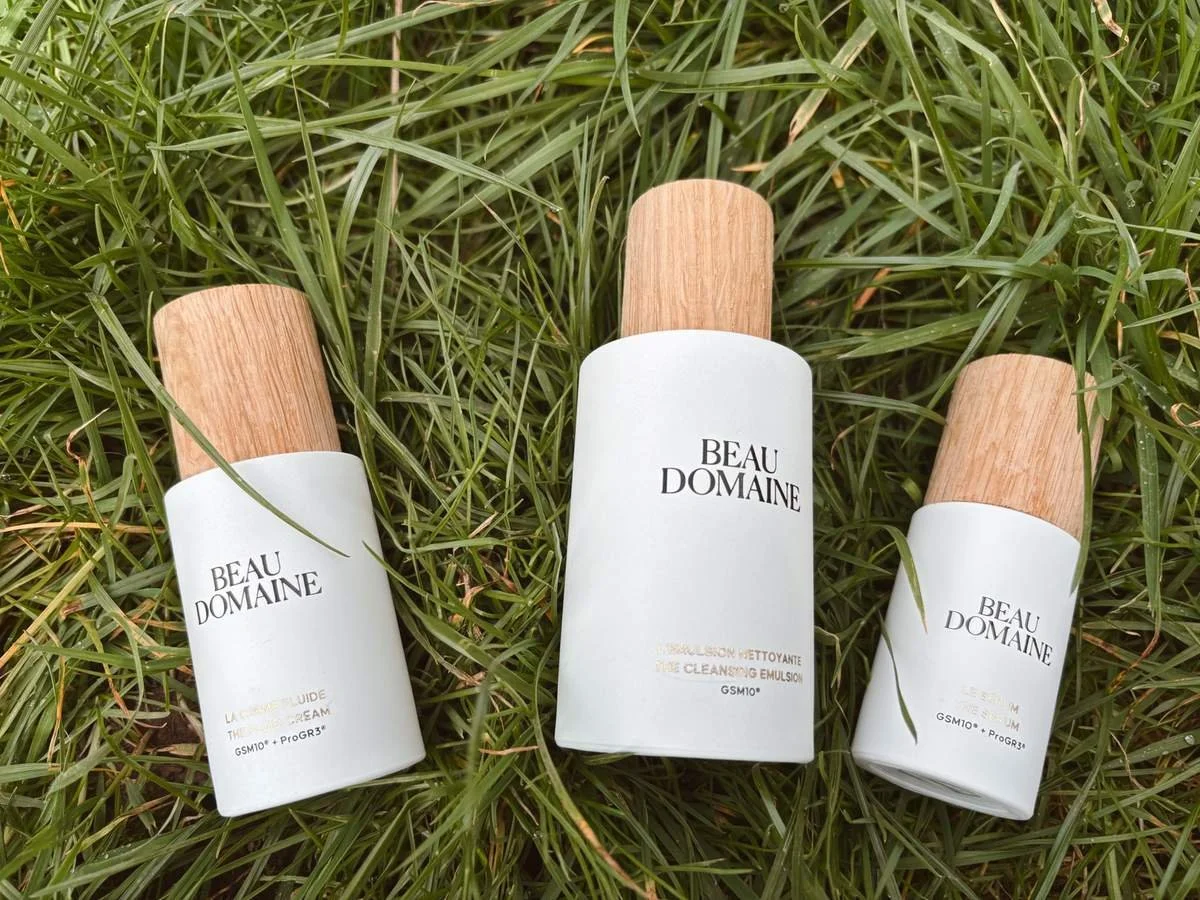
I tested Beau Domaine’s Cleansing Emulsion, Serum and Fluid Cream twice daily for 14 days to see if this luxury routine is genuinely worth the money. This post contains affiliate links.
I'll be honest; when Beau Domaine landed on my radar, my first reaction was scepticism. Celebrity skincare has a long history of being exactly what you'd expect: a famous name, beautiful packaging, inflated prices, and formulas that don't justify any of it.
Brad Pitt's name attached to a luxury skincare range wasn't going to change that assumption on its own. What changed it was actually using the products.
Beau Domaine sent me the three-step routine to test ( The Cleansing Emulsion, The Serum, and The Fluid Cream) and I used all three every morning and evening for two full weeks. As someone who has reviewed men's skincare for over 13 years and comes from a pharmacy background, I don't give luxury products an easy ride, gifted or not. Here's what I genuinely found.
The three products: what they are and what they do
The Beau Domaine core routine is built as a logical, sequential system. Cleanse, treat, protect and hydrate. Each product contains the GSM10® complex as a throughline, with the serum adding the ProGr3® compound on top.
The Cleansing Emulsion : $47-£45 / 100ml
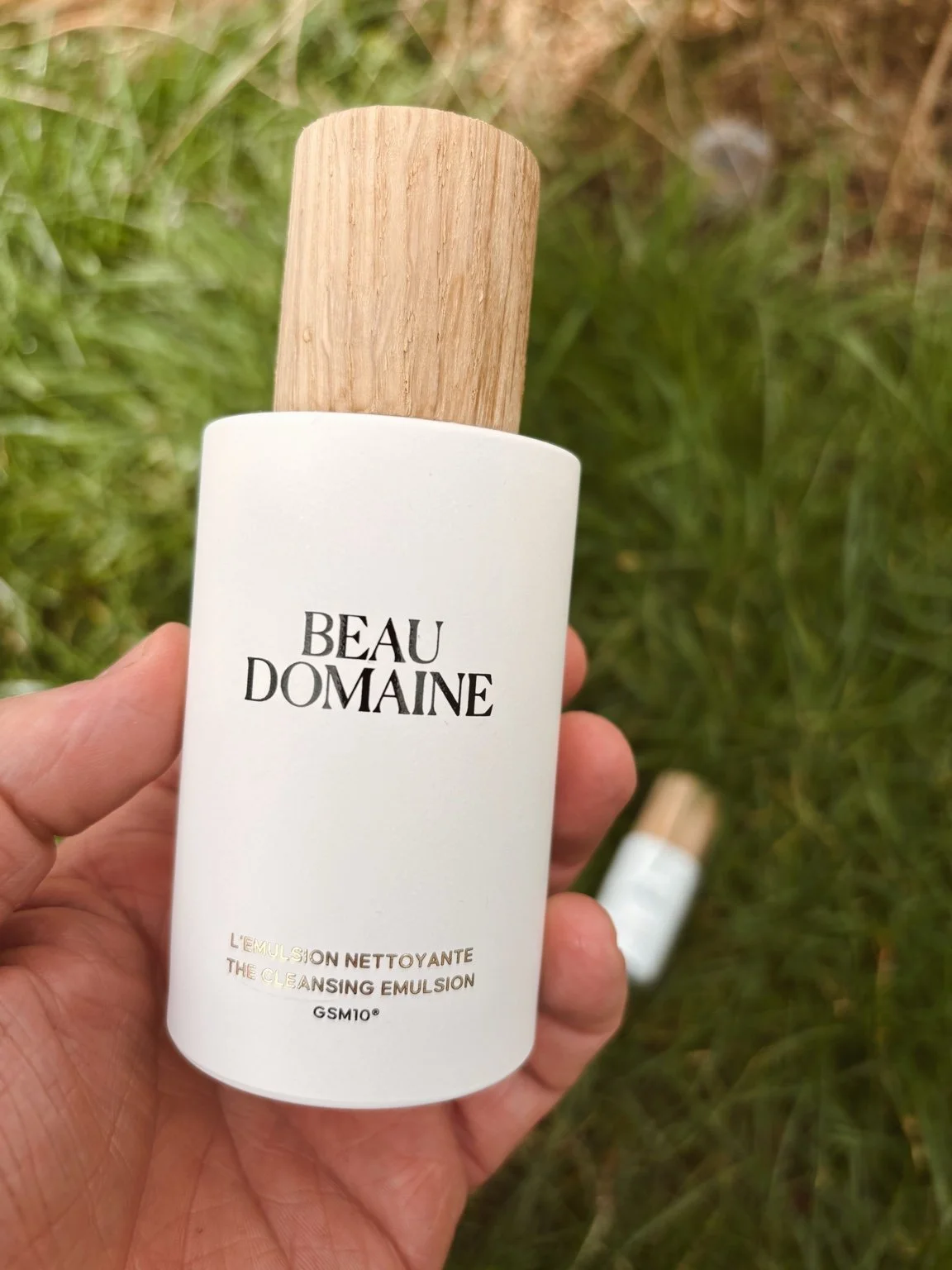
A light, sulfate-free emulsion that the brand recommends applying dry first, then working into a gentle lather with wet hands before rinsing. Beyond the GSM10® complex, the formula includes organic grape water from the estate, organic olive oil, Centella Asiatica, and Andrographis Paniculata. The full ingredient list is commendably clean: no parabens, no silicones, no mineral oils, no phenoxyethanol, no forever chemicals.
On skin, it has a pleasantly subtle scent — light and fresh without being perfume-forward — and the dry-application technique actually makes a noticeable difference. Applying it to dry skin first allows the emulsion to break down surface oils and impurities before water is introduced, which means it lifts more without needing to strip. The result is skin that feels genuinely clean but not tight.
Clinical data cited by the brand: 97% of users found their skin felt respected and supple after use; 94% found it felt detoxified without tightness; and independent testing showed a +57% increase in hydration two hours post-cleanse. For a cleanser, that last figure is notable.
The Serum: $111- £106 / 30ml
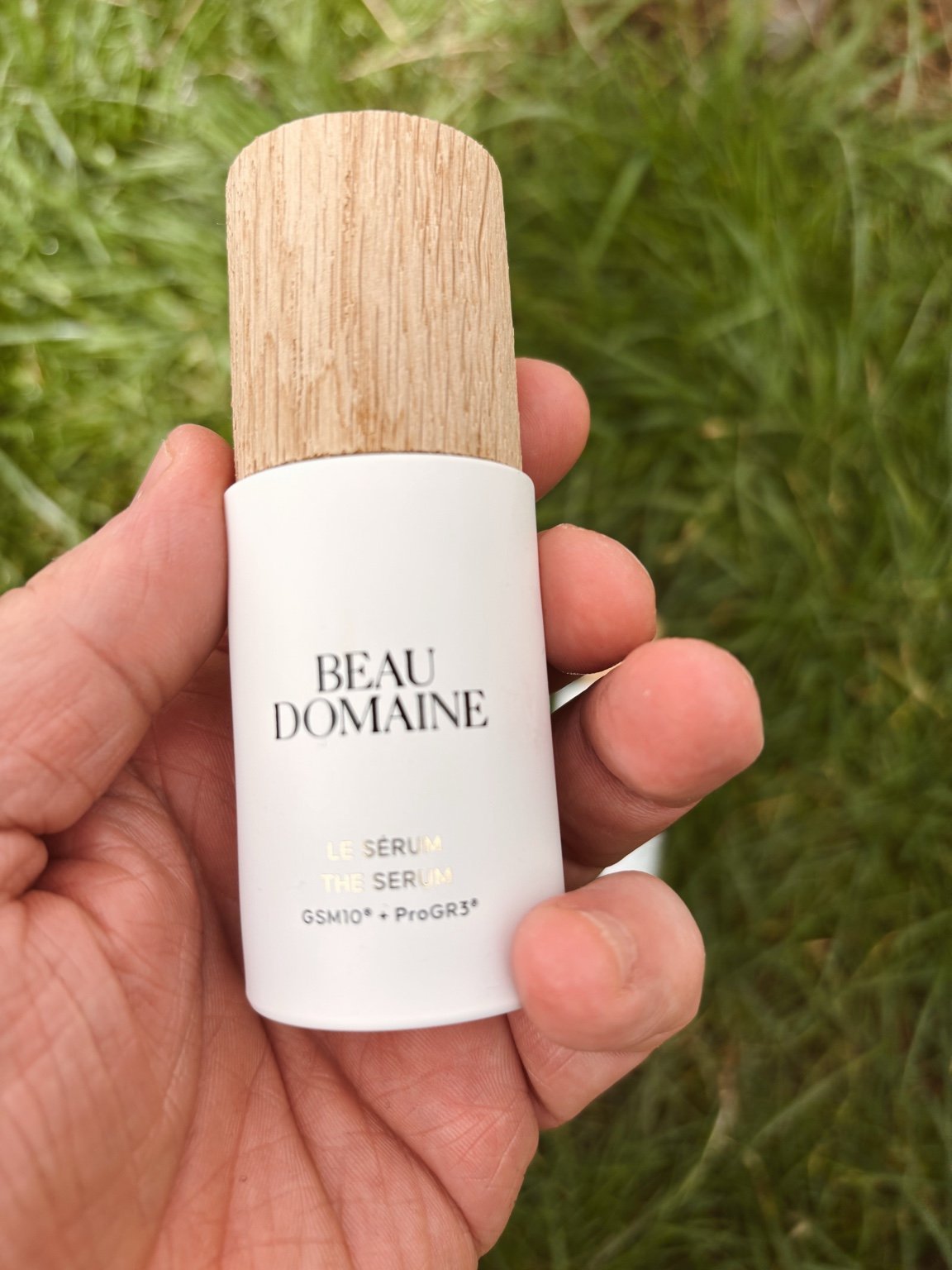
The star of the routine, and Beau Domaine's best-selling product. This is where both GSM10® and ProGr3® are at work simultaneously, alongside hyaluronic acid and plant-based water, targeting wrinkles, loss of firmness, and uneven skin tone.
After 13 years of testing skincare and with a background in pharmacy, I've developed a fairly calibrated sense of what a serum is actually doing versus what it's marketing itself as doing. This Serum is doing something.
Applied to cleansed skin, it absorbs with almost no residue and leaves a perceptible tightening and firming effect within minutes. That immediacy is something you rarely get from a serum at any price point. After two weeks of consistent use, the cumulative effect — skin that looks and feels firmer, more even in tone, and better hydrated — is genuine. The plumping and bounce from the hyaluronic acid component complements the antioxidant work happening underneath.
At $111-£106 for 30ml, this is the most expensive single item in the lineup, and the one I'd consider the non-negotiable if you're going to invest in one product from the range.
The Fluid Cream: $79- £76 / 50ml
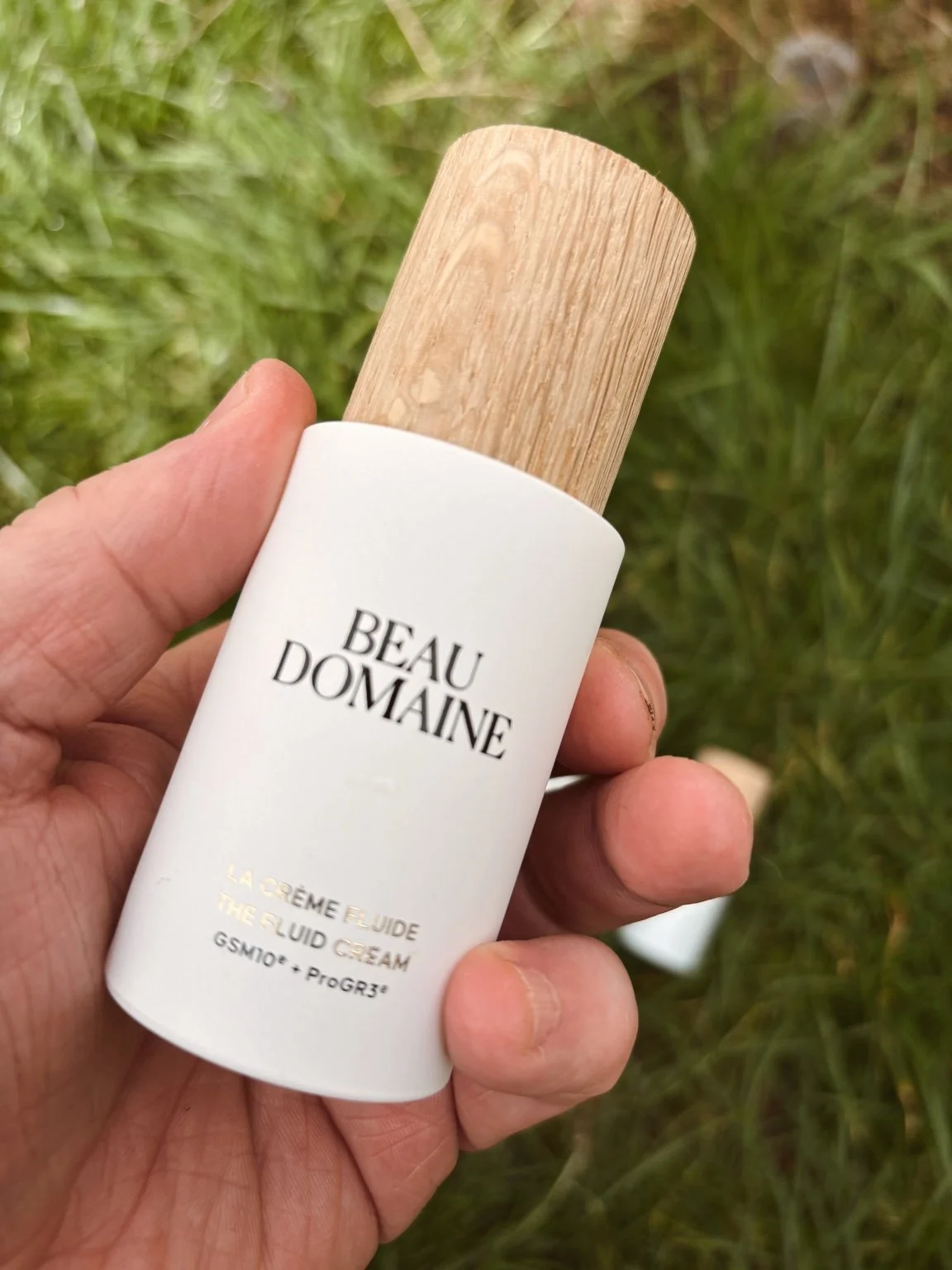
A daily anti-aging moisturiser in a featherlight, fast-absorbing texture, designed for normal to combination skin. It sits comfortably in the routine as the final step: a protective, hydrating layer that seals in the serum's work while providing its own antioxidant defence against environmental stress.
The texture is genuinely impressive for someone with skin on the drier side of normal — it delivers real hydration without the heaviness of a traditional moisturiser. Over the two weeks of testing, it has visibly contributed to a more even, luminous complexion, the kind of background improvement that you notice most acutely when you compare morning skin on day one versus day fourteen.
If you have dry or very dry skin, Beau Domaine also offers The Cream (a whipped texture) and The Rich Cream (nourishing, for dry to very dry skin) as alternatives to the Fluid at the same price point.
Two weeks of daily use: the honest experience
At 52, my skin is normal-to-slightly-dry — the kind of skin that isn't particularly problematic but is at an age where it benefits from intelligent, consistent care. I used the three-step routine every morning and evening without exception for fourteen days.
The routine takes about four minutes in total, which feels appropriate for what these products are. The cleansing emulsion sets things up well: after two weeks, I no longer think of the dry-application step as unusual — it simply works, and the skin-barrier preservation over time is something you notice cumulatively rather than immediately.
The serum is where the routine earns its keep. That near-immediate firming and tightening effect after application is something I noticed from day one and continued to notice throughout. It's a cosmetic effect in the technical sense — meaning it manifests on the skin's surface rather than being a structural change to the dermis — but it is real and visible, and after two weeks the overall texture and firmness of my skin is meaningfully better than when I started.
No skin reactions whatsoever across the full two weeks, which is worth noting for anyone with sensitivity concerns. The formulation philosophy — that long blacklist of excluded ingredients — appears to translate into real tolerance. The gender-neutral design of the range also means this is as relevant for women as it is for the men reading this.
So who is Beau Domaine for?
It is for men — and women, this is a gender-neutral range — who are already engaged with their skincare, who are in or approaching their forties and fifties and starting to take anti-aging seriously, and who are willing to pay for proven science rather than marketing.
It is not for men who are occasional users, who skip evenings, or who are looking for a gateway into skincare. The routine rewards consistency, and at this price point, inconsistency is an expensive habit.
Is Beau Domaine Worth It?
Two weeks in, my honest answer is yes — with one important qualification.
The Serum is the product that justifies the brand. That near-immediate firming effect, the cumulative improvement in skin texture and tone after consistent use, the way it absorbs without residue and gets on with the job quietly — that's what good skincare does, and it does it well. If you're only going to invest in one product from this range, that's the one.
The Cleansing Emulsion and The Fluid Cream are genuinely good supporting acts. The dry-application technique on the cleanser is something I was sceptical about on day one and now wouldn't skip. The Fluid Cream delivers real hydration in a texture that never feels heavy — which, at 52 with skin on the drier side of normal, matters to me.
Is it expensive? Yes, full stop. This is luxury skincare territory and there's no point pretending otherwise. But based on two weeks of daily use, the quality matches the price in a way that most celebrity skincare simply doesn't.
My recommendation: if you're a man in your forties or fifties who takes skincare seriously and wants a routine built around real science rather than marketing, Beau Domaine is worth trying. Start with The Serum. If it works for you — and I think it will — build the full routine around it. For more information and to check prices visit Beau Domaine (here)
FAQ: Beau Domaine Skincare
What is Beau Domaine? Beau Domaine is a luxury skincare brand co-founded by Brad Pitt and built around ingredients sourced from a biodynamic estate in the south of France. The range is gender-neutral and centred on a patented active complex called GSM10®, developed from the estate's grape skin extract.
Is Beau Domaine actually good or is it just a celebrity brand? Based on my two weeks of testing, it's genuinely good — and I say that as someone who went in sceptical. The formulas feel well-made, the ingredients list is serious and clean, and the results, particularly from The Serum, are visible and real. It doesn't feel like a brand built around a famous face. It feels like a brand that happens to have one.
What does GSM10® actually do? GSM10® is Beau Domaine's patented active complex, derived from grape skin extract from their biodynamic estate. It works as an antioxidant, helping to protect skin from oxidative stress and environmental damage while supporting hydration and skin barrier function. It runs through all three products in the core range.
Is Beau Domaine suitable for men over 50? Yes — and in my opinion it's particularly well suited to men in their forties and fifties. The range is designed with anti-aging as a priority: firming, hydrating, protecting against environmental damage, and improving skin texture and tone over time. At 52, I found it effective for exactly those concerns.
Does Beau Domaine work for sensitive skin? In my experience, yes. The formulas exclude parabens, silicones, and other common irritants. I had no skin reactions across the full two weeks of twice-daily use. That said, everyone's skin is different — if you have known sensitivities, patch testing is always sensible before committing to a full routine.
Which Beau Domaine product should I start with? The Serum. It is the most impactful single product in the range and the one that most clearly demonstrates what the brand is capable of. If you want to test Beau Domaine before committing to the full routine, that's the place to start.
How long does Beau Domaine take to show results? I noticed the firming effect from The Serum from the first use — that's a cosmetic surface effect from the formulation. The deeper cumulative improvements in texture, tone, and overall skin quality became clearly visible after around ten to fourteen days of consistent twice-daily use.
Is Beau Domaine worth the price? If you are already serious about your skincare and willing to invest in quality, yes. The Serum at $111/£106 for 30ml is expensive by any measure, but the formula justifies it. If you're looking for an entry-level routine or prefer affordable skincare, there are good options at lower price points — but Beau Domaine is not overpriced for what it delivers.
Products provided by Beau Domaine for review purposes. All opinions are my own.
Jerome
About the author: Jerome is the founder of Dapper & Groomed and has been reviewing men’s fragrances, grooming products, and lifestyle essentials for over a decade. With a background in pharmacy and years of hands-on testing, he brings a practical, experience-led approach to every review. He focuses on helping men find products that work in real life, not just on paper.
I tested The Ordinary Lacto-PDRN 4% + B9 Eye Cream for eight days. My honest review of its texture, fast tightening effect and value at $9.50.