
RayNeo GT Max Review: Impressive Technology Made Simple
Posted: 27th of November 2026
I've spent the past two weeks using the RayNeo GT Max AR glasses, and what has impressed me almost as much as the technology itself is how simple everything is.
I've previously tried a Meta Quest headset, but this is a very different experience. Before going any further, it's important to understand what the RayNeo GT Max actually is.
Unlike the Apple Vision Pro or Meta Quest, these glasses don't have a standalone operating system. They're also very different from Ray-Ban Meta smart glasses. In fact, without connecting them to another device, they don't even power on.
The RayNeo GT Max is essentially an extension of your existing technology. Think of it as a large personal screen that you can wear, allowing you to enjoy movies, TV series, games and other content directly from a compatible device.
It's a relatively simple concept, but the technology behind it is rather impressive. At around £399/$429, it's also a premium purchase—so the question is whether the experience justifies the price.

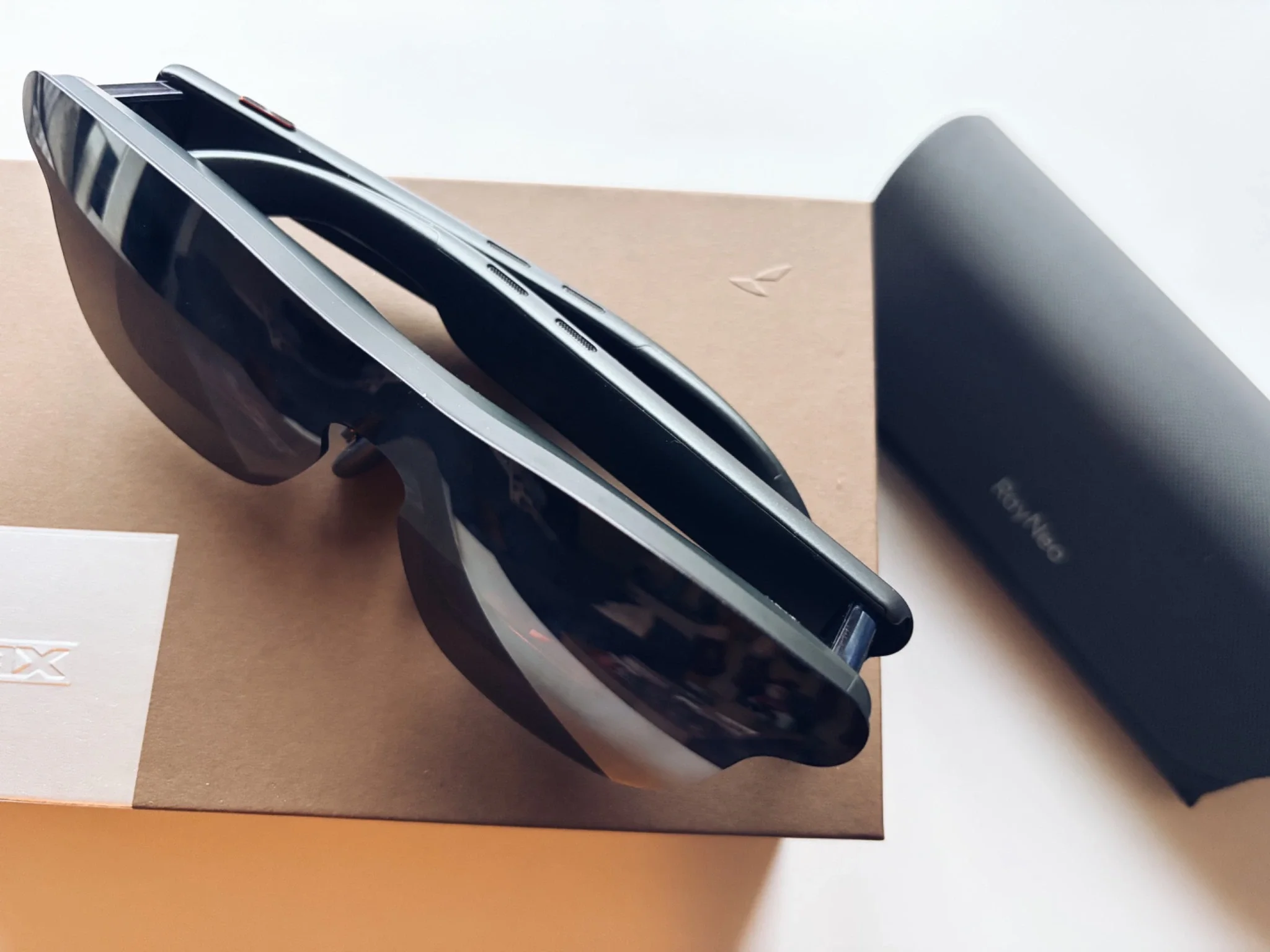
Testing the RayNeo GT Max at home. The glasses are surprisingly comfortable and easy to use.Quite reflective too!
Quick Verdict – RayNeo GT Max
The RayNeo GT Max combines an impressive virtual display, surprisingly immersive Bang & Olufsen audio and premium build quality with a remarkably simple plug-and-play experience. Screen alignment takes some patience, and the 3D experience isn't entirely convincing, but for immersive entertainment, particularly with my iPhone, these are excellent glasses.
| Picture quality | Excellent |
| Sound quality | Very impressive |
| Build quality | Premium |
| Ease of use | Excellent |
| Comfort | Very good |
| Price | £399 / $429 |
| Testing period | 2 weeks |
Best for: Anyone looking for a premium, easy-to-use wearable display for immersive entertainment.
The Beauty of Keeping Things Simple
One of my frustrations with modern technology is that sometimes we make things unnecessarily complicated. That's certainly not the case with the RayNeo GT Max.
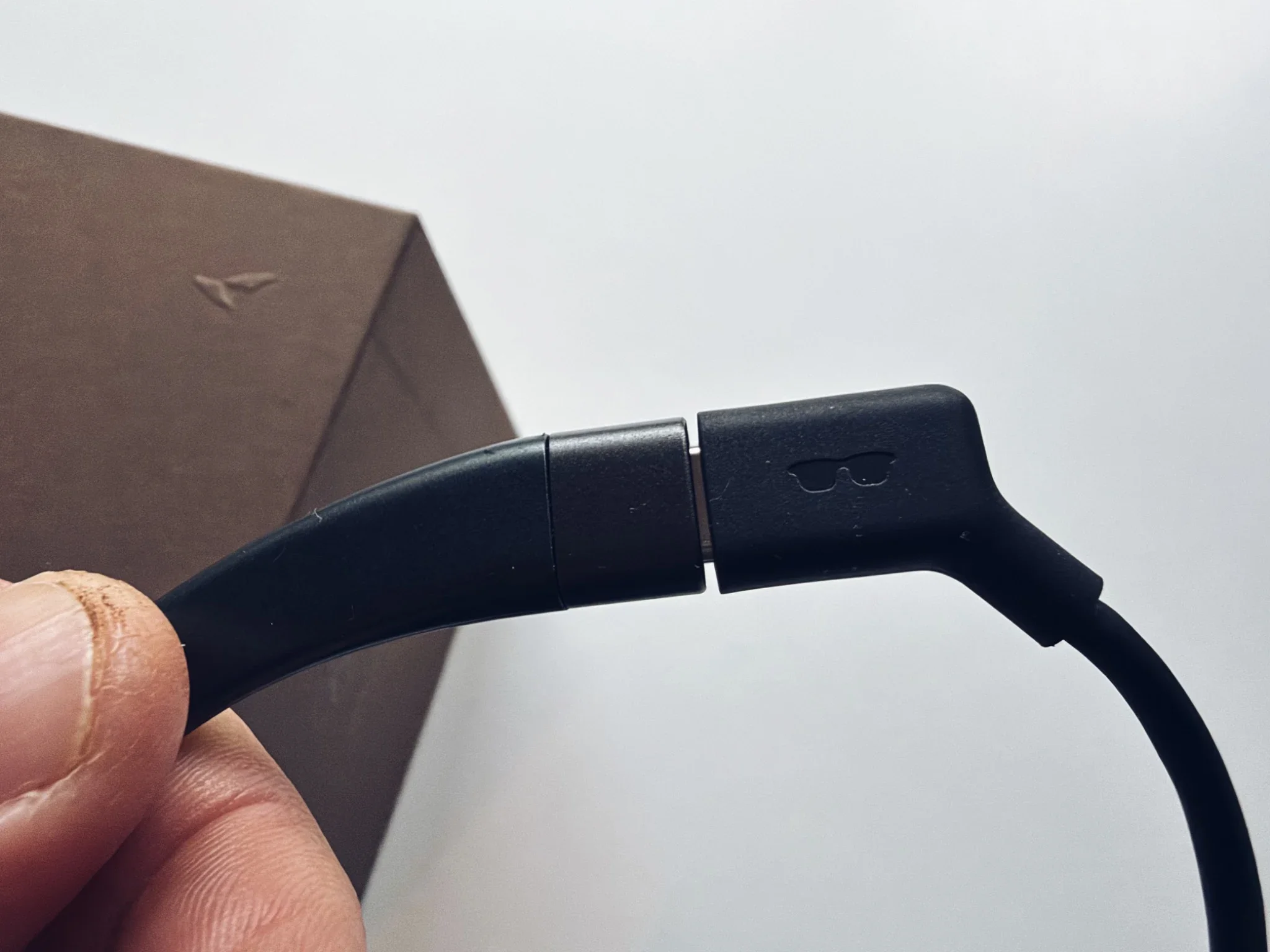
A simple USB-C connection is all I need to start enjoying content from my iPhone.
Connecting the glasses to my iPhone takes just a few seconds. There's a USB-C cable that connects the phone to one of the arms of the glasses. Once connected, the display appears almost immediately, and you're ready to go.
I've been testing the glasses with my iPhone, so I can't comment on the experience with Android devices. However, from an iOS perspective, the setup has been remarkably straightforward.
It's worth mentioning that having a USB-C port doesn't automatically make a device compatible with the RayNeo GT Max. Your device needs to support video output over USB-C for a direct connection, so I would recommend checking compatibility before purchasing.
What I also appreciate is how easy it is to navigate the settings. The glasses have physical controls, with buttons on the left arm allowing you to access the on-screen menu, adjust the brightness, change the colour settings and switch between 2D and 3D viewing.
On the right arm, there's a dedicated button to switch between three viewing modes:
Follow: The virtual screen follows your head movements.
Steady: The screen follows you more smoothly, reducing the effect of small head movements.
Pinned: The screen remains in a fixed virtual position, allowing you to look away from it.
The menu is clear, easy to navigate and doesn't take long to get familiar with. Considering how sophisticated the technology inside these glasses is, I really appreciate how little effort is required to start enjoying it.
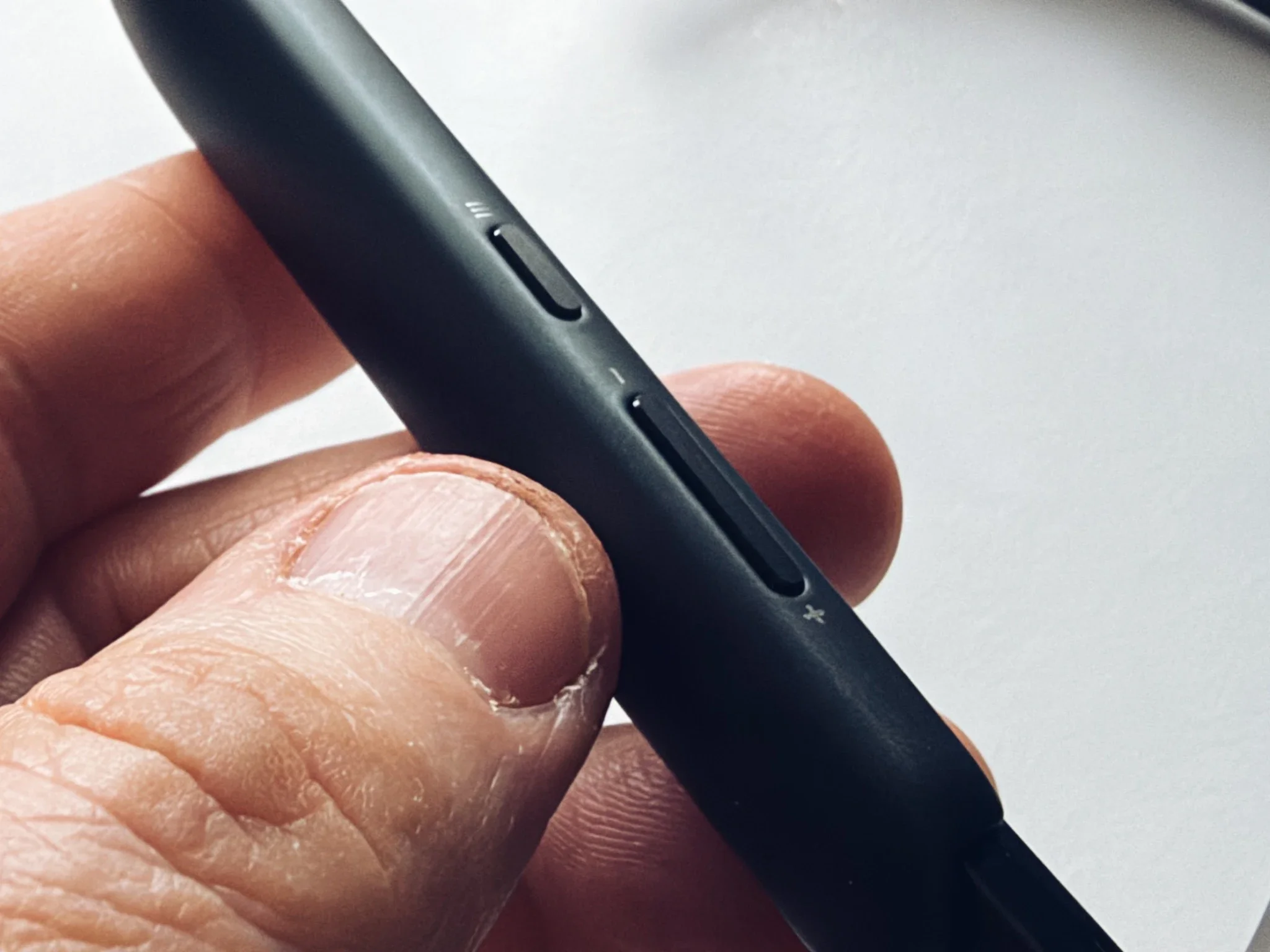
The physical controls are intuitive and make adjusting the display settings straightforward.
Design and Build Quality: A Premium Experience From the Start
RayNeo has clearly put a lot of thought into the presentation of the GT Max. The unboxing experience feels genuinely premium, with each accessory neatly presented in its own individual box. It's a small detail, but it makes a very good first impression.
I particularly like the carrying case. It looks like something you would get with a pair of premium sunglasses rather than a piece of technology. There's enough room inside for both the glasses and the USB-C cable, making it practical to carry everything around.
As for the glasses themselves, I really like the design. From a purely aesthetic perspective, I actually prefer them to the Ray-Ban Meta glasses. The materials feel premium, the finish is excellent, and the overall design is quite elegant considering how much technology is packed inside.
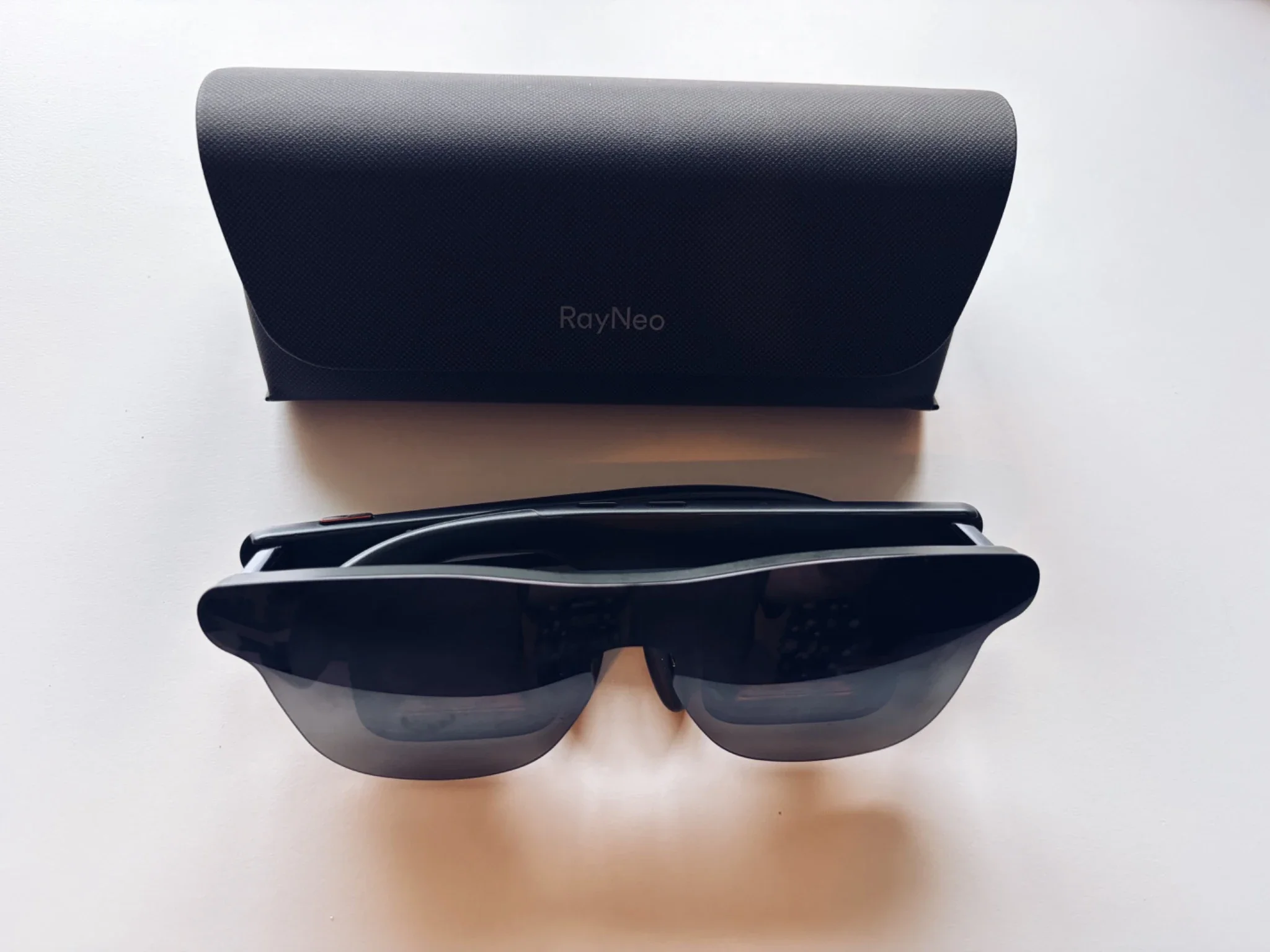
The premium carrying case has enough room for both the glasses and the USB-C cable.
At just 78g, the RayNeo GT Max is also relatively lightweight for this type of wearable display, something you will appreciate during longer viewing sessions.
RayNeo also offers three IPD (interpupillary distance) sizes to accommodate different distances between your pupils. Getting the right fit is important, not just for comfort but also for optimal picture clarity. I used the size that matched my IPD, and the fit was comfortable.
If I had one small criticism at this stage, I would have liked the USB-C cable to be slightly longer. It's certainly not a major issue, but a little extra length would give you more freedom when using the glasses.
There is also an optional Pocket TV Pro streaming device available from RayNeo. I didn't receive one for this review, so my experience is based on using the glasses directly with my own devices.
Picture Quality: This Is Where the Magic Happens
The first time you connect the RayNeo GT Max and see the virtual screen appear in front of you is quite an experience. I knew what to expect technically, but seeing it for myself was genuinely impressive.
The size of the display is fantastic, but it's the overall picture quality that really makes the experience enjoyable. The image is bright, colours are rich without looking unnatural, and the blacks are beautifully deep. Enabling HDR can give the picture an additional boost, while Dolby Vision is also supported when using the optional Pocket TV Pro.
Over the past two weeks, I've mainly been watching YouTube and content on Apple TV. There is something rather enjoyable about accessing the content you normally watch on your iPhone and suddenly having a cinema-sized screen in front of you.
And because this is a men's lifestyle website, I'm sure some of you are wondering about adult content. Yes, that is a remarkably immersive experience too.
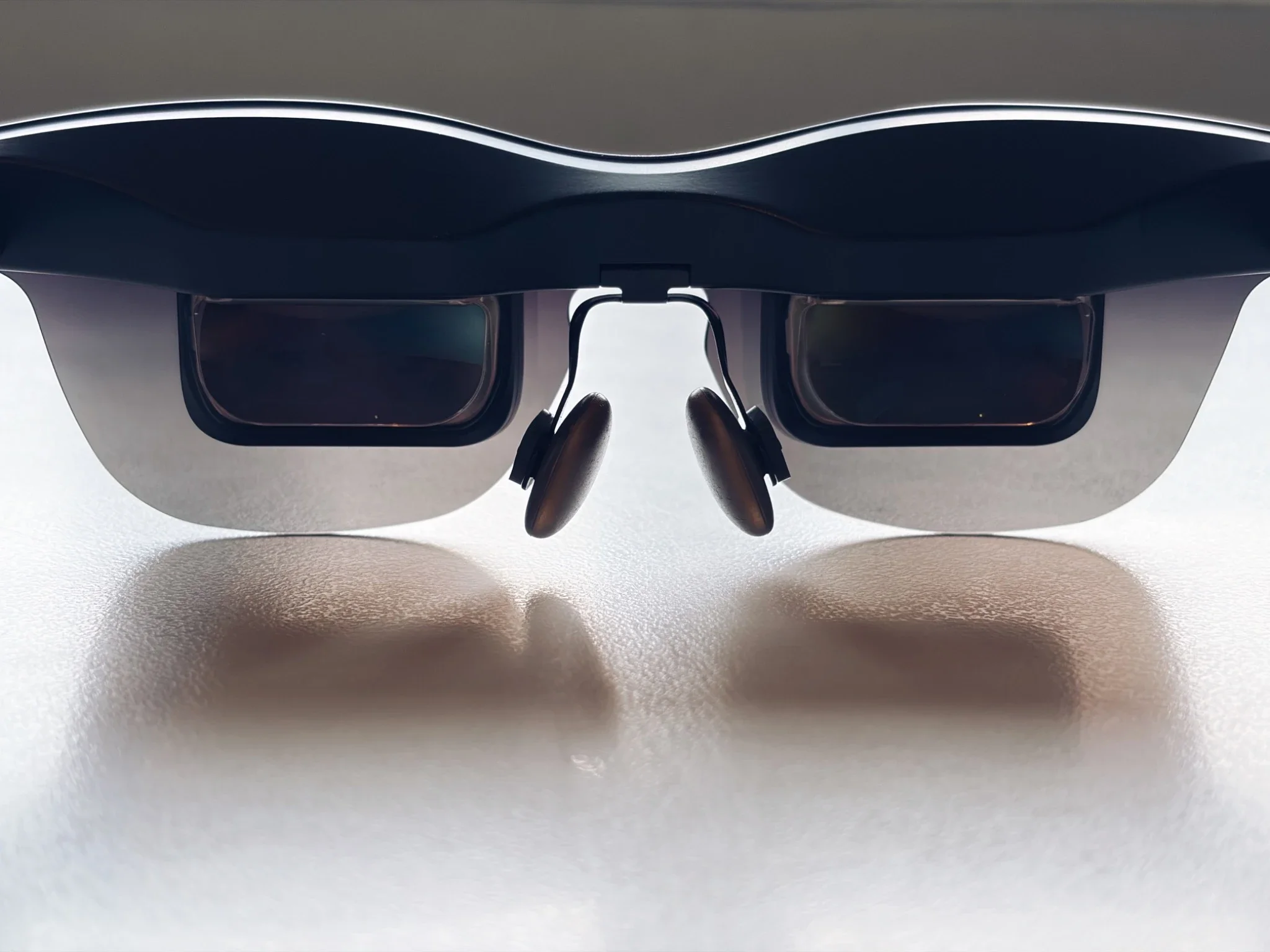
The impressive optical technology behind the RayNeo GT Max's immersive virtual display.
Picture Sharpness and Getting the Right Adjustment
Overall, the image is clear and sharp, and text is surprisingly easy to read. However, there is one aspect of the RayNeo GT Max that I think could be better.
Getting the glasses into exactly the right position can take some time. I've occasionally found it difficult to see the very bottom of the virtual screen clearly, requiring a few adjustments to the position of the glasses.
When watching a movie or a YouTube video, it's not particularly distracting. However, when navigating between apps or trying to access controls at the bottom of a screen, it becomes more noticeable.
It's certainly something to keep in mind if you're considering these glasses primarily for productivity rather than entertainment.
Which Viewing Mode Do I Prefer?
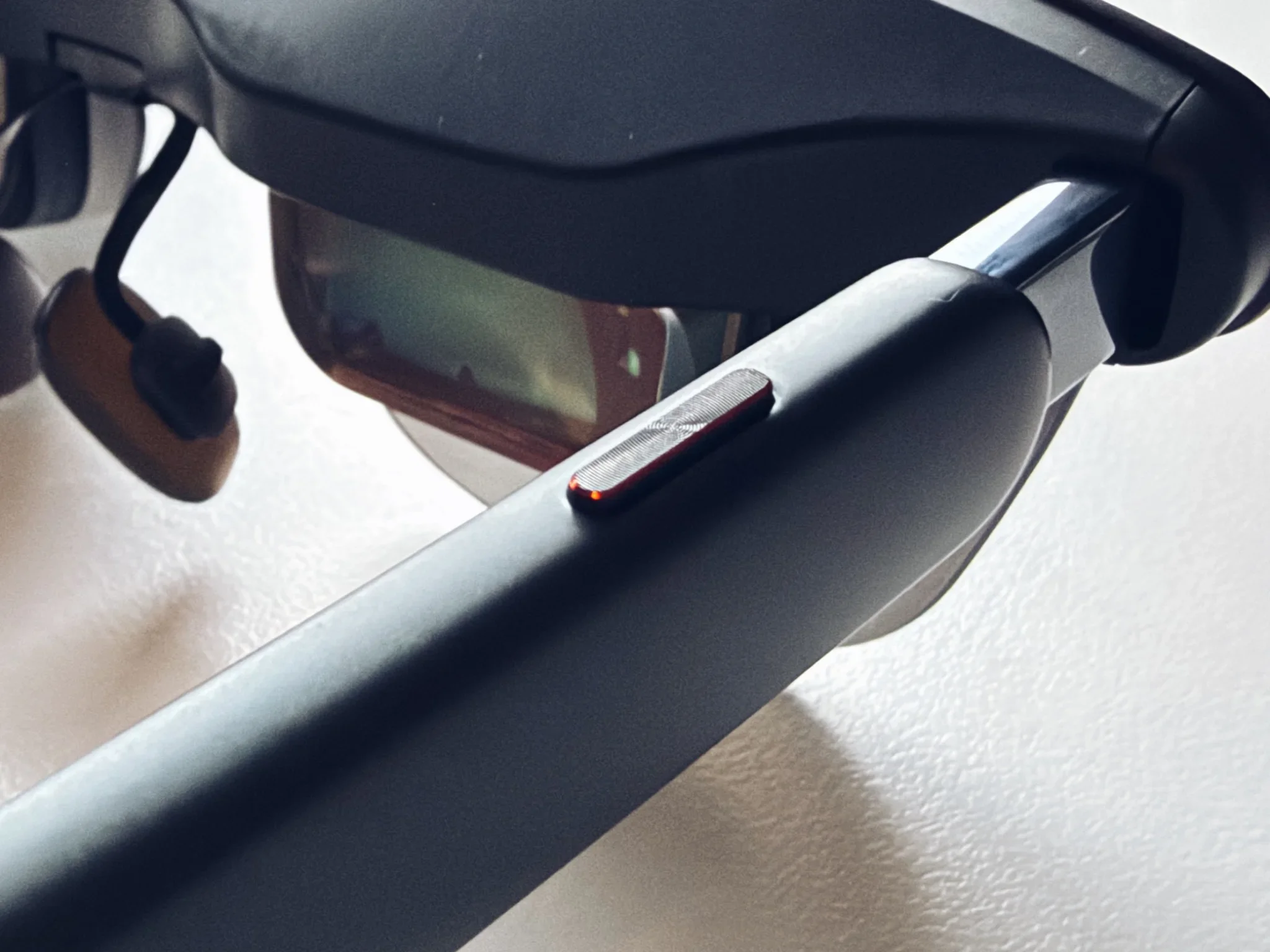
A dedicated button makes switching between Follow, Steady and Pinned modes remarkably simple.
Of the three viewing modes available, I naturally gravitate towards Steady and Follow. I like having the screen comfortably in front of me without having to think too much about its position. Both modes work very well for the type of content I've been watching.
Pinned mode is an interesting feature, but for my personal use, I find myself returning to the other two.
As for the viewing environment, I've been pleasantly surprised by how good the experience is. You can still see some external light coming in from the sides, but it hasn't significantly affected my enjoyment of the picture.
What I really appreciate about the RayNeo GT Max is that once you've found the right adjustment, you can simply forget about the technology and enjoy what you're watching. And that, for me, is what a product like this should be all about.
Sound Quality: One of My Biggest Surprises
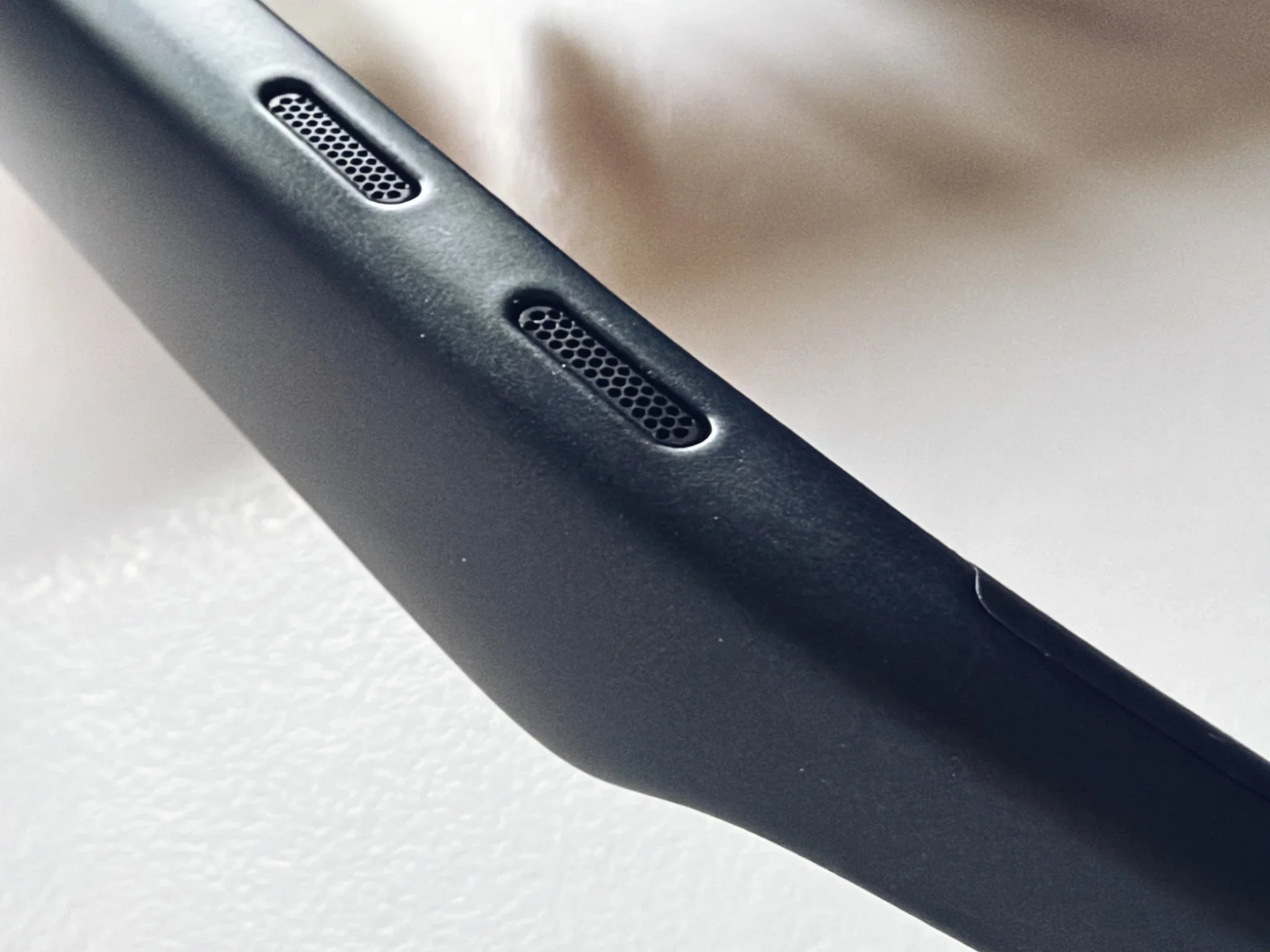
The discreet built-in speakers deliver surprisingly spacious and immersive sound.
Having reviewed a lot of audio products over the years, I was particularly curious about the sound quality of the RayNeo GT Max.
On paper, the collaboration with Bang & Olufsen certainly sounds promising. However, when you look at the size and positioning of the speakers along the arms of the glasses, it's natural to have a few doubts about their actual performance.
Well, I have to give credit to both RayNeo and Bang & Olufsen. The sound quality is genuinely impressive.
What surprised me most was how spacious and immersive the audio feels. It complements the large virtual screen beautifully and makes watching movies and videos a much more enjoyable experience.
I also find the volume more than sufficient for personal listening. There is a little sound leakage, as you would expect from an open-ear speaker design, but in my experience, it's relatively minimal.
It's easy to focus entirely on picture quality when reviewing a product like this, but I think RayNeo deserves a lot of credit for the audio experience. It makes the GT Max feel like a much more complete entertainment device.
The speakers are undoubtedly one of my biggest positive surprises after two weeks of use.
RayNeo GT Max – Key Specifications
Specifications provided by RayNeo. Compatibility depends on the connected device. Some features require additional accessories.
Comfort: What Are They Like to Wear?
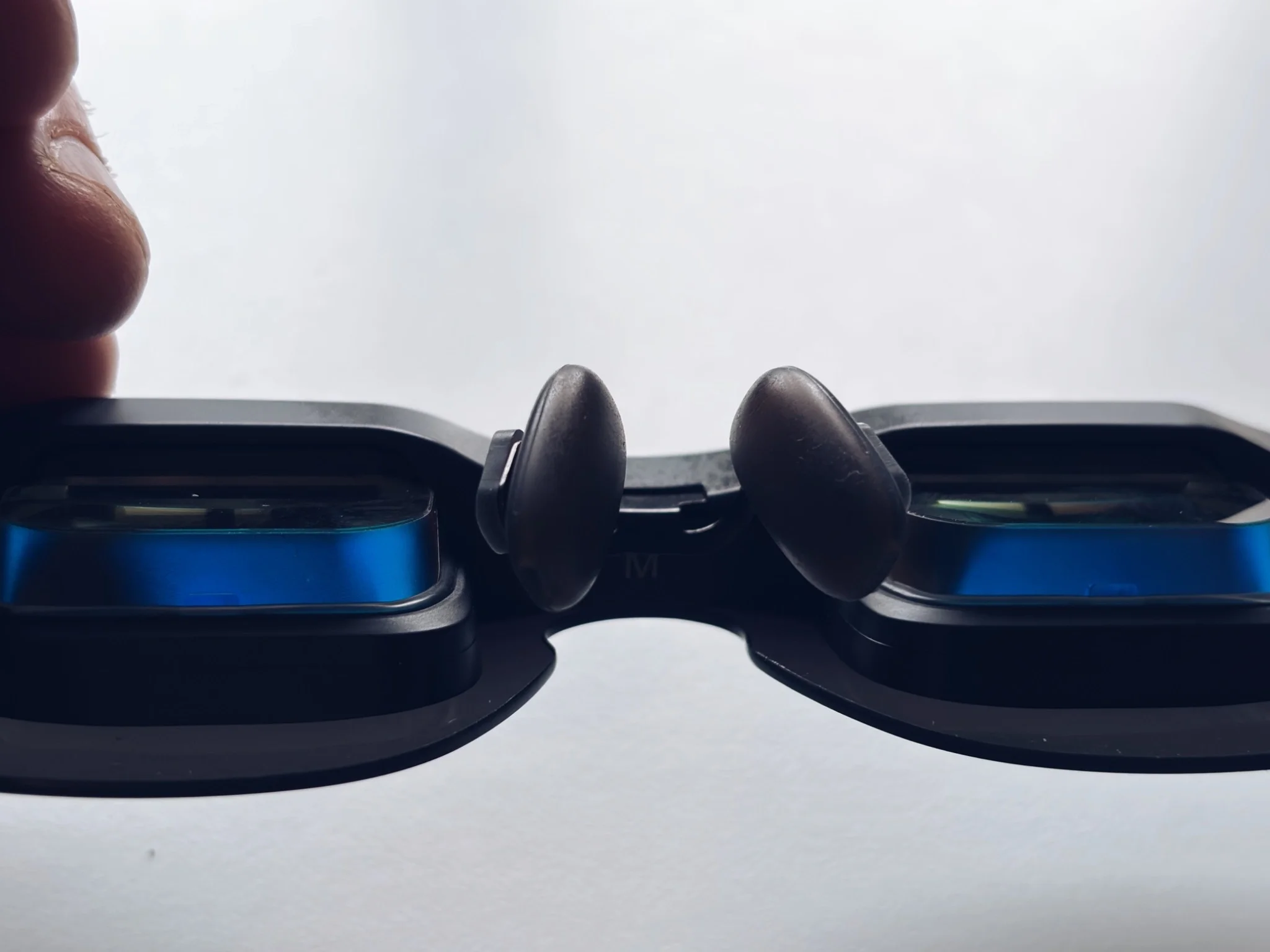
Finding the right adjustment is important for both comfort and seeing the entire virtual screen clearly.
At 78g, the RayNeo GT Max is relatively lightweight, and RayNeo has done a very good job with the weight distribution.
My longest viewing sessions have been around 45 minutes. I'm not someone who regularly watches entire movies at home, as I much prefer going to the cinema. Instead, I've been using the glasses to enjoy YouTube videos and other streaming content.
During these sessions, I haven't experienced any uncomfortable pressure on my nose or around my ears. I haven't noticed the glasses becoming particularly warm either, which is another positive.
As I mentioned earlier, finding the right position can take a few minutes. However, once properly adjusted, the glasses are very comfortable to wear.
Another aspect I was curious about was eye fatigue. At 52, I normally wear reading glasses, but I've been using the RayNeo GT Max without them. In my case, text on the virtual display is large and easy to read, and I haven't experienced any eye fatigue, headaches or dizziness during my testing. Of course, everyone's eyesight is different, so your experience may vary.
Overall, I'm very happy with the comfort of the GT Max. The biggest challenge isn't wearing the glasses for an extended period, but finding that initial adjustment to see the entire screen comfortably.
Using the RayNeo GT Max With My MacBook Air
Although most of my testing has been with my iPhone, I've also spent some time using the RayNeo GT Max with my MacBook Air.
Visually, the experience is very good. Having a large virtual display connected directly to your laptop is an appealing idea, particularly if you travel regularly.
Unfortunately, I experienced an unusual noise when using the built-in speakers with my MacBook Air. It's not something I've experienced with my iPhone, and I haven't been able to establish what's causing it.
Combined with the occasional difficulty seeing the bottom of the virtual screen, I personally find the GT Max much more enjoyable when connected to my iPhone for entertainment. That's where the simplicity of these glasses really shines.
What About the 3D Experience?
The 3D experience hasn't entirely convinced me.
Through the RayNeo app, you can access videos stored on your smartphone and use AI to convert existing 2D videos into 3D content. Some videos look better than others, and in certain cases the sense of depth is surprisingly impressive. However, I've been less successful with conventional side-by-side 3D content, which I couldn't get working as well as I had hoped.
It's a little disappointing, but it doesn't take anything away from the excellent 2D viewing experience. Personally, I wouldn't buy the RayNeo GT Max specifically for its 3D capabilities—the quality of the standard virtual display is a much more compelling reason to invest.
RayNeo GT Max – Pros & Cons
Pros
- ✓ Excellent plug-and-play experience
- ✓ Premium design and materials
- ✓ Beautiful Micro-OLED display
- ✓ Spacious and immersive audio
- ✓ Comfortable and lightweight
- ✓ Intuitive physical controls
- ✓ Three useful viewing modes
- ✓ Premium carrying case
Cons
- − Screen alignment can be frustrating
- − Inconsistent 3D experience
- − Audio issue with my MacBook Air
- − USB-C cable could be longer
- − Premium price
Final Thoughts: Are the RayNeo GT Max Worth Buying?
After two weeks with the RayNeo GT Max, I can definitely see a market for this type of product. It's a premium gadget, but it's also a very well-made one. From the quality of the packaging and the design of the glasses to the impressive display and surprisingly good audio, there's a lot to appreciate here.
What I particularly like is that RayNeo hasn't made the experience unnecessarily complicated. I can take the glasses out of their case, connect them to my iPhone and start enjoying content within seconds. There is no standalone operating system to learn, no complicated setup and no need to install an app for everyday viewing.
It's not perfect. Finding the right screen alignment can be frustrating at times, the 3D experience hasn't entirely convinced me, and I much prefer using the glasses with my iPhone rather than my MacBook Air. But none of these issues has changed my overall appreciation of the product.
I think the most important thing before buying the RayNeo GT Max is to understand exactly what you're getting. These aren't glasses designed to replace your smartphone or computer. They're designed to make the content you already enjoy on those devices considerably more immersive. And they do that very well.
At £399/$429, the RayNeo GT Max isn't an inexpensive purchase. However, considering the quality of the display, the impressive audio and the premium construction, I think the price is justified. If you're primarily looking for an immersive entertainment experience rather than a standalone AR headset, I think these glasses are well worth considering.
Whether you're travelling, relaxing at home or simply looking for a more personal way to enjoy your favourite content, the GT Max is a genuinely interesting alternative to a conventional screen. I also think these would make a fantastic Christmas present for someone who appreciates technology, particularly someone who enjoys movies, streaming or gaming. And with the Black Friday offers, this could be a particularly good time to invest in a pair.
The RayNeo GT Max is an excellent example of how impressive technology can also be remarkably simple to use. And that's probably what I like most about these glasses.
Jerome


My RayNeo GT Max AR glasses review after two weeks of testing. Impressive picture quality, Bang & Olufsen audio, comfort, compatibility, pros and cons.