
RingConn Gen 3 Smart Ring Review: Honest Thoughts After 1 Month
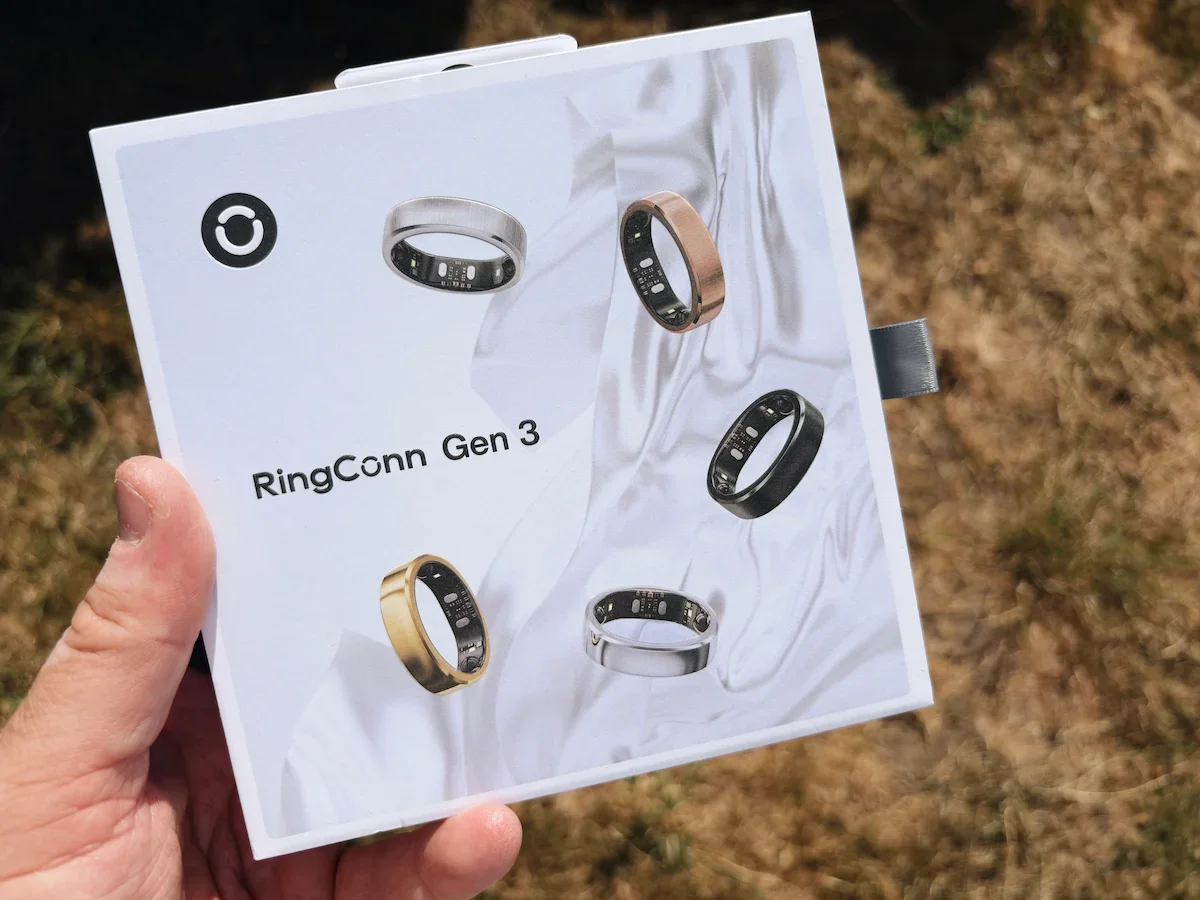
Around two months ago, the company RingConn contacted me to test and give my honest review of their Gen 3 Smart Ring. As someone who worked for several years as a healthcare assistant in a pharmacy, I was genuinely curious about what a smart ring could bring to my health. And I found out that it can bring a lot — more than I expected.
It started with the sizing kit. Then, when the RingConn Gen 3 arrived, I tested it for a little more than a month. Every day on my finger. Checking and comparing data. Discussing results with an ex-pharmacist colleague. And guess what? The RingConn Gen 3 really impressed me.
This is not a medical device. But this smart ring can detect trends and potentially ring some alarm bells that are worth checking with your doctor. In fact, that's exactly what happened to me. The ring detected patterns consistent with sleep apnea. My doctor took the findings seriously, and now I have further tests scheduled for September.
So yes, the RingConn Gen 3 is impressive. I tested it as someone who had never used a smart ring before — but as someone who has worked in the medical sector and understands how health information should be interpreted.
Here is my detailed and honest review after wearing it every day for a little more than a month.
How I Tested
Worn continuously for over a month — day and night
Compared against Apple Watch and a Kospet smartwatch
Checked readings against my home blood-pressure monitor
Shared data with a pharmacist friend and discussed sleep patterns with my GP
Used during normal daily life — work, sleep, exercise, and one stressful France-Sweden football match
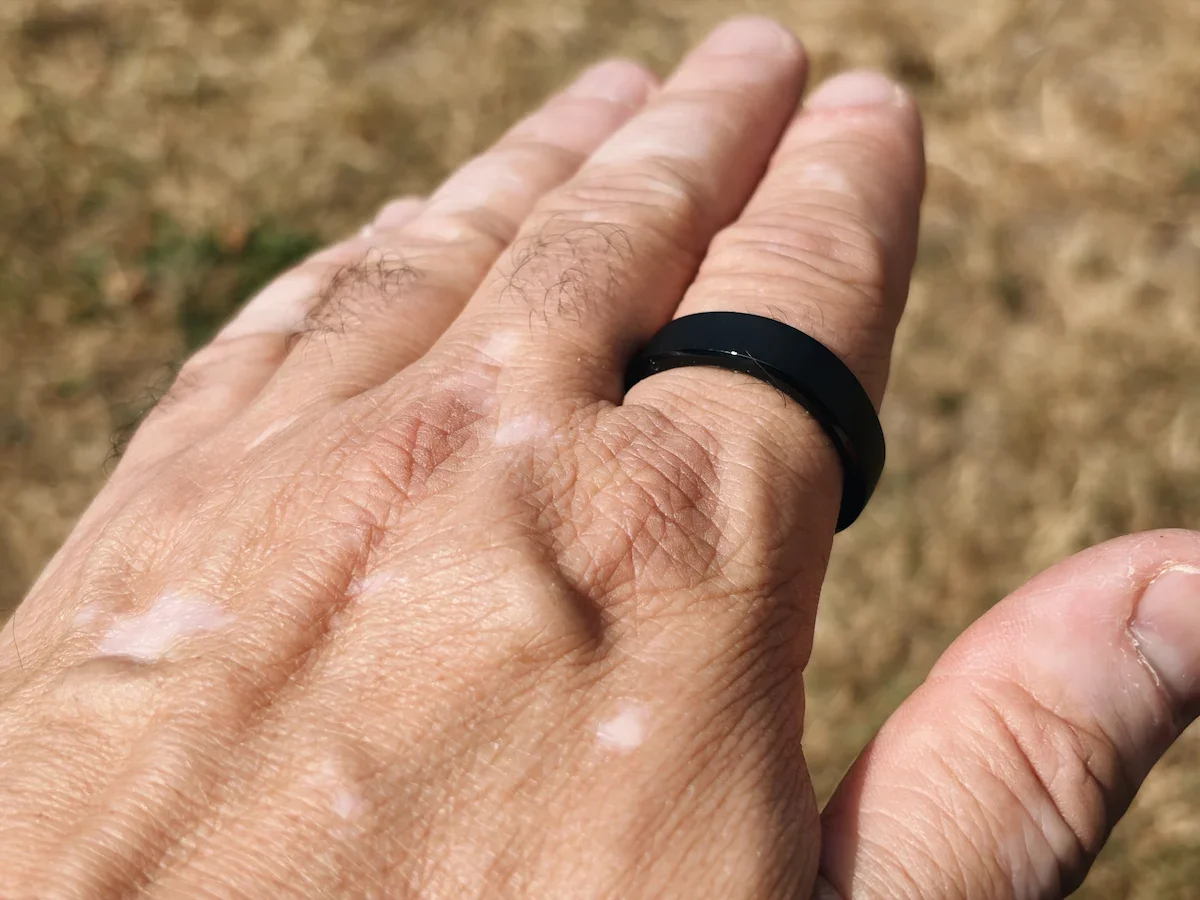
The Matte Black RingConn Gen 3 looks discreet and feels light enough to wear throughout the day
Design, Comfort and the Importance of Correct Sizing
The RingConn Gen 3 is a very good-looking smart ring. I have the Matte Black version, which looks simple, discreet, and modern. It doesn't immediately announce itself as a piece of technology, and most people would probably assume it was a normal ring.
I am not normally someone who wears rings, so it felt slightly unusual during the first few days. That feeling disappeared quickly. It became part of my routine, and I now barely notice that I am wearing it.
RingConn says the Gen 3 weighs between 2.5g and 3.5g, depending on the size, and measures 2.3mm thick. It feels impressively light in daily use.
Comfort is particularly important with a smart ring because it needs to remain on your finger throughout the day and night. If the size is wrong, the experience will quickly become uncomfortable. That is why I strongly recommend using the free sizing kit. RingConn Gen 3 sizes differ from standard jewellery sizes and from the company's previous rings, so guessing your usual size is not a good idea.
Wear the sample ring for more than a few minutes. Keep it on for a normal day, try sleeping with it, and pay attention to how easy it is to remove in the morning. My chosen size has been very comfortable. I have not experienced any problems with it becoming stuck or moving excessively during sleep.
The only noticeable change came during an unusually hot week here in the UK. My fingers swelled slightly, and the ring became a little more difficult to remove. It was nothing worrying, but it demonstrated why spending proper time with the sizing kit matters.
The Charging Case Is a Small but Important Advantage
Inside the box, you receive the RingConn Gen 3, a USB-C cable, documentation, and the Universal Wireless Charging Case. The charging case is one of my favourite parts of the package. It looks good, feels well made, and makes charging very simple. You place the ring inside, close the case, and let it charge. There is no small charging stand that needs to remain permanently connected beside your bed.
The case is also useful when travelling. You can charge it before leaving home and use it to recharge the ring without carrying another charging adapter. This may seem like a small detail, but wearables succeed or fail through these everyday practical decisions. A health tracker only provides useful long-term information when it is easy enough to keep wearing.
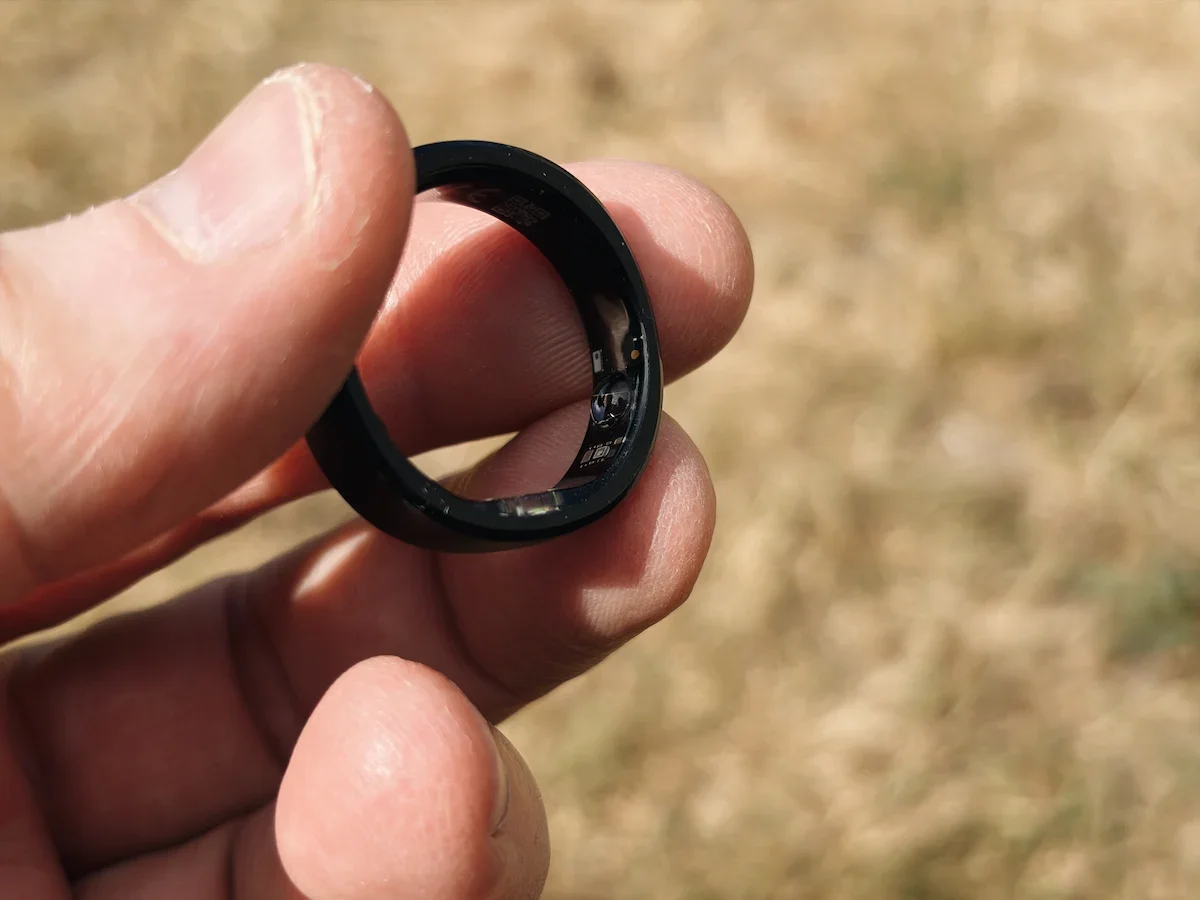
A closer look inside the RingConn Gen 3, where the sensors collect sleep, heart rate and wellness data.
Why the RingConn Gen 3 Makes More Sense Than My Apple Watch for Health Tracking
This was the biggest surprise of my review. I have used an Apple Watch for years. It remains the more capable overall device — notifications, apps, calls, messages, music controls, detailed workouts. But I now think the RingConn is better suited to continuous health tracking.
The reason is not that it necessarily collects dramatically more information. The advantage is that it is much easier to wear consistently.
It collects data without demanding my attention. The Apple Watch is another screen. Even when I'm only wearing it for health tracking, messages and notifications inevitably appear throughout the day. The RingConn Gen 3 has no screen and no constant distractions. It collects information quietly while I carry on with my normal routine.
It is far better for sleep. I have never particularly enjoyed sleeping with an Apple Watch. I can feel the watch and strap on my wrist, especially when I change position during the night. The RingConn is much easier to forget about. It is small, light, and comfortable. Once I am in bed, I rarely notice it.
The charging routine also works better. With the Apple Watch, I constantly need to decide when to charge it. Charge it overnight and I lose my sleep data. Forget to charge it during the evening and it may not have enough battery to last through the night. The RingConn Gen 3 lasted around ten days between charges during my testing. That's not just a convenient specification — it improves the quality of the experience because there are far fewer gaps in the data.
How the readings compared. Heart-rate readings from the RingConn were generally close to what I was seeing on the Apple Watch and Kospet smartwatch. Blood-oxygen readings were also broadly in line. The most interesting difference involved sleep. At first, the RingConn was reporting around 30 to 40 minutes less sleep than the Apple Watch. After checking over several nights, the RingConn's sleep time usually seemed more consistent with when I remembered actually falling asleep. My impression was that the Apple Watch occasionally counted some of my time resting in bed as sleep, while the RingConn appeared more conservative.
Where the Apple Watch is still better. For running, live workout information, GPS maps, notifications, calls, and apps, the Apple Watch remains much more capable. Activity tracking on the RingConn is perfectly adequate for my daily walks and general movement, but serious runners and athletes will probably want the more detailed information provided by a sports watch. For smart features and serious exercise tracking, I would choose the Apple Watch. For passive health monitoring, sleep, and recovery, I now prefer the RingConn Gen 3.
What the RingConn App Shows You
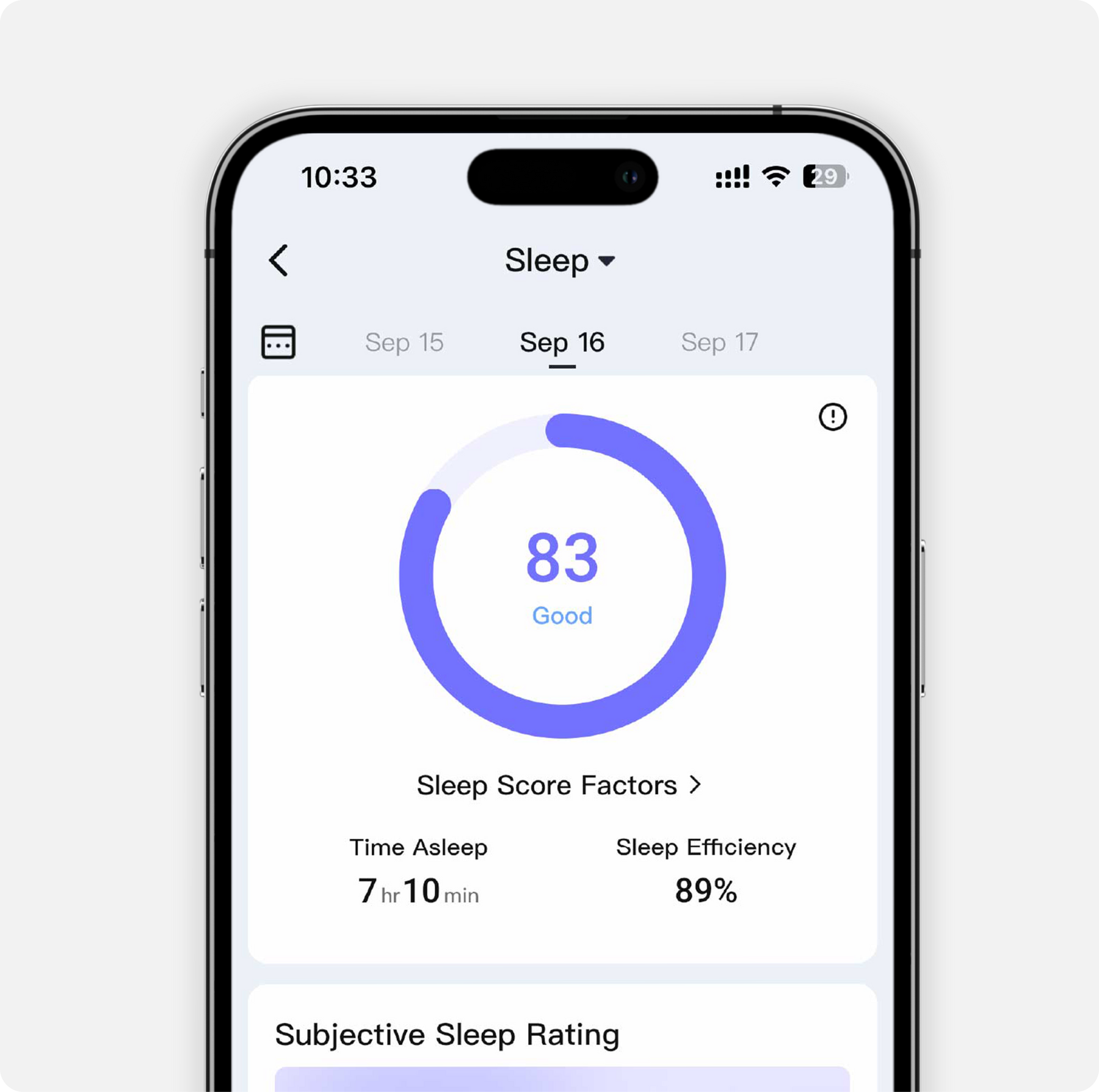
The RingConn app contains a considerable amount of information, but it is presented in a way that remains relatively easy to understand. The main screen gives you a daily wellness overview with a score from 0 to 100. You can then explore separate areas covering sleep, relaxation, vital signs, and activity.
The RingConn Gen 3 monitors data including heart rate, heart-rate variability, blood oxygen, respiratory rate, skin temperature, stress, sleep stages, steps, calories, and general activity. RingConn also promotes sleep-apnea pattern insights, vascular-health insights, and improved data stability as key features of the Gen 3.
You can keep the experience simple by checking the main daily score, or open the individual sections when you want to understand why something may have changed. That balance works well. There is enough depth for anyone who enjoys studying their data, but you do not need to analyse every graph to gain something useful from the ring.
Why Trends Matter More Than Individual Scores
The most valuable lesson I took from wearing the RingConn Gen 3 is that individual readings rarely tell the whole story. One poor night does not mean you suddenly have a health problem. One higher stress reading is not a reason to panic. Sleep, food, alcohol, exercise, illness, temperature, and emotional events can all influence the information.
I saw this myself while watching France play Sweden. I am French, so I was not exactly watching the match calmly. When I checked the RingConn app later, I could see that my stress reading had increased during the first half. It made me smile, but it also demonstrated how ordinary life can affect the data.
The weekly wellness summary is particularly useful because it provides more context than one daily score. It helps you see whether your sleep, recovery, activity, and stress appear to be improving, remaining stable, or gradually moving in the wrong direction. That is where the ring becomes useful. It is not there to judge you every morning. It is there to help you understand how your habits and health patterns change over time.
Vascular Health Trends: What the Feature Actually Does
This is one area where the terminology needs to be clear. The RingConn Gen 3 does not measure blood pressure and does not provide individual systolic and diastolic readings. Instead, it provides Vascular Health Trends designed to help users understand how their vascular-health patterns may be changing over time. According to RingConn, these insights consider nighttime vascular-load patterns, lifestyle factors, and optional blood-pressure readings entered manually by the user.
During my testing, I reviewed these trends alongside readings from my home blood-pressure monitor. The general direction often made sense in the context of what I was seeing from my cuff, but they are not directly comparable measurements. I continued using my home monitor whenever I wanted an actual blood-pressure reading.
RingConn clearly states that the feature is intended for health awareness and trend monitoring rather than medical diagnosis or blood-pressure measurement. That is how it should be used. It should not replace a proper blood-pressure monitor, professional medical testing, or advice from your GP. If you notice a repeated change or anything that concerns you, speak to a healthcare professional.
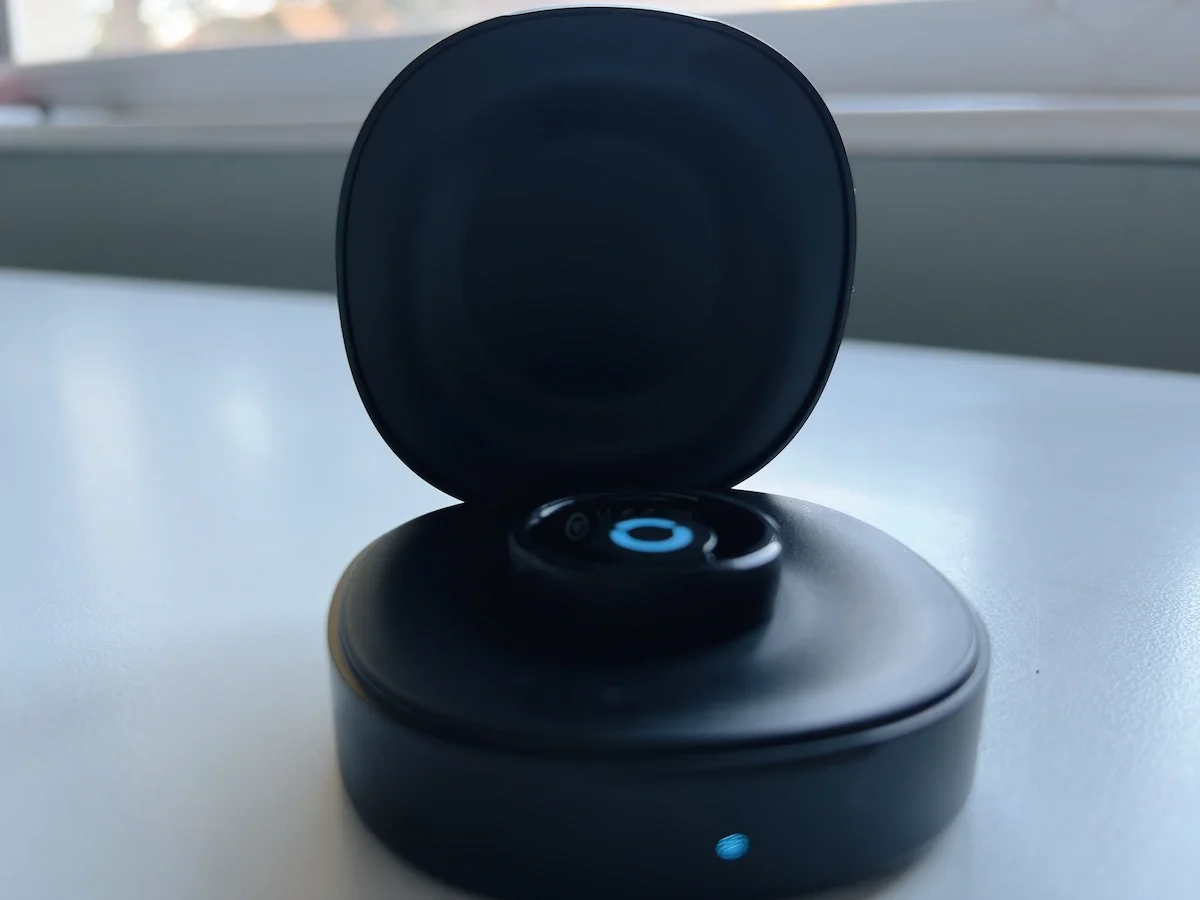
Chrgin Dock RingConn Gen 3
The Sleep Pattern That Made Me Speak to My GP
This became the most important part of my RingConn Gen 3 review. During the testing period, the app began showing a repeated pattern suggesting that I could be experiencing signs associated with sleep apnea. I was surprised, but not completely shocked. I had already suspected that something was not quite right with my sleep. I had gained weight, I often felt tired during the day, and I knew that the quality of my sleep was not as good as it should have been.
Seeing the pattern appear repeatedly in the app encouraged me to take those concerns more seriously. The RingConn Gen 3 did not diagnose me with sleep apnea. It is not a diagnostic medical device, and I did not treat the information as a medical conclusion. What it did was draw my attention to a pattern that seemed significant enough to investigate.
I saved the information, made an appointment with my GP, and showed her what the app had recorded. She reviewed it alongside my symptoms and the readings taken during the appointment. The RingConn information was not treated as a diagnosis, but it provided useful background and supported the decision to investigate my sleep further.
That experience changed how I saw the ring. It did not tell me that I had a medical condition. It gave me useful information at the right time and encouraged me to speak to my doctor. That is exactly how I think a health wearable should work — not as a doctor on your finger, but as a quiet tool that may help you notice a repeated pattern you would otherwise dismiss.
I will update this review when I know more about the outcome of my sleep tests.
Can Tracking Your Health Every Day Become Stressful?
This is a question worth considering before buying any health wearable. Is checking your sleep and health every morning beneficial, or can it make you worry unnecessarily?
I think it depends entirely on how you use the information. If you wake up and panic whenever your score is lower than it was the previous day, the ring may create more anxiety than value. The human body changes constantly. One unusual score does not automatically mean something is wrong.
However, when you use the RingConn Gen 3 to examine patterns over several days or weeks, it becomes genuinely useful. For me, the ring was never about chasing a perfect score. It was about understanding what appeared normal for me and noticing when something changed repeatedly. In my case, one of those patterns was important enough to discuss with my GP.
Use the information, but do not become a prisoner of it.
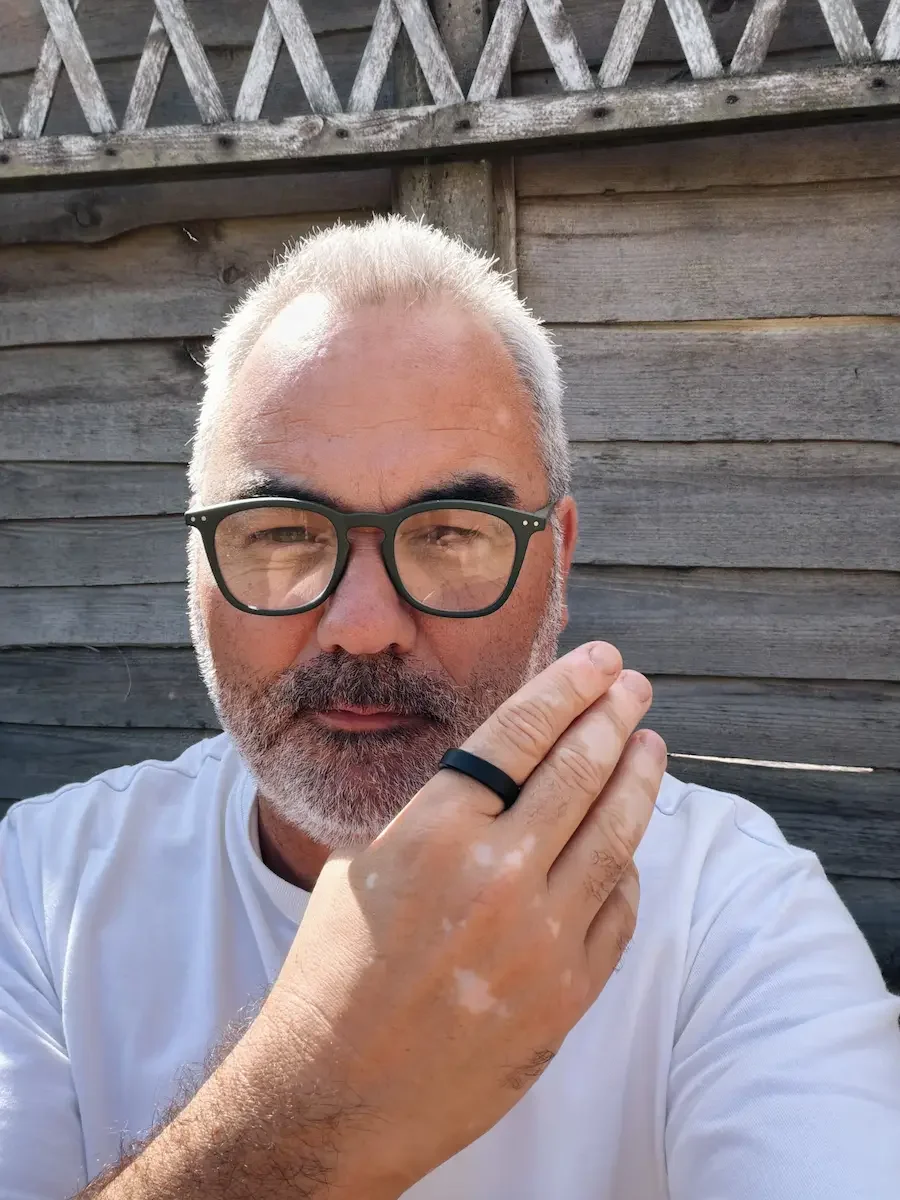
After more than a month of daily use, I found the RingConn Gen 3 more comfortable and less intrusive than wearing a smartwatch.
No Subscription Fees
Another major advantage is the absence of a monthly subscription. You buy the RingConn Gen 3, install the app, and can access its health and sleep information without paying an additional monthly fee. This matters because health wearables are most useful over long periods. A subscription can turn an already expensive piece of hardware into a much larger ongoing commitment. With the RingConn, the original purchase gives you access to the app and its core features.
- Light, discreet, and comfortable — easy to forget you're wearing it
- Far better for sleep tracking than a smartwatch
- Around 10 days of battery life — no daily charging
- No subscription fees
- Helped me notice a sleep pattern worth discussing with my GP
- App is detailed but not overwhelming
- App has a small learning curve
- Activity tracking is basic — not a replacement for a sports watch
- Correct sizing is critical — use the free sizing kit properly
- Not suitable for heavy weight training or contact sports
RingConn Gen 3 Review: Final Verdict
So after a month, do I recommend it? 100%.
If you're thinking about buying a smartwatch for health data, I'd recommend going for the RingConn Gen 3 instead. The battery life is way better — around ten days versus a daily charge. It's more comfortable to wear at night, which means more consistent data. And the health app is genuinely excellent — detailed, well-organised, and completely free with no subscription fees.
The RingConn Gen 3 is capable of spotting health trends that are worth taking seriously. As I said earlier, my GP reviewed the sleep apnea patterns the ring detected and has scheduled me for further tests in September. That alone tells you this isn't a gimmick.
Now, if you want notifications, apps, calls, GPS, and workout tracking, a smartwatch still makes more sense. The RingConn doesn't try to replace that. But for health tracking only — sleep, recovery, stress, heart rate, long-term trends — the RingConn Gen 3 really impressed me.
I highly recommend it.
Jerome
FAQ
Does the RingConn Gen 3 measure blood pressure?
No. It provides Vascular Health Trends designed to show how your vascular-health patterns may be changing over time, but it does not give individual systolic or diastolic readings. For actual blood-pressure measurements, you still need a proper blood-pressure monitor.
How long does the battery last?
Around 10 days in my use. RingConn advertises up to 14 days depending on usage and whether vibration features are active. Either way, you're not charging it every night.
Can I wear it in the shower?
Yes. The RingConn Gen 3 is water-resistant and can be worn while showering. However, I'd remove it for heavy weight training or any activity where a metal ring could become uncomfortable or damaged.
Does it work with iPhone and Android?
Yes. The RingConn app is available on both iOS and Android.
Is there a monthly subscription?
No. You buy the ring, install the app, and access the core health and sleep features without any ongoing fees. That's a significant advantage over some competitors.
About the author: Jerome is the founder of Dapper & Groomed. He's been testing and reviewing tech, health wearables, and men's lifestyle products since 2013. With a background in pharmacy, he brings a practical, safety-conscious approach to every review. His reviews are never approved or previewed by brands — just honest, real-world testing.