
Google Pixel 9A Review: Still Worth It in 2026?
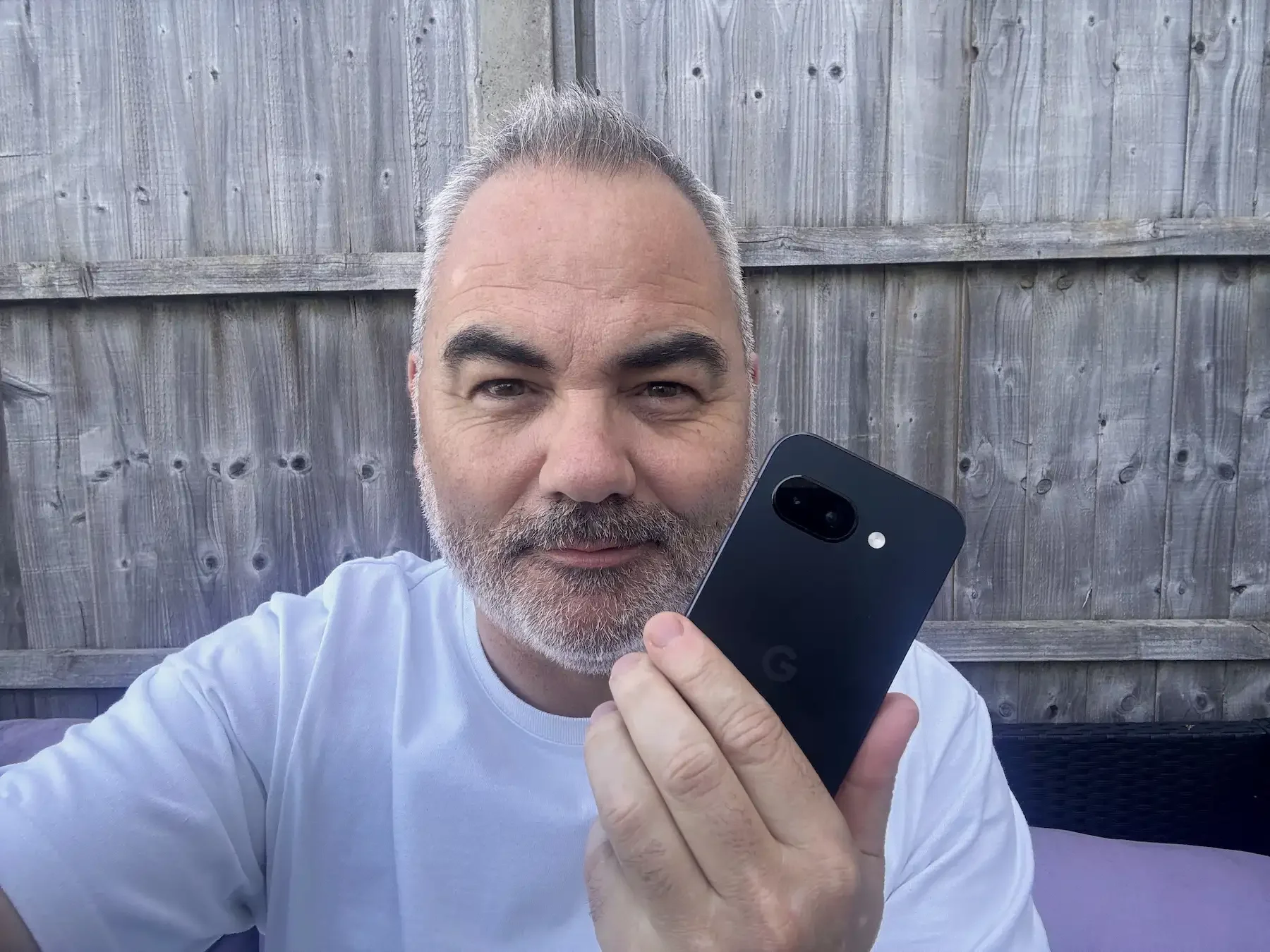
Green and proud. This is the phone that finally pulled me out of the Apple "safe bet" and back into curiosity.
Back in January 2026, I bought the Google Pixel 9A.
I did not really need another phone. My daily driver at the time was still my iPhone 15 Plus, and to be fair, it had been a very good phone for me. Reliable, easy to live with, great battery life, and perfectly at home in a family where everyone else uses an iPhone.
But the Pixel 9A deal was too tempting to ignore.
Here in the UK, I paid around £200 for it and received £20 cashback, which made it feel like one of those rare phone deals you do not overthink for too long. As soon as it arrived, I moved my SIM card from the iPhone 15 Plus to the Pixel 9A and used it as my daily phone for a few weeks.
And I liked it. Quite a lot.
Then real life happened.
Because the rest of my family is deep into the Apple ecosystem, I slowly moved back to the iPhone. Not because the Pixel 9A was bad. Not because I regretted buying it. It was more practical than emotional. Family group chats, FaceTime, shared Apple habits, the usual little things that make leaving iPhone harder than it should be.
Then recently, something changed again.
I used the Pixel 9A with Android Auto in my Citroën Berlingo family van, and for the first time Gemini was properly available to me in the car. At first, I used it in the obvious way. Play this song. Take me to this place. What is the weather like? Normal voice assistant stuff.
Then I pushed it further.
We are planning a family trip to Alpharetta, Georgia, for Halloween. We have never been to the United States before, so there is a lot to work out. Where to stay. Where to eat. What to do with the children. How much supermarkets cost. Whether there are food trucks nearby. How tax works. How much you should tip in restaurants. The kind of practical details that matter when you are travelling as a family, not just scrolling through pretty travel photos.
So I started asking Gemini questions while driving.
After about half an hour of conversation, it had helped me build a proper day-by-day plan. Places to visit, restaurants to try, rough costs, family activities, and useful local details I would normally have spent hours checking manually at my desk.
Honestly, it was impressive.
That was the moment I moved my SIM card back into the Pixel 9A.
And here we are, a few weeks later, with the Pixel 9A still in my pocket as my daily driver.
But there is now a bigger question. In 2026, with the newer Google Pixel 10A already available, is the Pixel 9A still worth buying? Is it still a smart budget Android phone, or is it already starting to feel like last year’s bargain?
This is my honest Google Pixel 9A review in 2026, based on real daily use after moving from an iPhone 15 Plus.
The Scenario:
Driving the Citroën Berlingo, planning a Halloween family trip from Bristol UK to Alpharetta, GA with 4 kids.
The Voice Prompt:
"Gemini, find me family-friendly food trucks, restaurants, places to visit in Alpharetta (Georgia) and estimate a daily budget for 6 people including US tipping and tax."
The Result:
A complete itinerary with local spots like The Maxwell, a calculated daily spend, and specific swimming pool locations—all delivered via voice while keeping my eyes on the road.
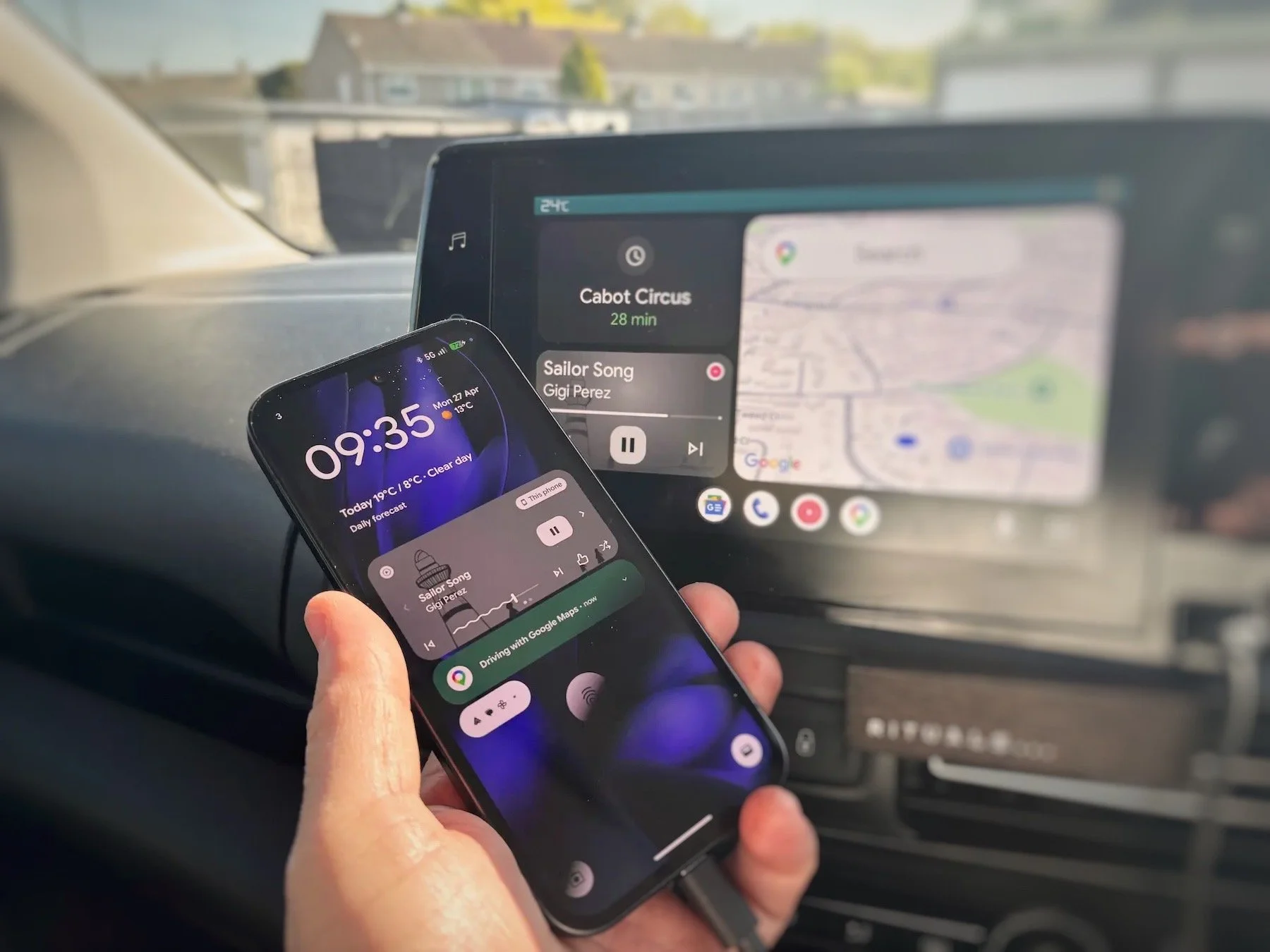
The moment it all changed. Planning a family trip to Georgia via Gemini while navigating the 9 AM school run.
This Is Not Really A Traditional Pixel 9A Review
I should say this early. This is not a traditional Pixel 9A review.
There will be no long benchmark section here, no pretending that most normal people care about every tiny technical detail, and no endless comparison table created mainly to keep Google happy.
This is more personal than that.
This is about why the Pixel 9A has quietly become the phone I want to use every day.
The display matters. The camera matters. Battery life matters. Android Auto matters. Gemini matters. Google Messages matters. The way the phone fits into my family life matters.
But this is not really about specs.
It is about that moment when a device stops being interesting and starts being genuinely useful.
That is what happened with the Pixel 9A.
The Road Back to Pixel
This isn't my first time in the Google camp. I loved the "no-nonsense" feel of the Pixel 4A 5G and 6A. While Samsung feels like a complex universe and Apple feels like a controlled private club, Pixel has always felt more relaxed—a direct line to the Google tools I use every day.
But I still left.
I live in a house full of iPhones. When your wife and four children are on iMessage and FaceTime, being the "Android guy" creates friction. In family life, “nobody has to think” is the most powerful feature a phone can have, so I drifted back to the iPhone 15 Plus. It was the sensible, reliable choice.
The problem? The sensible choice became the boring choice.
I missed the spark. I missed the curiosity of a phone that feels like it’s still evolving. So, when I saw the Pixel 9A on offer for around $290 (I paid £200 in the UK with £20 cash back!) in Obsidian Black, I couldn't resist. I bought it as an "interesting second phone," but I kept my SIM in the iPhone because it was "easier."
The Pixel stayed on the sidelines—until that ordinary drive in my Citroën Berlingo changed everything.
The Gemini Moment: Useful, Not Just Clever
The decision to switch didn’t happen while reading a spec sheet. It happened in my family van.
Planning a trip to Georgia for six people usually means a "laptop evening"—opening 17 tabs, comparing menus, and ending up more stressed than when I started. But using Gemini through Android Auto changed the math.
Instead of a generic list of links, it helped me think. It handled the daily budget, explained Georgia’s tax and tipping culture, and mapped out Halloween activities—all while I was just driving.
This is where the Pixel 9A won me over. I don’t need a phone to perform "AI party tricks"; I need it to make the logistics of my life feel lighter. In that moment, the Pixel stopped being a screen in my pocket and started being a proper assistant. Not perfect, but genuinely helpful.
That was the moment I went home and moved my SIM card for good..
Going Green Again
Now, the elephant in the room: the green bubble.
In a house full of iPhones, my messages are now officially green. And do you know what happened? Nothing. Nobody fainted. Nobody called an emergency family meeting. Life continued.
The iMessage "stigma" is real, but it’s also slightly ridiculous when you’re 52 with four children and a business to run. I have enough real-world chaos to manage; I can’t spend energy worrying about the color of a text bubble.
The transition at home was classic: I created a new family group in Google Messages, and my youngest daughter immediately renamed it “Family Group 2.” That is how tech transitions actually happen—not with strategy meetings, but with a name change and everyone carrying on. We use WhatsApp or Google Meet now instead of FaceTime. It’s a small change, not a crisis.
The real question isn't whether my messages are blue or green—it’s whether the phone works for my life. Right now, it does.
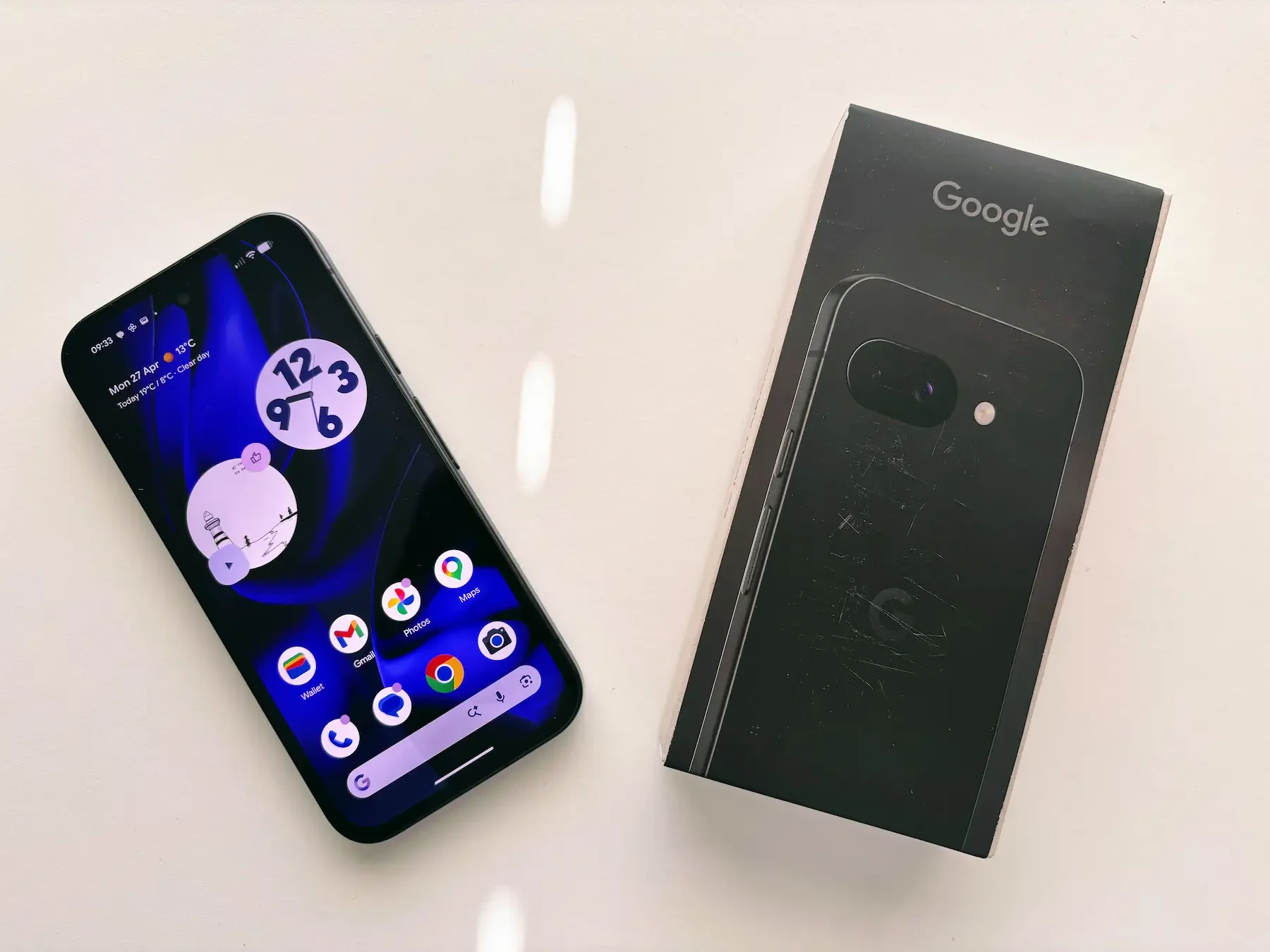
The $309 (£229) hero. The Pixel 9A in Obsidian Black—simplicity that caught me by surprise.
The Apple Ecosystem Is Still Hard To Leave
I should be honest: moving your SIM card is the easy part. Leaving the Apple ecosystem is where the real friction starts.
I still use a MacBook Air for my writing and an iPad sometimes. In that world, everything "just talks" to everything else. Messages appear on my Mac, photos sync instantly, and AirDrop remains the closest thing to magic in modern tech. It is a beautifully polished system, but it is also a cage—admittedly one with a very nice aluminium finish.
The biggest hurdle isn't the laptop, though; it’s the Apple Watch. Once you move to Pixel, that expensive piece of glass on your wrist becomes a very pretty paperweight.
Switching to the Pixel 9A requires you to accept some "digital messiness." You lose the seamless handoff, you lose the watch, and you lose that effortless Apple connection. But in return, you get something I’ve missed: breathing space. The Pixel feels less like a locked club and more like a tool that’s ready to work with the world as it actually is.
The Pixel 9A Display, Size And Camera
The Pixel 9A display surprised me. Specs are useful, of course, but I care more about how a screen feels in daily use.
And the Pixel 9A feels lovely.
Text is sharp, colours look good, scrolling feels smooth, and the whole interface feels clean and calm. Android on Pixel has become very polished now. It does not feel like old Android, where you sometimes had to forgive the software because you liked the flexibility.
The size is more complicated.
I know many people prefer smaller phones, but I personally find the Pixel 9A a little too small. I prefer the size of the iPhone 15 Plus. The bigger screen is better for reading, watching videos, replying to emails, checking websites, and doing small bits of work during the day.
The Pixel 9A is easier to hold, yes. But I still miss that larger iPhone 15 Plus display.
The camera is probably the biggest reason I keep coming back to Pixel phones. Since the Pixel 4A 5G, there has been something about the way Google processes images that works for my eyes. Pixel photos often have more contrast, more mood, and more character. Faces look natural. Skies look good. Everyday scenes have a little more life.
As a blogger, that matters.
I take photos all the time: product photos, fragrance bottles, skincare textures, earbuds, speakers, street scenes, family moments, travel shots, and random things I notice when walking around town.
The best camera is not always the one with the most impressive spec sheet. It is the one that makes you want to take photos.
The Pixel camera makes me want to take photos.
Video is strong too, especially in good light. In more difficult lighting, I still think the iPhone is stronger, and if I had to record something important indoors with mixed light, I would probably still trust the iPhone first.
The front camera on the Pixel 9A is just OK. It is fine for video calls and quick selfies, but it is not one of the strongest parts of the phone.
For still photos, everyday shots, and the kind of images I enjoy taking, the Pixel gives me something I prefer.


Daily Life With The Pixel 9A
Using the Pixel 9A as my main phone changes small things, not huge dramatic things.
Battery life has been good. For my usage, the Pixel 9A comfortably gets me through the day. Could it be better? Maybe. The iPhone 15 Plus is still stronger for battery life, and I do miss that slightly.
But the Pixel 9A has not made me battery anxious.
And that matters.
Typing has been excellent. In fact, I much prefer the Google keyboard to the iPhone keyboard. It feels faster, smarter, and more accurate. This is one of those small daily things that becomes important because we type on our phones all the time.
Google Maps feels better. Google Photos feels central. Google Messages is clean. Gmail, Calendar, Keep, Drive, Chrome, YouTube, Gemini — everything feels like it belongs.
This is where Pixel makes sense.
If your digital life already sits mostly inside Google services, using a Pixel feels natural. For me, this matters because my phone is not just for scrolling. I use it for work, research, taking photos, notes, emails, planning content, answering messages, looking things up quickly, navigating, and managing family life.
The Pixel 9A feels clever in the background.
Not loud. Not flashy.
Clever.
That is what I want from modern technology. Not more noise. More help.
Android Auto, Gemini And A Few Odd Inconsistencies
Android Auto has been one of the biggest positives of switching to the Pixel 9A.
I much prefer it to CarPlay overall, especially now that Gemini is becoming part of the experience. Gemini in the car feels like a proper step forward. Being able to ask practical questions while driving, especially when planning something like a family trip, makes the Pixel feel genuinely useful.
This is not a gimmick for me. It is not a feature I tried once and forgot.
It changed how I used the phone.
But Android Auto is not perfect.
Calling and texting by voice command still feel faster on CarPlay. Apple’s system is very smooth for that. There are also some odd inconsistencies with voices on Android Auto.
I love the Gemini voice, but Google Maps does not use the same voice, and the voice used when sending or reading texts can sound different again. It is a small thing, but it makes the system feel less joined-up than Apple’s.
That is one area where Google still needs to tidy things up.
Even so, I still prefer Android Auto now, mainly because Gemini feels like a total game changer. CarPlay feels polished. Android Auto with Gemini feels like it is becoming something more useful.
Not perfect.
But more interesting.
And for me, more helpful.
What I (Still) Miss From the iPhone
I’m not going to pretend it’s all sunshine and green bubbles. There are three specific things I miss about the iPhone 15 Plus:
The "Find My" Safety Net: Since my kids are on iPhones, I can no longer check their location with a single tap. We use Google Maps sharing as a workaround, but it isn’t as seamless. For a parent, that’s a real loss.
The Battery Legend: The iPhone 15 Plus is a battery beast. While the Pixel 9A gets me through a full day, the iPhone could comfortably do two. I’ve had to re-learn how to keep an eye on my percentage.
The Social "Default": I miss the ease of FaceTime and iMessage being the house standard. Switching to WhatsApp and Google Meet works, but it adds an extra step to family life.
The iPhone is the "safe bet"—reliable, predictable, and everywhere. But I've realized that "safe" is often just another word for "familiar." I’m willing to trade that familiarity for a phone that actually makes me curious again.
The 5G Connection Has Been A Surprise
One thing I rarely hear mentioned in reviews is mobile connection.
But on my Pixel 9A, the 5G connection has been seriously impressive. In my own use, it is faster than my iPhone 15 Plus in the same kind of places.
That surprised me.
We often talk about cameras, processors, screens and AI, but a phone is still a phone. Connection matters. Speed matters. The ability to open pages, send messages, upload photos, use Maps, and get things done quickly when you are away from Wi-Fi matters.
The Pixel 9A has been excellent for that.
It is not the kind of detail that makes a dramatic headline, but in real life it makes a difference.

The Marlow Test: The Pixel 9A excels at capturing the difficult textures of pet fur, even when they won't sit still.
The Verdict: Green and Proud
So, why did I really switch? Because the Pixel 9A makes me want to use it.
It isn’t about one specific spec; it’s the combination of the camera, the clean software, and that moment in the car where Gemini actually made my life easier. I paid exactly $309 (£229) for this phone. For that price, it feels like a tool that helps me live, rather than just a beautiful, expensive object in my pocket.
I don’t know if this is forever. I’m a "phone person"—I change my mind, and that Pixel 10A in "Fog" is already calling my name. But today, my SIM card is inside the Pixel 9A, and that says more than any benchmark ever could.
This switch didn't happen because of a YouTube video. It happened in my family van, planning a Halloween trip to Georgia. That is real life. And in real life, technology either works for you or it gets in your way.
And yes, it gives me green bubbles. At 52, with four children and a busy life, a message bubble color is the very last thing on my mind.
For now, I am back on Pixel.
Green and proud.
As an Amazon associate I earn from qualifying purchase. The Pixel 9A is available on Amazon (check link below) or at the official Google Store.
Jerome
About the author: I'm Jerome, founder of Dapper & Groomed. I've spent the past 13 years testing and reviewing tech, audio gear, grooming products, and men's lifestyle essentials on this blog and on my YouTube channel. My reviews are never approved or previewed by brands — just honest, real-world testing from a dad who's been doing this since 2013.
I tested the new Insta360 Mic alongside my Mic Pro. Here's why this more affordable wireless microphone makes sense for YouTube creators and vloggers.