
Why Men Trim Body Hair: My Story From the 80s to 2026

Body Hair, Masculinity, and the Quiet Revolution
I didn’t grow up thinking body hair was a choice.
In the 1980s — in my corner of France near Toulouse — body hair on men wasn’t a debate, it was simply part of the landscape. Hairy legs. Hairy armpits. A hairy chest if you had one. And yes, the intimate area too — it was all just… there. Nobody had a dedicated “body groomer” in a bathroom drawer. At most, a razor for the face, and maybe a pair of scissors that had seen better days.
Hair wasn’t a style decision. It was nature. It was masculinity, almost by default. If anything, it was a sign you were becoming a man — the same way your voice changes, the same way your posture starts to harden without you even noticing.
And then in 1993, at 19, I moved from France to Spain, and something became even clearer: hair wasn’t just normal — it was part of the mythology.
In Spain, I saw a very specific kind of confident male image everywhere. The open shirt. The button undone. The chest hair visible like a signature. In certain places, it wasn’t just accepted — it was admired. It carried a cultural message: warmth, passion, a kind of southern swagger. The “Latin lover” look wasn’t a cliché; it was a real aesthetic people leaned into, sometimes proudly.
It’s funny to say it out loud now, but back then, a hairy chest didn’t feel like a grooming detail. It felt like a passport.
And if you had told me in 1993 that within a decade or two men would be debating whether to trim their stomach hair, shaving their chest, grooming their intimate area with purpose-built devices, and casually discussing it like it’s as normal as shaving your beard… I would have laughed.
But that’s exactly what happened.
Not overnight. Not with a dramatic announcement. More like a slow shift in the air — carried by advertising, adult media, fashion, gym culture, and a new idea that men, too, could redesign themselves.
The moment the rules changed
I can’t point to one single day, but I remember the feeling of the mid-to-late 90s: the sudden rise of a different kind of male body in the public imagination.
A leaner body. A more sculpted body. A body that looked… engineered. And importantly: a body with less hair. Sometimes no hair at all.
Underwear campaigns had always been about selling fantasy, but now the fantasy was becoming sharper, cleaner, more controlled. The male torso started to look like a product in itself — smooth, defined, almost reflective under studio lights.
I remember the impact of those Calvin Klein images. You didn’t need to be a fashion expert to feel the shift. It wasn’t subtle. It was like the culture decided, quietly and collectively, that “hairy” belonged to the old world.
And that’s when something changed inside me too.
Because up until then, I hadn’t really considered my own body hair as something I could edit. It sounds obvious now — but back then, the idea that you could simply remove what you didn’t like wasn’t widespread. It wasn’t part of normal male grooming.
What happened in the late 90s and early 2000s wasn’t just a trend. It was permission.
Permission for men to step outside the inherited image of masculinity. Permission to stop looking like we “should” look. Permission to say, actually, I don’t love all this hair. I don’t love how it feels. I don’t love how it looks on me. I’d like to change it.
And that feeling — that small internal click — was oddly liberating.
Because it wasn’t really about becoming smoother to please anyone else.
It was about ownership.
The adult industry effect nobody admits
There’s a second shift that happened around the same era — less polite, but impossible to ignore.
Adult movies changed.
The “bush” disappeared, especially for women, and then increasingly for men too. The visual language of sex became… clearer. More explicit. More “clean.” More direct.
I’m not saying adult media invented grooming trends, but it absolutely helped normalise a new aesthetic. What used to look standard suddenly looked old-fashioned. And once something looks old-fashioned on screen — in a culture that is obsessed with the new — it tends to follow you into real life.
Men began to shave or trim not because someone told them to, but because the modern image of sexuality was subtly being rewritten in front of their eyes.
Again: permission.
Not the kind you request — the kind that arrives through repetition until it becomes normal.
The grooming industry saw the gap
And then, of course, the manufacturers did what manufacturers always do: they spotted the cultural shift and built products for it.
For years, shaving below the neck was a messy improvisation. People used face razors, cheap clippers, scissors, whatever was available. It wasn’t elegant. It wasn’t safe. And it definitely wasn’t designed for sensitive areas.
Then, somewhere in the early 2000s, the “body groomer” category started to become a real thing — devices built for the chest, the back, the underarms, and yes, the intimate area.
Once the category existed, the habit grew.
Brands like Philips began to make body grooming feel mainstream. Later, newer brands came in with a different tone entirely — not just selling a tool, but selling an identity. Manscaped didn’t just market a trimmer; they marketed a conversation men weren’t used to having out loud.
And suddenly, this thing that used to be private — even slightly embarrassing — became normal dinner-table humour. Podcast talk. Locker-room talk. “Every man should do it” talk.
The revolution wasn’t just in the bathroom.
It was in the culture.
My own body hair story
Here’s the honest part: I didn’t start trimming because I wanted to look like an underwear model.
I started trimming because I wanted to feel better in my own skin — in real clothes, in real life, moving through the world rather than posing for it.
Over the years, body hair became less about “masculinity” and more about comfort, cleanliness, confidence, and control.
There are practical reasons nobody puts in an advert:
Hair traps sweat.
Sweat turns into smell.
Hair can make you feel hotter in summer.
Hair can make workouts feel uncomfortable.
Hair can pull or rub under certain clothes.
Hair can irritate skin, especially when it mixes with friction.
And then there’s intimacy — which, whether people admit it or not, is a major driver.
Trimming doesn’t make you a different person, but it changes how you feel in your body during intimate moments. It changes how you perceive yourself. It changes the sense of “being looked at,” even in the most loving relationship.
For me, trimming didn’t feel like chasing a trend.
It felt like taking responsibility for my body the way I take responsibility for my face — washing it, shaving it, moisturising it, choosing how I present myself.
A lot of men are happy being naturally hairy, and that’s completely fine. But for me, over time, trimming became a form of self-care.
Not in a soft, candle-lit way.
In a very male, very simple way: I like feeling clean. I like feeling comfortable. I like looking in the mirror and recognising myself.
The part nobody says: body hair is emotional
We pretend grooming is purely practical — “hygiene,” “comfort,” “sports performance.”
But body hair is tied to identity. Especially for men.
Because hair is one of the first signs that tells you: you’re not a boy anymore. So later, choosing to remove it can feel like a strange reversal. Some men worry it makes them look less masculine. Others worry it looks vain. Some fear judgment. Some fear they’re doing it “for others.”
What I’ve learned is this:
The most masculine thing you can do is decide for yourself.
If you like your hair, keep it. If you hate it, remove it. If you want to trim lightly, trim lightly. If you want to be smooth, be smooth.
Confidence isn’t in the amount of hair.
Confidence is in the lack of apology.
And that’s where this subject becomes bigger than grooming. It becomes about autonomy. About not being trapped by old images — the Latin lover chest hair, the 90s smooth model, the modern “manscaped” comedy.
All of these are costumes.
Real life is you in the bathroom, making a decision that suits you.
How it happened for me
For me, that autonomy didn’t arrive as a big declaration. It arrived in small steps.
It started with my chest — and then my armpits.
That was the obvious place: the part you see when you look in the mirror, the part that used to be shown with a button undone, the part that carried so much of that old “Latin lover” signal. Trimming it felt like a quiet shift: not a rejection of masculinity, but a decision to stop wearing someone else’s idea of it.
And then, almost naturally, it moved south.
Not because I became obsessed, but because once you realise you can choose, you start noticing what actually bothers you. And intimate grooming, for me, was never about trying to look like an advert. It was about comfort, hygiene, and — something I didn’t expect at the beginning — sensation.
Because less hair can genuinely mean more sensation.
It’s not a dramatic claim, and it’s not the reason everyone does it, but it was true for me. Skin feels different when it isn’t trapped under hair. Touch feels sharper. Everything feels a bit clearer, physically and mentally. You feel more present in your body, and that changes the way you experience intimacy.
Of course, like most men, I experimented.
At one point I tried removing hair from my legs too. Part curiosity, part summer logic — and I’ll admit it: in hot weather, hairless legs feel surprisingly good. Cleaner. Cooler. Almost like you’re wearing less of your own body.
But I realised fairly quickly it wasn’t my long-term sweet spot. Not because there’s anything wrong with it — just because it didn’t feel like me. It felt like one step too far into maintenance. Trimming, for me, has always been the balance: intentional, controlled, but still natural.
And while all of this was happening, I noticed something else that made me smile.
Women were changing too. Quietly at first, then completely. Hair removal became normal, especially pubic hair. It was part of the same cultural shift — bodies becoming editable, aesthetics becoming choices, the old “this is just how it is” rules loosening.
Honestly, I don’t remember the last time I saw a full bush.
That isn’t a judgement — just an observation of how thoroughly the norm changed. And it’s also a reminder that this wasn’t only a “men’s grooming revolution.” It was bigger than that. It was a new era of choice.
Which brings me back to the point: once you realise you have options, grooming stops being about hair. It becomes about identity — and the quiet confidence of choosing your own version of yourself.
But we should talk about the downside
This is where I like to be honest, because overly polished “grooming talk” can feel fake.
Trimming body hair can come with a learning curve:
Trim too short and you can get itch.
Shave too close and you can get irritation.
Cheap devices can pull hair, nick skin, or feel rough on sensitive areas.
Some routines become maintenance — and maintenance can become annoying.
There’s also a psychological effect nobody mentions: once you start grooming, you start noticing things you never cared about before. You can fall into a loop of “fixing” yourself.
That’s why I always come back to a simple principle:
Grooming should serve your life, not dominate it.
The best grooming routine is the one you can actually maintain without thinking about it too much.
And this is also where the “tool” question becomes unavoidable. The right device makes the whole experience calmer, quicker, and safer — the wrong one turns it into stress.
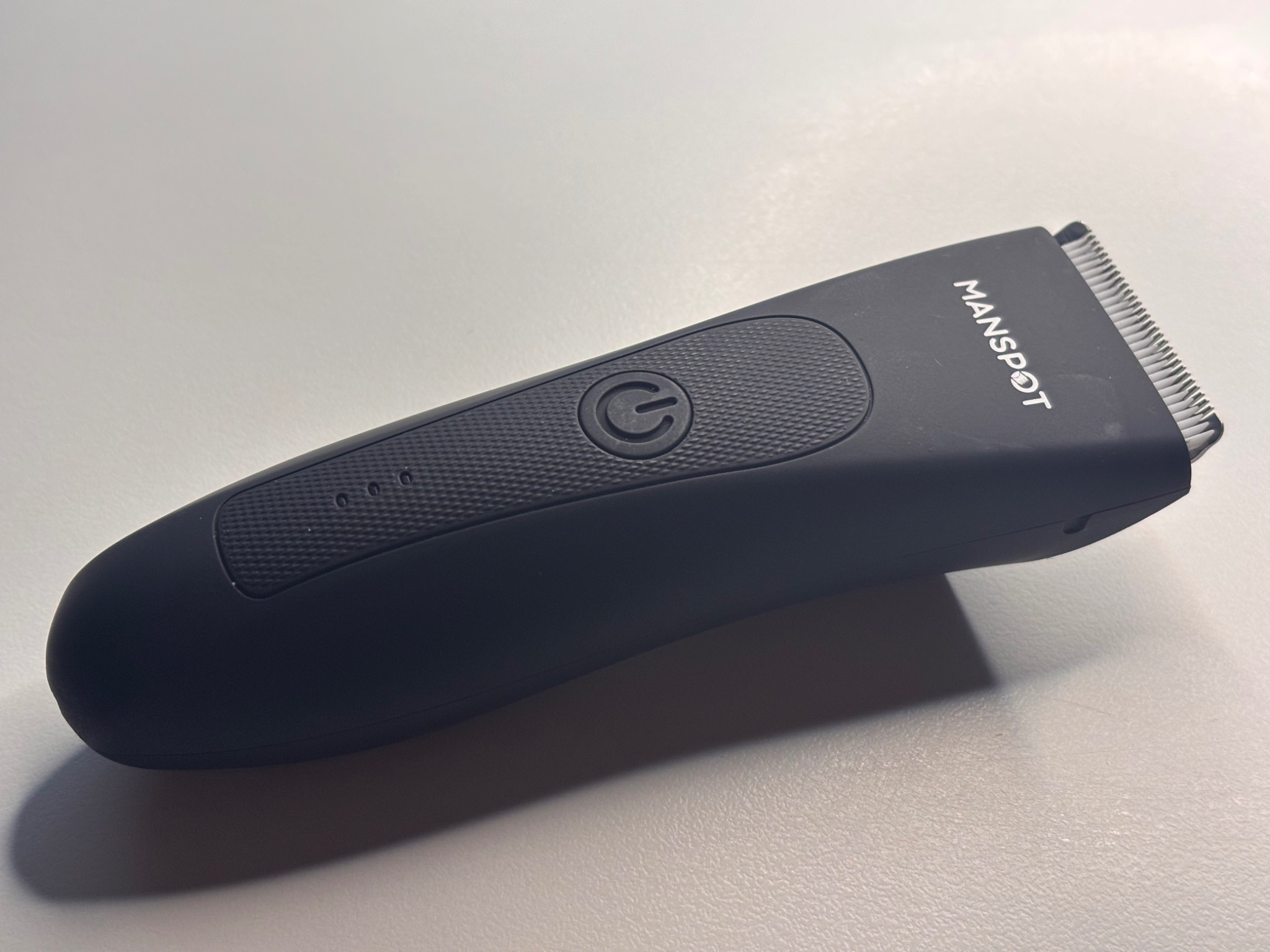
If you want the practical side of this, I’ve written a separate guide to the body hair trimmers I’ve tested and relied on over the years: 5 Best Body Hair Trimmers for Men – Tried, Tested and Reviewed.

Where I see the future going
I don’t think body hair will ever go back to being a single “norm.”
We’re past that.
The future looks more like freedom: men choosing what suits them, with less shame attached.
But I do think a few things are coming:
1) Less shaving, more trimming
As men become more aware of irritation, ingrown hairs, and skin comfort, trimming will keep winning over full shaving for most body areas.
2) Better design, better safety
Devices will continue to improve — better guards, better materials, better skin protection, better waterproofing.
3) A calmer conversation
The loud marketing will always exist, but the real trend is quiet normalisation: men treating body grooming like any other part of self-care, without needing to make it a personality.
4) A return to taste
This is my personal hope: not “everything off,” but intentional grooming. Not copying an image — creating your own.
5) More men choosing longer-term solutions
Trimming is flexible and easy, but some guys eventually want less maintenance altogether — especially for areas like the chest, stomach, shoulders, or back. That’s why at-home IPL is becoming part of the conversation for men too.
If you’re curious about that route, I’ve written my experience separately here: How to Achieve a Hair-Free Torso This Summer With Ulike Air 3 IPL Hair Removal.
Final reflection
When I was a teenager, body hair felt like fate.
By the time I moved to Spain, it felt like identity — that open-shirt confidence, the Latin lover image, the idea that hair meant you were more of a man.
Then the culture shifted. The 90s and early 2000s introduced a different aesthetic: smoother, more controlled, more designed. And for the first time, I felt something that mattered more than any trend:
Freedom.
Freedom to choose what I wanted to keep and what I wanted to remove. Freedom to stop inheriting an image and start shaping my own.
Over the years, trimming became less about looking like anyone else and more about feeling like myself — cleaner, more comfortable, more confident in my own skin.
And that’s the real point.
Body hair isn’t a moral issue. It’s not a rule. It’s not a badge you must wear to prove masculinity.
It’s just hair.
And if trimming it makes you feel better — even a little — then it’s worth doing.
Not because the culture says so.
Because you do.
That’s the whole revolution, really.
Jerome