
In 2026, can you really live with a minimalist phone?
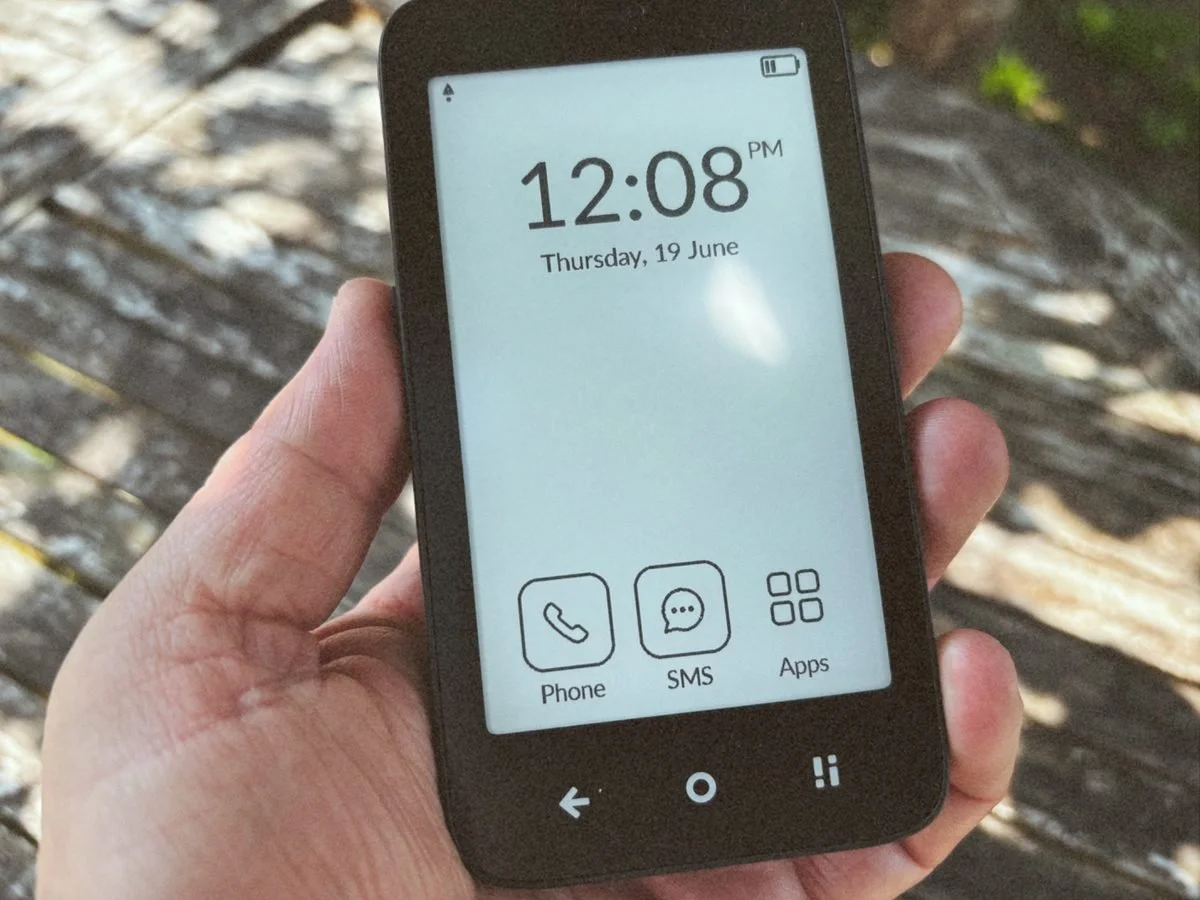
I wanted to believe I could.
I’d already spent time with the Mudita Kompakt — in fact, I wrote a full review of it — so this wasn’t a random impulse or a trendy little experiment. I knew what the phone was trying to be. The question was whether I could actually live with that philosophy, day in and day out.
Not in a “delete Instagram and become a new man” kind of way, but in a proper, practical, adult way — the kind where you put your SIM card in, you leave the smartphone at home, and you walk into the world with a device that does less… because you want to live more.
That was the plan.
A minimalist phone on my desk, a quiet screen, a few essential tools, and a promise to myself that I’d stop carrying a full-time distraction machine in my pocket. I tried it seriously, as my only phone. I wanted the experiment to be clean: one device, one routine, no cheating.
And I failed.
Not dramatically. Not in a “relapse” way. More like a slow, creeping reality that kept tapping me on the shoulder: this is a lovely idea… but the world doesn’t quite work like that anymore.
Minimalist phones are beautiful. Calm. Almost poetic in a sea of glowing rectangles shouting for attention. But in 2026, trying to live with one exclusively can feel like turning up to modern life with a typewriter.
You can still write. You can still create.
But you will hit walls — often.
The fantasy is strong… because it’s not really about phones
If you’re reading this, you probably know the feeling.
The fantasy isn’t just “a simpler phone.”
The fantasy is a simpler mind.
It’s the idea that we can reclaim something we’ve lost — attention, patience, silence. It’s the desire to go back to a time when you could leave the house and not feel like you’ve forgotten a limb.
And this is where I need to admit something a bit uncomfortable:
Deep down, I think many of us are in love with the minimalist aesthetic…
but not always with the minimalist way of life.
We love the clean design. The calm branding. The quiet screens. The feeling of being the sort of person who owns a device like that. The idea of being intentional, disciplined, modern-but-not-addicted.
But the reality of minimalism is harder than the look of it.
Minimalism is not just clean lines and empty home screens.
It’s inconvenience. It’s saying “no” repeatedly. It’s resisting the shortcut. It’s accepting friction as part of the deal.
And when you’re busy, when you’ve got work, family, deadlines, bills, messages, appointments… friction isn’t romantic. It’s exhausting.
Our phones aren’t phones anymore — they’re pocket computers
This is the part nobody can ignore in 2026.
A smartphone isn’t really a phone. It’s a portable operating system that happens to make calls.
It’s your:
wallet
train ticket
boarding pass
bank branch
ID verification tool
map
calendar
camera
email terminal
authentication device
emergency lifeline
“where are you?” locator
digital key for a growing number of services
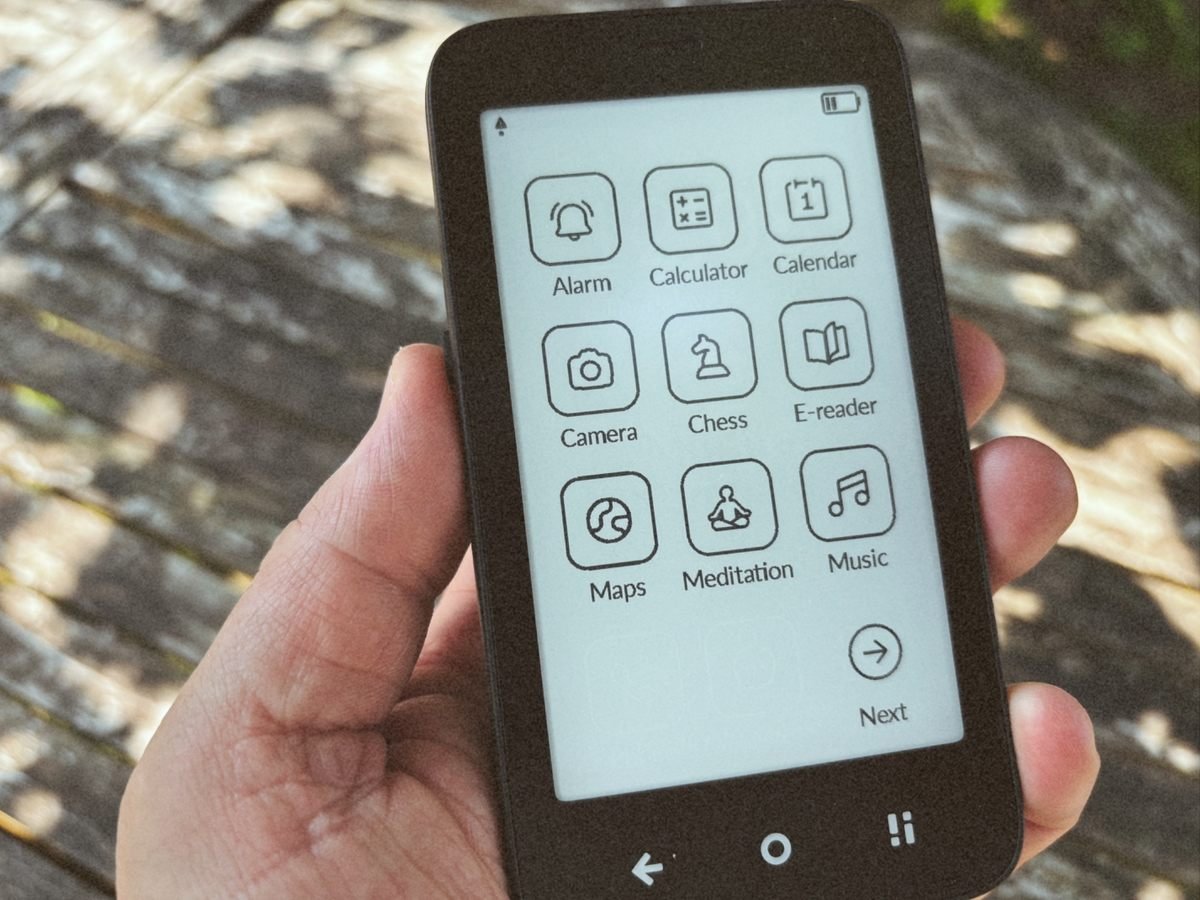
Minimalist phones refuse that job description. That’s the whole point. They’re designed to be tools, not ecosystems.
But the problem is… modern life often assumes you’re carrying the ecosystem.
And this is exactly where I fell off the minimalist cliff.
How I failed (and why it wasn’t about willpower)
People love the neat story: “I tried minimalism, I couldn’t stop scrolling, I’m weak.”
That wasn’t my story.
I didn’t miss social media. I didn’t miss mindless scrolling. If anything, I felt lighter without it. My brain was calmer. My days felt longer. I noticed my surroundings more — especially in the city, where everything is movement and noise and faces and little moments you normally miss because you’re staring at a screen.
The failure came from something else entirely:
infrastructure.
Not trends. Not entertainment. Not dopamine.
Basic adult life.
1) Banking broke the dream
This was the big one.
You don’t really appreciate how deeply online banking is woven into your routine until you try to live without it in your pocket. It’s not just checking your balance. It’s confirming payments, verifying logins, approving transfers, handling security prompts, checking transactions when something looks suspicious.
In theory, you can do a lot of this on a laptop at home.
In reality, life doesn’t always wait until you’re back at your desk.
Some problems need a quick action now — and modern banking is built around the idea that your phone is your security key.
That alone was enough to make my “minimalist only” plan wobble.
2) Two-factor authentication is the silent chain
Then there’s the other invisible thing: authentication.
Email. Work tools. Accounts. Services. Shopping. Everything wants to confirm it’s you.
Sometimes that can be done via SMS, sure. Sometimes it can’t. Sometimes it becomes a maze of “download the app” or “approve on your device.”
And suddenly, your minimalist phone stops being a peaceful tool… and becomes a daily reminder that you’re swimming against the current.
3) City life makes convenience feel non-negotiable
This is where the city vibe matters.
I genuinely believe minimalist phones make more sense in a city than in the middle of nowhere — not because you need more tech, but because you have more structure around you.
Public transport. Coffee shops. Workspaces. People. Movement. Options.
You can survive without your smartphone because there are places to sit, ask, buy, recharge, re-route, and improvise. The city gives you a safety net.
But the city also demands speed.
It’s the last-minute change of plan. The message that says “meet us here instead.” The QR code menu. The ticket gate. The map reroute. The taxi booking when it’s raining and you’re late.
Minimalist phones can handle some of this — but not always smoothly, not always quickly.
And when you’re in the rhythm of city life, speed isn’t luxury. It’s how things work.
4) Messaging isn’t just texting anymore
Calls and SMS are fine… until you’re the only one not on the thread.
Family groups. Friends. School stuff. Links. Locations. Voice notes. Photos.
Even when you personally don’t care about these things, other people rely on them. And that’s when minimalism stops being a personal decision and starts affecting everyone around you.
I didn’t love that feeling.
And yet… I still think minimalist phones are the future (just not as the only phone)
After I “failed,” I didn’t feel like I’d wasted my time.
I felt like I’d learned the real use-case.
Minimalist phones aren’t here to replace smartphones in the way some people imagine — at least not for most of us, not yet.
They’re here to become the second phone.
The weekend phone.
The evening phone.
The holiday phone.
The “I need my brain back” phone.
The phone you switch to when you want to be present.
Because here’s the truth: most of our smartphone use isn’t essential. It’s habitual. Reactive. Automatic.
Minimalist phones break that spell.
And when they do, something happens that’s hard to explain unless you’ve felt it:
You breathe differently.
You stop checking for nothing.
You stop “filling” every empty moment.
You start noticing life again — not in a cheesy way, in a very practical, human way.
Walking through the city feels different when you’re not constantly dipping into a feed.
You look up more.
You walk slower.
You feel more in control.
That’s not a gimmick. That’s a real benefit.
The huge advantage: attention is the new luxury
Minimalist phones give you back the one thing modern tech quietly steals in tiny amounts all day long:
your attention.
And attention is a kind of wealth.
Not just for productivity — for presence. For mood. For relationships. For the simple joy of being where you are.
This is why I don’t see minimalist phones as a failure at all.
I see them as a solution — just not a total replacement.
My final reflection
Can you live with a minimalist phone in 2026?
Some people can, absolutely.
Most people will struggle — not because they’re addicted, but because modern life is built around pocket computers.
But do I think minimalist phones matter?
Yes. More than ever.
Because even if we can’t fully embrace the minimalist life, a lot of us are desperate for the minimalist feeling — that sense of quiet, control, and calm in a world that never stops shouting.
Maybe that’s the real future:
Not abandoning the smartphone forever…
but learning when to put it down.
And in that role — as a second phone, a weekend phone, a boundary phone — minimalist devices make perfect sense.
They’re not the end of technology.
They’re the reminder that technology should serve us, not consume us.
Jerome