
Body Hair Grooming for Beginners

If you’re reading this, you’ve probably been thinking about body hair grooming for a while — but you haven’t quite started. Maybe you’re not sure where to begin. Maybe you’ve picked up a razor, thought “this could go wrong”, and put it back down.
That’s exactly what this guide is for: body hair grooming for beginners, explained plainly — what to do, what to avoid, and what to realistically expect the first time.
I started grooming my body hair in the late 1990s with no guidance and terrible tools. I learned the slow way: trial, error, and the occasional mistake. Twenty-five years later — and after reviewing men’s grooming products professionally for over a decade — I can tell you this with confidence: it’s not complicated when you use the right method and the right tools.
Most men who start don’t go back. Not because it’s trendy — because it’s simply cleaner, more comfortable, and easier to maintain than doing nothing.
First, Know That You're Not Alone — Not Even Close
Men have always had preferences about body hair. The difference today is that grooming is normal, the tools are better, and the whole subject is less awkward than it used to be.
A widely-cited study in JAMA Dermatology found that around two-thirds of men reported pubic hair grooming. Whether you’re trimming for comfort, hygiene, confidence, sport, or your relationship — you’re not “weird”. You’re late to a party that’s been going on for years.
Understanding Your Options: Trim, Shave, or Both
Before you think about tools or technique, it's worth understanding what you're actually choosing between.
Trimming
Trimming means reducing hair length without removing it entirely. Using an electric body hair trimmer with an appropriate guard, you bring the hair down to a short, neat length — typically somewhere between two and six millimetres depending on personal preference. The result is clean and well-groomed without requiring the maintenance of full removal. Skin irritation risk is low. Ingrown hairs are rare. This is the easiest starting point for most men and a perfectly valid long-term approach.
Full shaving
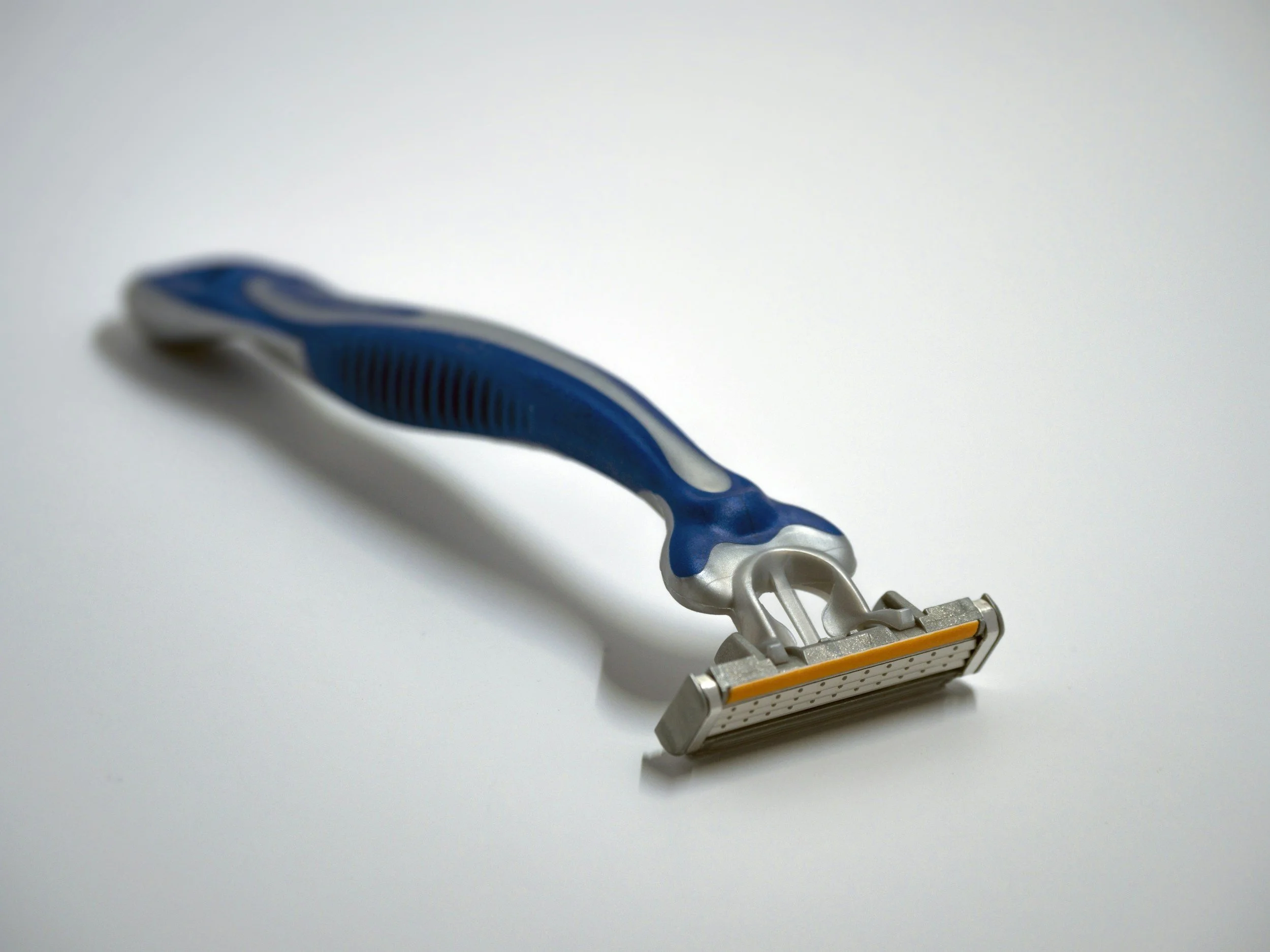
Full shaving means removing the hair entirely with a manual razor, leaving the skin completely smooth. It delivers the maximum benefit in terms of sensation and freshness, but requires more careful technique — particularly in the scrotal area, where the skin's loose— and more consistent maintenance to stay ahead of regrowth. For most men, this is something to work toward rather than attempt on the first session.
The combination approach
This is where most experienced groomers land, including myself. Full shaving in specific areas — particularly the ball sack — combined with close trimming in others, such as the pubic mound and the base of the shaft. It delivers most of the benefits of full removal while keeping the maintenance demands manageable. Once you're comfortable with the basics, this combination tends to feel like the natural sweet spot.
My recommendation for beginners:
Start with trimming only. Use a dedicated body hair trimmer with a short guard, and spend your first two or three sessions simply getting comfortable with the tools and the process. Once that feels routine, you can decide whether you want to introduce a razor for specific areas. There is absolutely no need to go straight to a full shave on your first attempt.
What You Actually Need to Buy — and What You Don't
A dedicated body hair trimmer
This is your most important purchase. Do not use a beard trimmer, a standard clipper, or a general-purpose grooming tool. Body hair trimmers are specifically designed with skin-safe blade guards, waterproof bodies, and geometries that reduce the risk of catching or pulling sensitive skin. The difference matters in this area.
A fragrance-free shaving gel or cream
If you're going to introduce a razor at any point — even just for tidying edges — you need a proper shaving product rather than soap. Soap dries too quickly, provides insufficient lubrication, and leaves the blade dragging. Choose something fragrance-free and formulated for sensitive skin.
A fragrance-free moisturiser
Apply this after every session. Grooming removes natural oils from the skin along with the hair, and moisturising immediately afterwards reduces irritation, prevents dryness, and significantly improves comfort during the regrowth phase. Again, fragrance-free. This is not the area of your body for heavily scented skincare products.
Avoid heavily fragranced “cooling” products down there — they’re a common cause of stinging and rash.
What to Realistically Expect the First Time
Here is what the first time actually looks like for most men.
It will take longer than subsequent sessions
Your first proper grooming session will probably take twenty to thirty minutes. That's not because it's complicated — it's because you're learning the tools, finding the right guard length, and getting a feel for the process. By your third or fourth session you'll be down to ten minutes or less. Don't judge the ongoing experience by the first one.
The result will be good but not perfect
First attempts rarely produce the exact result you had in mind. You might find a guard length that's slightly too long or too short. You might miss a patch. You might not be entirely happy with the edges. This is normal and it doesn't matter — hair grows back quickly, and each session you'll get closer to the result you're after.
There may be some mild irritation
Particularly if you introduce a razor, some mild redness or sensitivity in the first day or two is common and not a cause for concern. This usually resolves within 24 to 48 hours and decreases significantly with each subsequent session as the skin adapts. Proper aftercare — cool water rinse, fragrance-free moisturiser, breathable underwear — minimises this considerably.
You will immediately notice the difference
Despite all of the above, the improvement in how you feel — cleaner, fresher, lighter — is noticeable from the very first session. Even an imperfect first attempt produces a result that the majority of men find immediately preferable to what they had before. That first-session impression is almost universally positive, which is why so few men go back once they've started.
The first time I tried this, in my early twenties with no guidance and questionable tools, the result was imperfect and took far longer than it should have. I still noticed the difference immediately. With a proper trimmer and this guide, your first attempt will go considerably better than mine did.
Five Mistakes to Avoid
1) Using the wrong tool
A beard trimmer is not a body hair trimmer. Invest in tools designed for the purpose — it makes a genuine difference.
2) Skipping preparation
Heat softens the hair and relaxes the skin, reducing the force needed to trim or shave. If you’re using a razor, apply shaving product generously and give it time to work before you start.
3) Applying too much pressure
Both electric trimmers and manual razors work best with light, controlled strokes and no downward pressure. Let the tool do the work. This matters even more on loose scrotal skin.
4) Using a blunt blade
If you use a razor, a dull blade is your enemy. Replace it after 3–4 uses in this area.
5) Neglecting aftercare
A quick cool-water rinse and moisturiser will prevent most post-grooming irritation.
A Brief Word on Skin Health (Pharmacy Background)
Before I spent over a decade reviewing grooming tools, I worked as a healthcare assistant in a pharmacy. And here’s the practical truth: below-the-belt grooming isn’t just “a look” — it changes the skin environment.
In healthcare we talk about a simple trio: hair + heat + moisture (occlusion). That combination creates the perfect conditions for bacteria linked to body odour — including Corynebacterium. When you reduce the hair “forest”, you physically change that micro-environment: better airflow, less sweat trapped on skin, and less odour build-up over the day. It’s simple biology, not vanity.
Most grooming issues are minor and temporary: mild redness, the odd ingrown hair, a bit of itch during regrowth. Proper prep and aftercare prevent most of it.
But there are times you should stop playing hero and see a GP: spreading redness, warmth, swelling, increasing pain, or discharge (possible infection). Same if you develop a rash that doesn’t settle after a few days — it’s often a reaction to fragrance or harsh products.
One extra benefit most men don’t think about: grooming makes it easier to do a quick testicular self-check. A warm shower is actually a good time for it — the skin is relaxed and it’s easier to notice anything unusual.
Where to go from here
If you’ve read this far, you have everything you need to make a confident first attempt. Start simple, take your time, and use the right tools.
- Ready for the technique? Read my step-by-step guide to trimming or shaving your balls safely.
- Want the “why” first? Read the real benefits of trimming your balls: hygiene, sensitivity, and confidence.
Welcome to a significantly more comfortable situation.
Jerome