
Edifier STAX Spirit S5 Review: Still Worth It in 2026?

I've wanted to try the Edifier STAX Spirit S5 for almost two years. Ever since they launched in 2024, I've been drawn to their design and the prospect of planar magnetic sound in a premium wireless headphone.
I've reviewed plenty of Edifier headphones over the years, but the S5 were always near the top of my wish list. So thank you to Edifier for sending them.
I've used them daily for a little over a month — working, editing videos, relaxing at home, occasionally walking Marlow. I've tested them with my iPhone 17, MacBook Air, Google TV Streamer and a CD player.
My conclusion? The STAX Spirit S5 are the best-sounding headphones I've tested. I particularly appreciate their clarity, vocal reproduction and ability to separate instruments without making music sound unnatural.
But they're not perfect. No active noise cancellation, relatively heavy, and a few design decisions I'd change. And at around $599-£500 retail, are they still sensible in November 2026?
| Quick Verdict Edifier STAX Spirit S5 | |
| Best For | Music lovers who prioritise sound quality, clarity and detail over noise cancellation. |
|---|---|
| The Testing | Over a month of daily use with iPhone 17, MacBook Air, Google TV Streamer 4K, Questyle dongle and a CD player. |
| The Wins | Outstanding instrument separation, natural vocals, balanced sound, premium materials and excellent battery life. |
| The Catch | No ANC, average physical controls, a disappointing case interior and a premium asking price. |
| My Take: The best-sounding headphones I've tested so far. Not perfect, and certainly not cheap, but if music comes first, the STAX Spirit S5 are still worth considering in 2026. Even better if you can find them at a discount. | |
Design and Build Quality
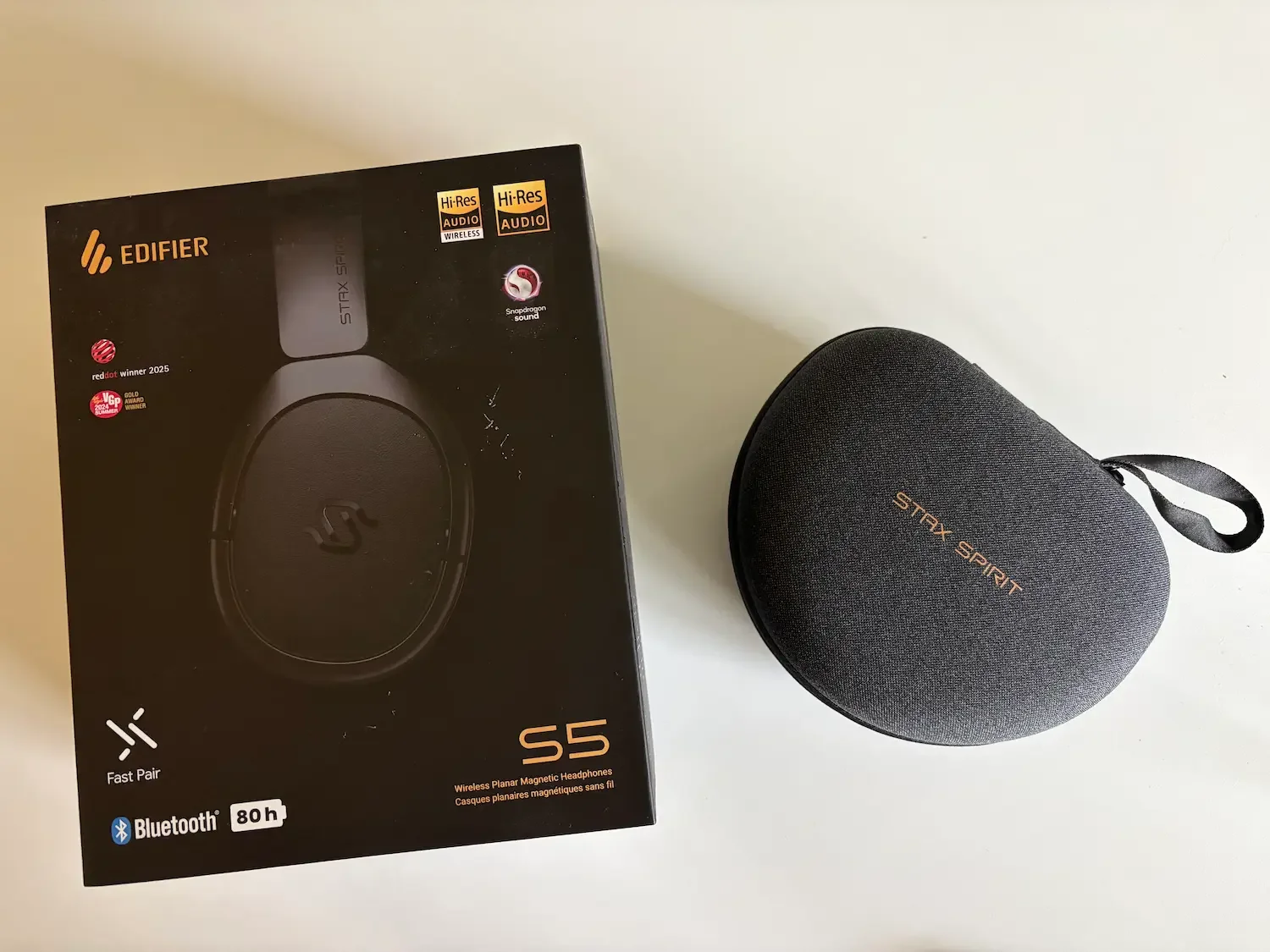
The design is a big part of why I wanted these for so long. The combination of leather, metal and the distinctive earcup shape is genuinely attractive, and the packaging reinforces the impression — careful presentation, attention to detail.
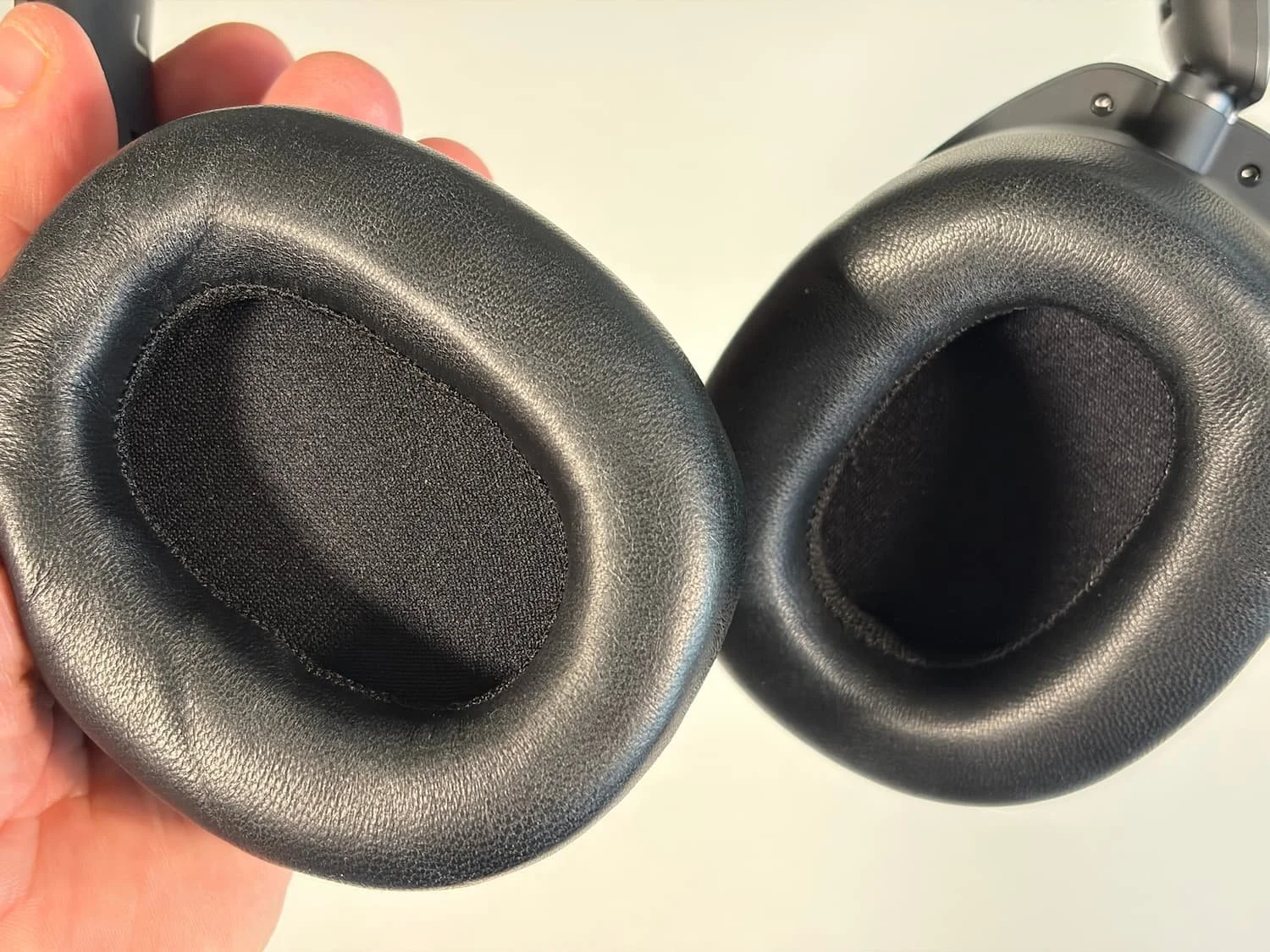
The headphones feel substantial. Top-grain leather earcups, a steel headband, noticeably soft lambskin pads. No unnecessary decoration. They look as expensive as they are.
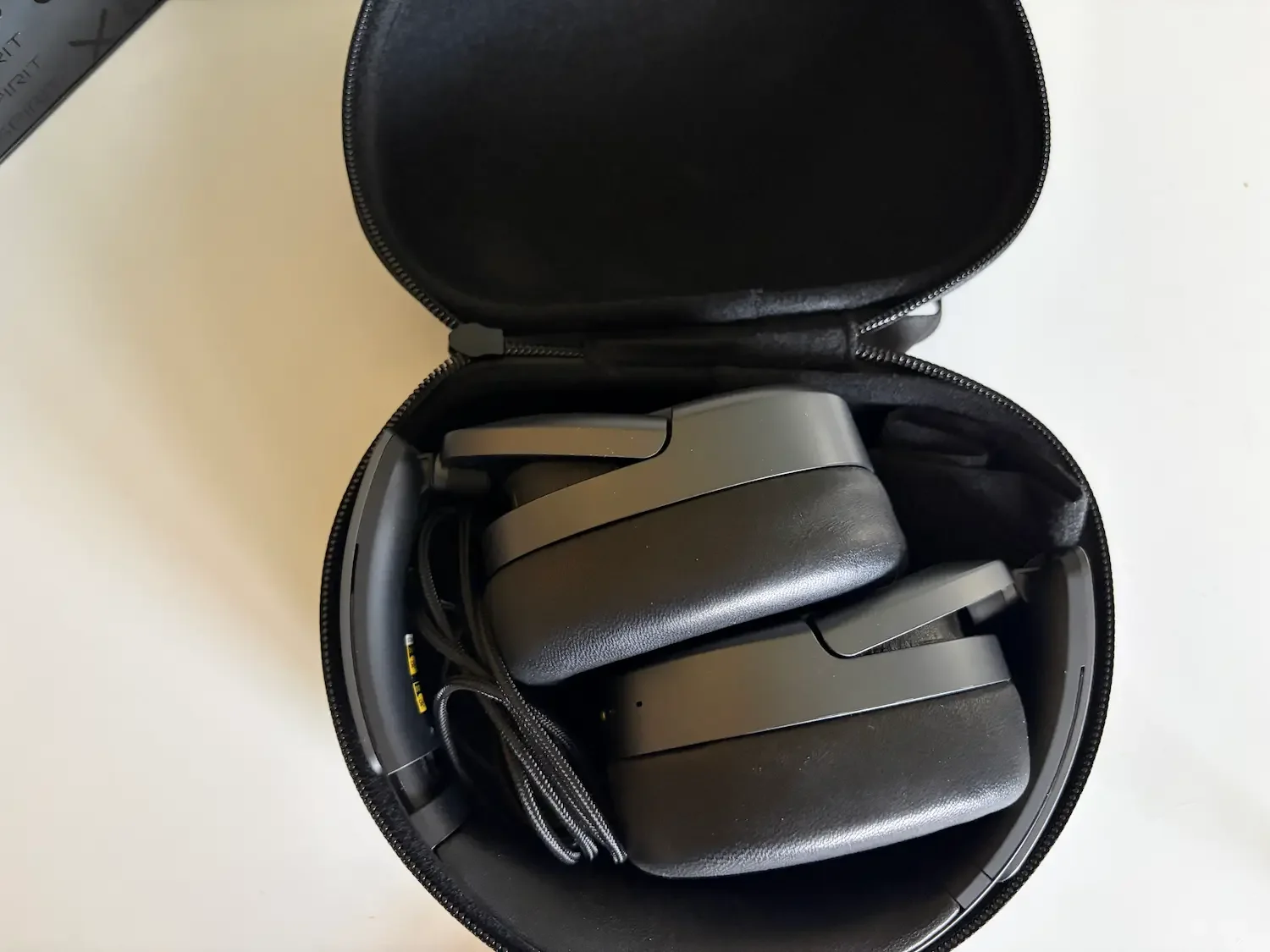
One disappointment: the carrying case. From outside it suits the premium character. Inside, a small foam divider separates the compartments and feels flimsy — honestly, it's a bit cheap. I find it surprising that Edifier put so much effort into the headphones and packaging and overlooked this. Not a deal-breaker, but it's the one thing I'd change first.
Comfort
At 347g, they aren't light. I've worn them regularly for 40 minutes to just over an hour at a time — working, listening during breaks, editing, walking Marlow — and they've been comfortable throughout. The headband sits nicely, the lambskin pads feel soft, and while there's some warmth after a while, that's true of most over-ear headphones.
Edifier includes a second set of cooling-mesh earpads. I mostly prefer the leather — the feel and the look — but the mesh pads are comfortable and the S5 still sound very good with them fitted. I haven't measured the difference between the two, so I won't claim one sounds better. I appreciate having the choice.
Comfort has been one of the S5's strengths for my normal sessions. Whether I'd say the same after five continuous hours, I haven't tested.
Sound Quality
This is the reason to buy them.
I was impressed immediately. No app, no EQ, no afternoon of experimenting with profiles — the default tuning suited me straight away.
I listen to a varied selection: Genesis, Norah Jones, George Michael, Moby, MC Solaar. What stands out isn't a particular frequency or exaggerated bass. It's the way the S5 bring different elements of a recording together while keeping them easy to distinguish.
Bass
I don't want heavy bass all the time. I enjoy a convincing low end, especially with electronic music, but I don't want it dominating everything else. The S5 get this balance right for my taste: enough presence to give music weight, but controlled, so I can follow the low frequencies without them interfering with vocals or other instruments.
It works particularly well with Moby. The bass contributes to the recording rather than becoming the main attraction. If you prefer stronger bass, the ConneX app has EQ. I've been happy with the default.
Vocals
One of the things I appreciate most. With Norah Jones and George Michael, vocals come across clear, detailed and quite intimate — a natural sense of presence without harshness or being overly forward.
I like hearing the finer details of a singer's voice, but I don't want headphones that make every recording feel like a technical demonstration. Music still needs to be enjoyable, and the S5 strike a very good balance. Vocal reproduction is one of the reasons I keep returning to them.
Instrument Separation
If I had to identify one area where the S5 stand apart from other headphones I've reviewed, it's instrument separation.
I find it remarkably easy to distinguish individual instruments even when a recording gets complex. There's a sense of order, with different elements occupying their own space instead of blending together.
Genesis is a good example — their arrangements can contain plenty of layers, and the S5 let me follow what's happening without making the sound feel clinical. The soundstage is reasonably wide, though I wouldn't call it enormous. What impresses me more is the clarity within that space.
For my listening preferences, this is probably their greatest achievement.
Treble
Plenty of detail in the higher frequencies, and I haven't found the presentation sharp or tiring. That matters — headphones can impress for ten minutes and become less enjoyable if the upper frequencies are too aggressive. No such problem here.
Taken together — controlled bass, excellent vocals, clear treble, separation of instruments — the sound suits my tastes extremely well. I can listen across genres without feeling the need to change settings. For overall sound quality, I prefer the S5 to any other headphones I've reviewed. That's subjective, but after more than a month of daily use I'm comfortable saying it.
Planar Magnetic Technology
One of my original reasons for wanting the S5. Most conventional headphones use dynamic drivers — a voice coil moving a diaphragm. Planar magnetic drivers use a thin diaphragm with conductive traces across its surface, driven by a magnetic field.
In the S5, Edifier uses its second-generation EqualMass technology with a diaphragm substrate measuring just 2 micrometres, aiming to distribute the driving force evenly and maintain better control of the diaphragm's movement.
The engineering is interesting, but buyers don't need to understand every detail. Planar magnetic drivers aren't automatically superior to dynamic ones — design and tuning still matter. What matters to me is the result, and in the S5 Edifier has produced the sound I was hoping for when I first became interested two years ago.
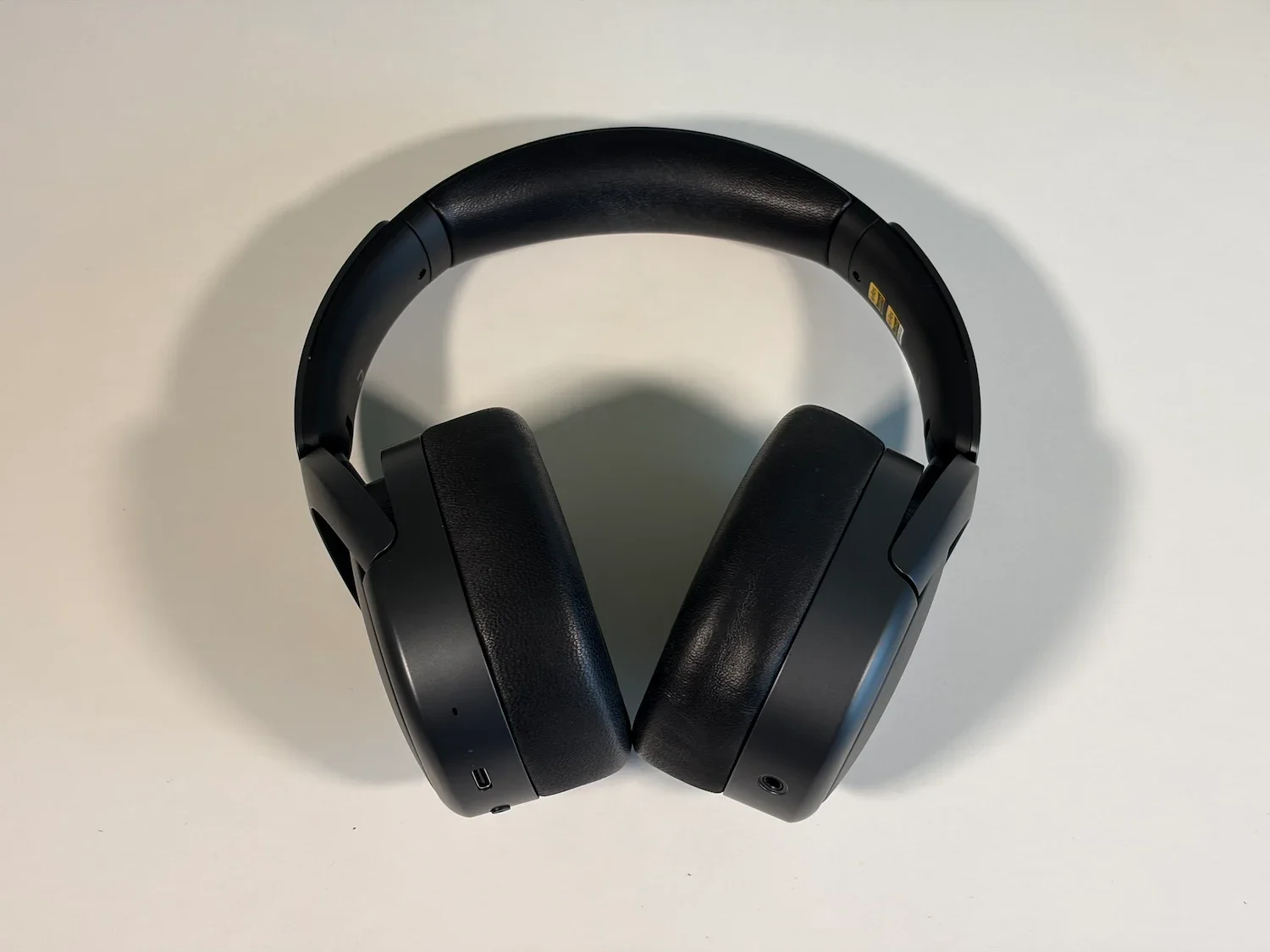
I love the design!
Testing With Different Sources
I always try headphones with several sources rather than just one phone.
MacBook Air (wired).
Connected with the supplied 3.5mm cable, listening through Spotify, Apple Music and YouTube. This remains one of my favourite ways to use them — the presentation and clarity feel very natural.
One note on volume: I initially found Spotify quieter than expected, then discovered volume normalisation was enabled. Switching it off improved matters noticeably. Even then, the MacBook's wired output was quieter than some Bluetooth sources, particularly the Google TV Streamer. Perceived volume depends on source, app, settings and the recording itself — I wouldn't call the S5 inherently quiet, but some combinations offer more volume than others.
iPhone 17 (Bluetooth).
The iPhone uses AAC. Despite that limitation, the headphones sound excellent — the same clarity, balance and separation I've enjoyed throughout. Spotify, Apple Music, YouTube, Prime Video, all consistently enjoyable. Video apps often sounded louder than music services, though that varied by content.
Questyle QCC Dongle Pro2.
A tiny USB-C Bluetooth transmitter I've recently started testing. I'll review it separately, but it's worth mentioning here because it makes a real difference with the S5.
Normally the iPhone connects over AAC. That's fine for everyday listening, but the S5 also support aptX Adaptive, aptX Lossless and LDAC, which the iPhone doesn't transmit natively. The Questyle dongle changes that: plug it into USB-C, pair with the S5, and you get compatible higher-quality codecs. It's small and light enough to add nothing to the phone's size or weight.
Compared with AAC, I prefer the sound through the dongle. The presentation feels more refined, and on familiar music I can hear differences in finer details. Not a dramatic transformation on every track, but noticeable. It's exactly the kind of accessory that makes sense with headphones like these — you've already invested in premium wireless, so it's worth exploring what a compatible source can deliver. Whether that's worth the extra expense depends on how seriously you take your listening.
Google TV Streamer 4K.
An unexpected favourite. Connection was remarkably fast thanks to Fast Pair, and Bluetooth performance has been excellent. YouTube, Prime Video, BBC iPlayer — dialogue clear, plenty of detail, enough volume.
What impressed me most was audio/picture sync. I couldn't detect any lip-sync delay during normal viewing. I haven't measured latency in milliseconds, so I won't claim the connection is technically delay-free, but I couldn't see or hear a mismatch in any app. That matters, because I've used wireless headphones where even a small delay makes television frustrating. Here it simply wasn't something I had to think about.
I also used the Spotify app on the Streamer. "Mama" by Genesis sounded excellent — the clarity and separation I'd come to expect. "cardigan" by Taylor Swift played noticeably louder, a reminder that recording and source affect perceived volume. The Streamer has turned out to be an excellent partner for the S5. I wanted these primarily for music, but I've ended up enjoying them for television too.
Thinkya JA-310R CD player.
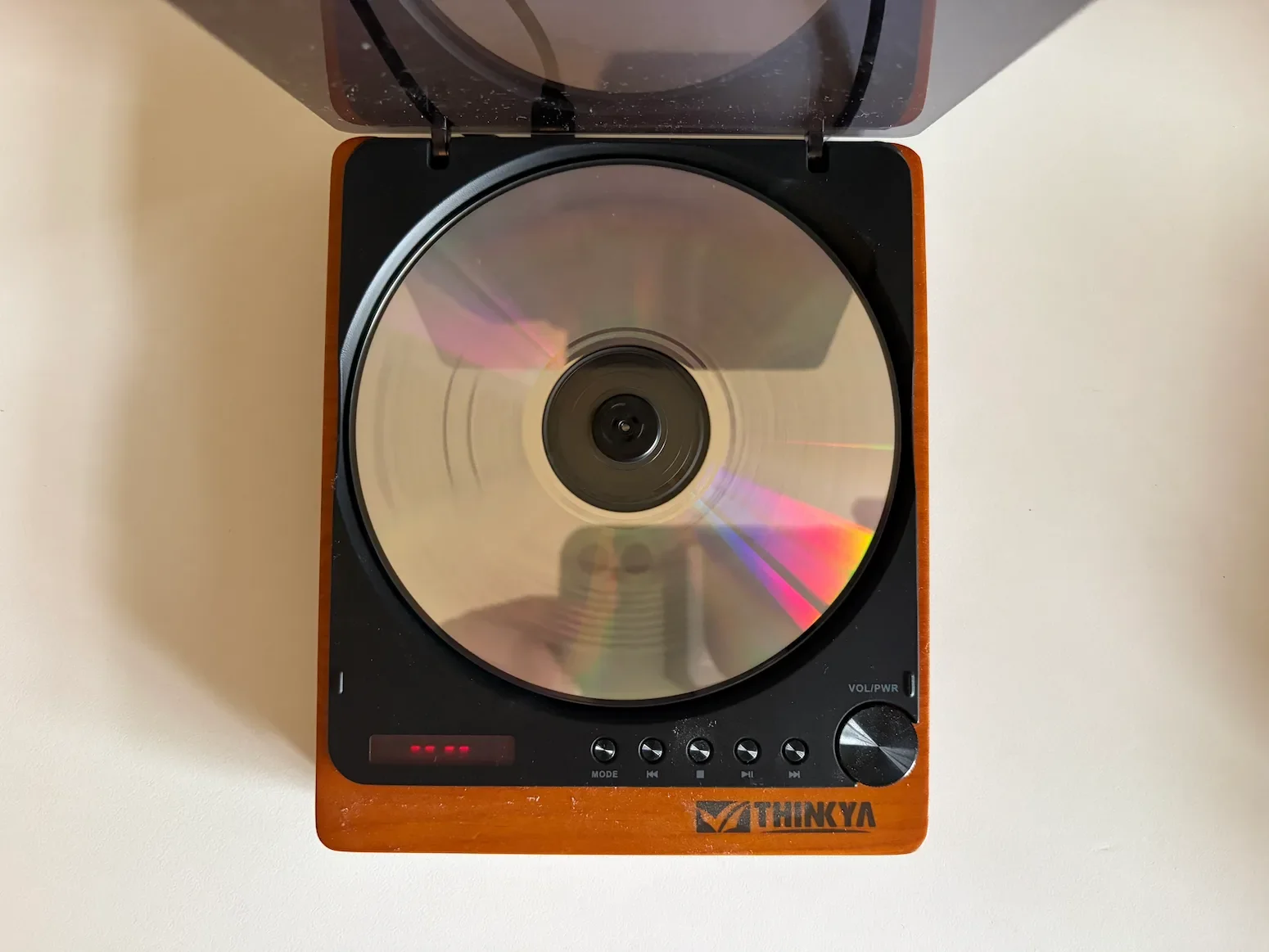
I've been enjoying CDs again, and connected the S5 through the 3.5mm cable. The result was excellent. I'm not suggesting CDs beat streaming — I simply enjoy choosing an album and listening without reaching for the next track, and the S5 fit that experience well. Their wired connectivity gives them more flexibility than Bluetooth-first headphones.
Everyday Use
After a month, the S5 have been easy to live with. Bluetooth has been consistently reliable with no significant connection issues.
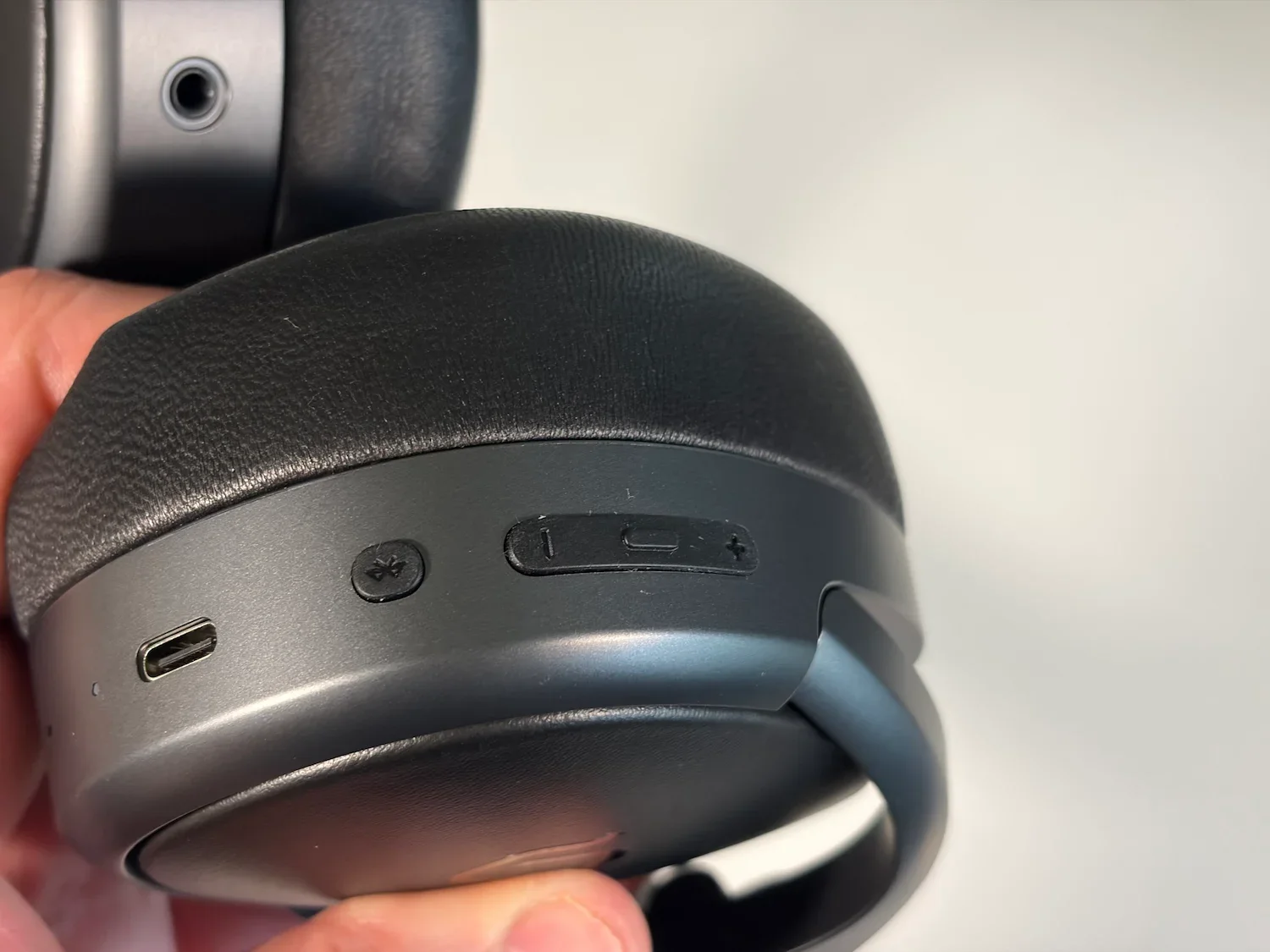
The physical controls are less convincing. I've said the same about other Edifier headphones, and the company still has room to improve. The buttons work, but the layout and operation aren't my favourite. That said, I usually control music from my phone or computer, so it hasn't been a major irritation.
The ConneX app offers preset profiles, EQ and control settings — useful for listeners who want a different balance, though I haven't felt much need to move away from the default. Phone calls were acceptable but nothing special; I wouldn't buy these for the microphone.
Battery: Edifier claims up to 80 hours. I haven't run a full endurance test and I don't listen for hours daily, so I can't verify it. But after a month of regular use, I've been impressed by how rarely I think about charging.
No ANC
No active noise cancellation, and at this price that's a fair criticism. Plenty of premium headphones include it, and it's useful for travel, commuting or noisy rooms.
I haven't missed it as much as I expected. The S5 provide good passive isolation, and at home or working I find external noise isn't too distracting.
But passive isolation isn't ANC. Low-frequency sounds — aircraft engines, train noise — are exactly where active cancellation makes a substantial difference. If I were buying primarily for flights or commuting, I'd choose a model with effective ANC. For the listening I do most often, its absence hasn't stopped me enjoying the S5. I'd like to see it in a future model, provided it doesn't compromise the sound that makes these appealing.
Worth Buying in 2026?
The S5 launched in 2024, and the market has moved on. Buyers can now find advanced ANC, spatial audio, sophisticated software and more compact designs.
The S5 aren't trying to win on convenience. Their main attraction is sound quality, and after a month of testing I think that gives them a strong reason to exist in 2026. For someone who listens primarily at home, values clarity and separation, and uses both wired and wireless sources, they're easy to appreciate. They're also worth considering on Android if you want the advanced codecs — and my experience with the Questyle dongle has strengthened the case for iPhone owners too.
At around $599-£500 , I consider them expensive. I understand the cost when I look at the construction, materials and listening experience, but the absence of ANC and the small compromises make full retail harder to recommend without qualification. Fortunately they've been discounted since launch, and Black Friday is approaching : a substantial discount makes them considerably more attractive.
Final Verdict
Yes, they were worth the two-year wait.
After more than a month, they've become my favourite headphones for sound quality. I appreciate the vocal reproduction, the instrument separation and the balanced approach to bass. They suit the music I enjoy without requiring much adjustment.
I'd change things: the case doesn't match the headphones, the controls could be better, and there's no ANC. None of that changes my overall impression of the sound.
For someone who enjoys sitting down with a favourite album, appreciates good audio equipment and wants headphones that make familiar music rewarding, the Edifier STAX Spirit S5 remain an excellent choice in 2026. At a good discount, I'd recommend them even more comfortably.
Jerome

Are the Edifier STAX Spirit S5 still worth buying in 2026? After a month of daily use and testing across five sources, here's my verdict on their sound, comfort and £500 price.