
Plaud Note vs Plaud NotePin S
This post contains affiliate links. As an Amazon associate I earn from qualifying purchase.
There are gadgets you review, enjoy for a week, then quietly put back in a drawer.
And then there are gadgets that quietly change your habits.
Not in a dramatic “new life” way. More like… they reshape the little routines that make up your working day. The way you start a meeting. The way you handle a call. The way you capture an idea before it disappears. The way you stop trusting your memory to do a job it was never designed to do.
That’s the category Plaud Note and Plaud NotePin S fell into for me.
And this is important: I’m not talking about first impressions anymore. I’m not talking about “testing for content.”
I’m talking about daily use.
I’m a full-time content creator, a dad of four, and my day is a constant mix of tasks, calls, ideas, admin, editing, writing, school messages, and those moments where something good pops into my head at the wrong time — on a walk, in the car, in the kitchen, between two real-life interruptions.
So when people ask me:
Plaud Note vs Plaud NotePin S — which one should I choose?
I don’t answer like a tech spec sheet.
I answer like someone who uses both tools for the same reason most men end up using them:
Because life is busy, and forgetting things is expensive.
If you want the deep dives, I’ve written full reviews on both (these are the “proper” separate articles):
Plaud Note review: https://www.dapperandgroomed.com/blog/plaud-note-review-this-ai-powered-voice-recorder-might-change-the-way-you-work
Plaud NotePin S review: https://www.dapperandgroomed.com/blog/plaud-notepin-s-review-the-wearable-ai-note-taker-for-meetings-calls-amp-ideas
This post is the comparison — the one you read when you’re trying to decide which one fits your life.
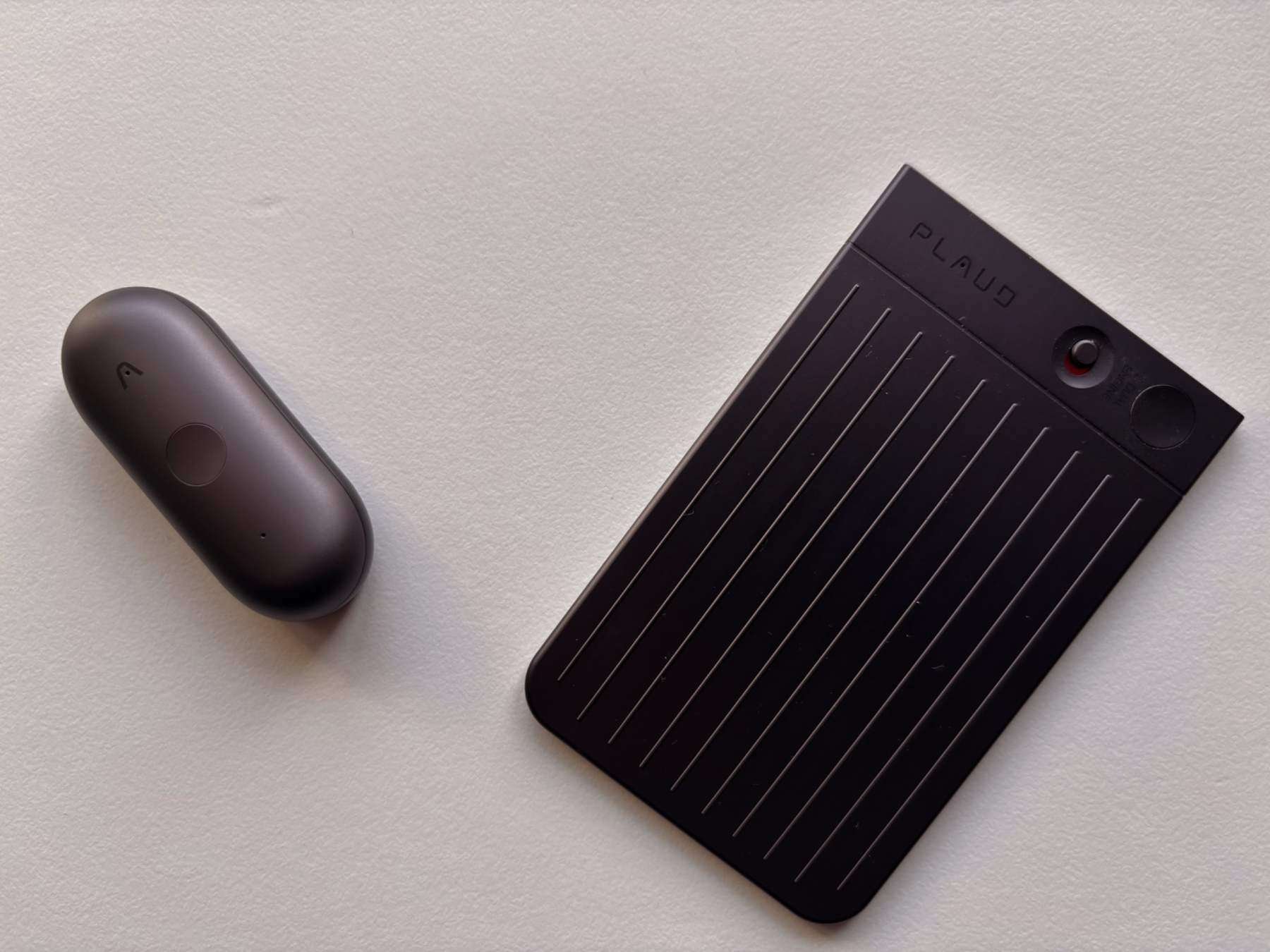
Plaud Note vs Plaud NotePin S
Let’s be honest: we’ve all tried to take notes properly.
We start with good intentions. A notebook. A clean page. A pen that actually works.
And then reality arrives.
A call starts earlier than expected. Someone speaks too quickly. You’re trying to listen and write at the same time and you end up doing both badly. Half your notes make no sense. The key detail disappears because your brain was busy spelling someone’s surname. And a week later you look at your notebook and think: What is this?
That’s the real problem.
It’s not that we don’t take notes.
It’s that modern life moves too fast for the old method.
And once you have an AI note-taker that captures the conversation and turns it into structured output — summaries, key points, actions — something changes. You stop scrambling. You stop relying on memory. You stop pretending your brain is a hard drive.
You just… work.
That’s why these two Plaud AI devices matter.
Not because they’re “cool tech”.
Because they reduce friction — the kind of friction that quietly drains your day.
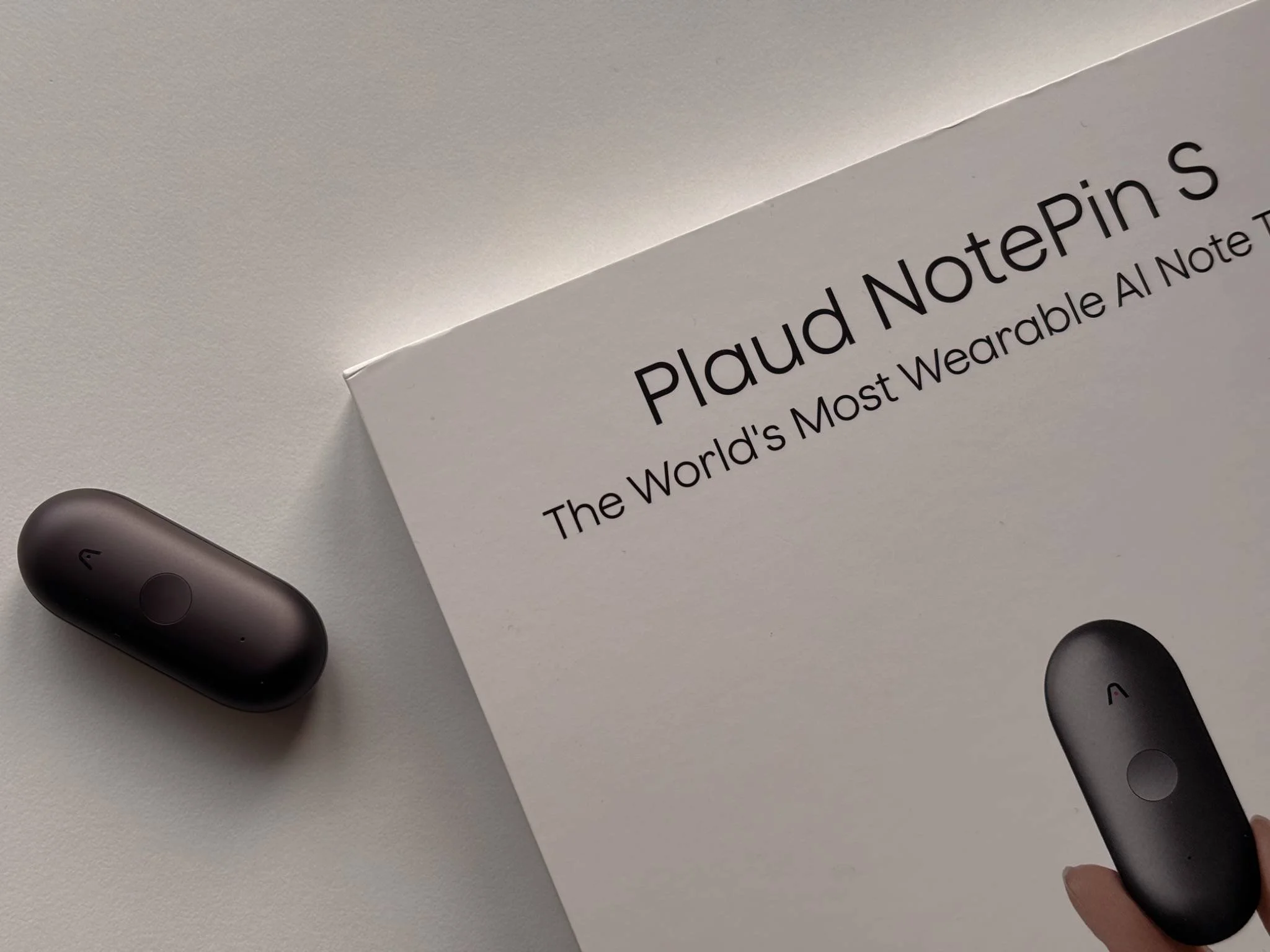
Plaud Note vs Plaud NotePin S: it’s not about features, it’s about where it lives
Here’s the simplest way I can explain the difference:
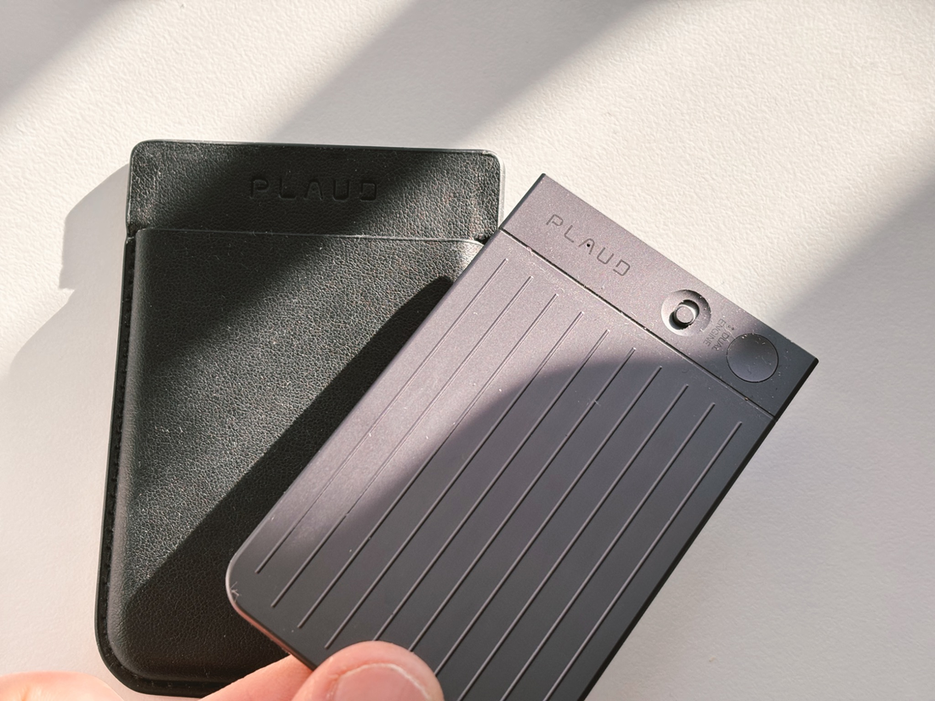
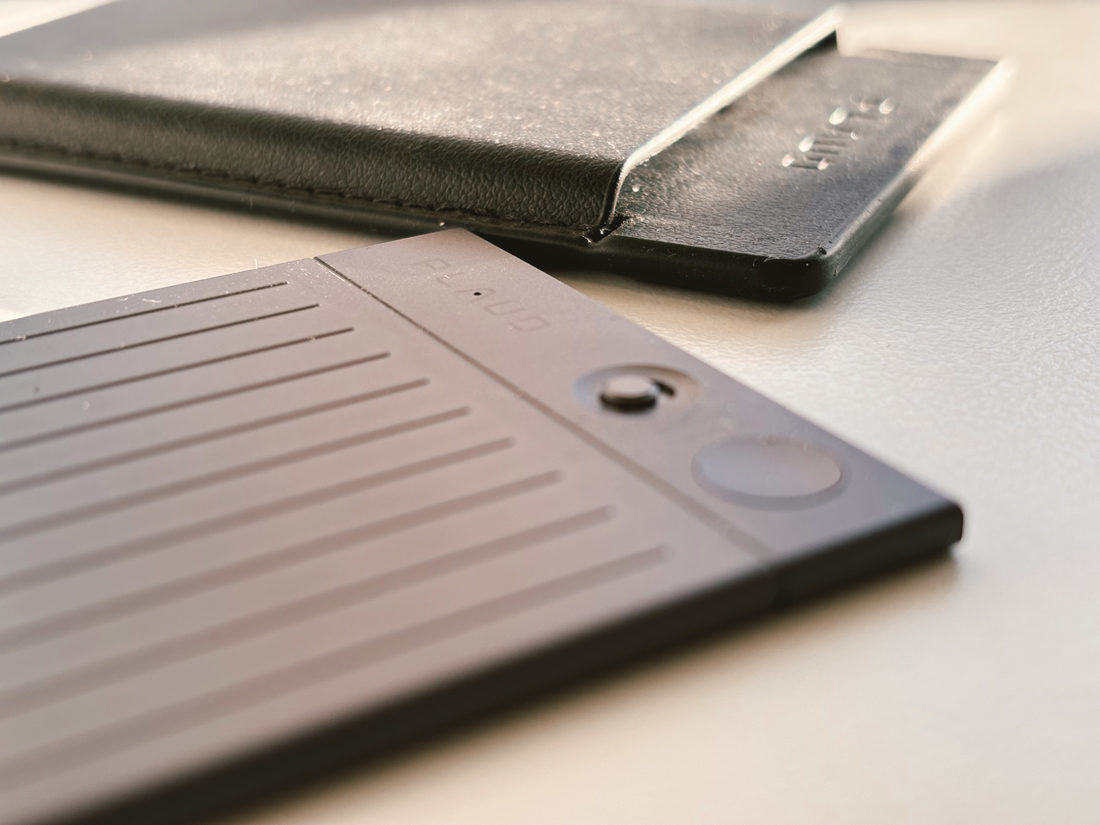
Plaud Note is the one that lives on your desk, in your bag, near your phone — a deliberate tool you pick up when you’re about to record something.
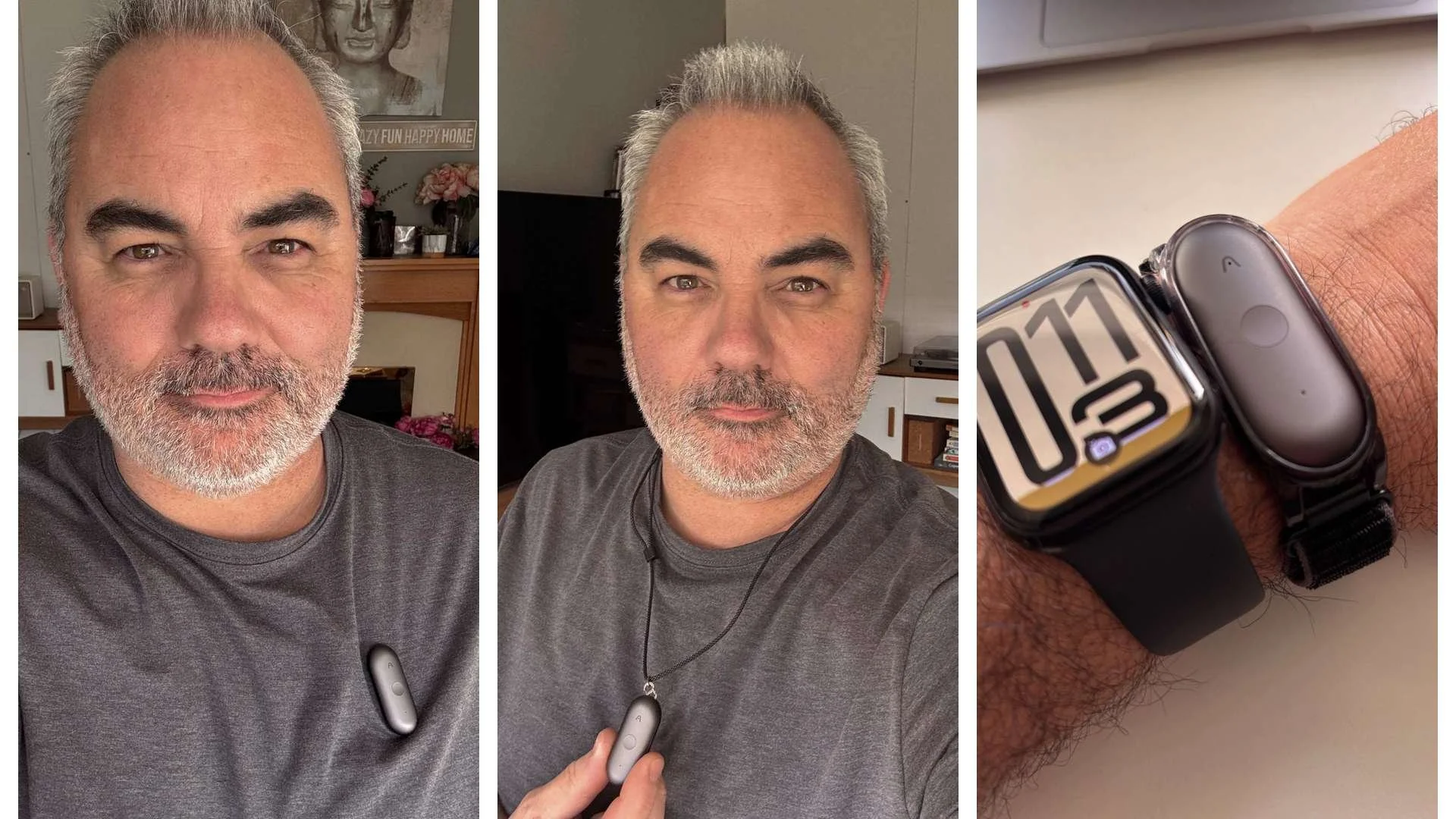
Plaud NotePin S is the one that lives on you — a wearable you can clip on and forget about until you need it.
That one difference changes everything.
Because the device you’ll use most is not the one with the best marketing.
It’s the one that fits your behaviour.
My daily reality
As a blogger, my work isn’t one clean block of focused time. It’s a thousand small blocks.
I’m writing posts. Planning titles. Editing. Replying to brands. Making YouTube plans. Testing products. Answering messages. Switching between “creative” and “admin” constantly. Some days I feel like I’ve done ten hours of work but I’ve never sat still long enough to feel properly finished.
So the question for me wasn’t:
“Do these devices work?”
Both work.
The question was:
Which one do I actually reach for when life is moving?
That’s where the difference between Plaud Note and Plaud NotePin S becomes very real.
Plaud Note: the intentional tool that makes you feel organised
The Plaud Note feels like the device you use when you’re in “work mode.”
It’s the one you bring out when you know you’re about to do something worth capturing: a proper call, a meeting, a planning session.
It gives you that feeling of preparation.
Like putting a notebook on the table before you start.
And I love that.
Because there’s something reassuring about intentionality. The Plaud Note is not a thing you wear all day. It’s a thing you decide to use. That decision creates a little moment of clarity:
This matters. I’m capturing it.
When I’m at my desk with my MacBook open, the Plaud Note makes perfect sense. It fits the environment. It fits the mindset.
And because it feels like a “proper” recorder, it also feels stable — like the grown-up choice.
If you mostly work at a desk, or you’re the kind of person who likes structured tools, Plaud Note will feel natural quickly.
Plaud NotePin S: the wearable that catches the moments you don’t plan
The Plaud NotePin S is a different energy entirely.
It’s less “I’m about to work” and more “life is happening.”
It’s the device you use when you don’t want to stop what you’re doing to open an app, find a note, type a sentence, or record something on your phone like a teenager.
It’s wearable. It’s quick. It’s closer to you — literally.
And this is where it becomes powerful.
Because the best ideas rarely arrive when you’re sitting neatly at your desk.
They arrive when you’re walking. Driving. Cooking. Doing school runs. Standing in a hallway. In between tasks.
That’s why the NotePin S has become strangely addictive for me: it captures the “in between” moments.
And as someone who creates content for a living, those moments are gold.
A line for an intro. A structure for a post. A hook for a YouTube video. A phrase that sounds right. A thought you don’t want to lose.
The Plaud NotePin S is better at catching those fragments — because it’s on you, not on your desk.
Which one do I use more?
This is where I’ll be honest, because it’s the only useful way to write this.
I don’t use them equally.
I use them differently.
Plaud Note is the one I use when I’m in a deliberate work session and I want the conversation or thought captured cleanly.
Plaud NotePin S is the one I use when I’m moving through the day and I don’t want my phone to become the centre of my life.
If you asked me which one feels more “essential” on a busy week, the answer is surprisingly:
Plaud NotePin S.
Not because it’s “better,” but because it fits my daily rhythm as a dad and a creator. It prevents loss. It stops those small ideas from evaporating.
But if you asked me which one I trust most for structured recordings — the kind where you really need accuracy and clarity — I’d still say:
Plaud Note.
Because it feels like the stable desk tool. The dependable recorder.
So the choice depends on what your life looks like.
Are you capturing conversations or capturing thoughts?
Whatever you choose, both devices do the core job very well.
Both Plaud Note and Plaud NotePin S record reliably. Both turn your audio into clean summaries and structured notes. Both feel genuinely useful once they’re part of your routine. This isn’t one of those comparisons where one product is clearly “bad” and the other is clearly “good.”
They’re both good.
The difference is not performance.
The difference is where the device lives in your day — and what kind of moments you’re trying to catch.
That’s why the best way to decide is to ask yourself one question:
Are you mostly trying to capture conversations… or mostly trying to capture thoughts?
Choose Plaud Note if you mainly want:
meeting and call capture
structured summaries you can refer back to later
a desk-based tool that feels like “work equipment”
something you pick up deliberately when you’re about to record
Choose Plaud NotePin S if you mainly want:
a wearable “idea catcher” for the day
something that lives with you, not on your desk
quick capture without breaking your flow
a tool that helps you rely less on your phone
And here’s the quiet truth:
A lot of people think they want the meeting recorder…
…but what they actually need is the thing that stops them losing thoughts.
Why it feels so satisfying?
This is the part that surprised me.
Using these devices doesn’t just help me remember things.
It makes my day feel longer.
Because when you stop taking messy notes, when you stop re-listening, when you stop trying to reconstruct what someone said, you recover time. Small pockets of time, but they add up.
And there’s another benefit that’s hard to explain unless you’ve experienced it:
You become a better listener.
When you know the recording is there, you stop panicking about capturing every detail. You stay present. You focus on meaning instead of transcription.
That has improved my work more than I expected — especially when I’m discussing content plans, product notes, or any conversation where the tone matters as much as the facts.
Be intentional about privacy
These devices are powerful because they record.
So the adult rule applies: be clear, be respectful, and be careful about where and when you record. I treat it like I treat a camera: it’s a tool, and tools come with responsibility.
That doesn’t need a lecture — it just needs maturity.
My honest verdict
If you’re choosing one, and you’re not trying to build a “tech setup,” here’s my honest answer:
If you work mostly at a desk:
Start with Plaud Note.
It’ll feel familiar, structured, and immediately useful. It’s the easiest entry point. It fits the “I want to record this call/meeting properly” use case perfectly.
If you’re always moving, juggling life, capturing ideas:
Start with Plaud NotePin S.
Because it will change the daily experience more. It catches the moments you normally lose.
And for someone like me — a busy dad, constantly switching between tasks — it’s the one that feels more like a companion than a gadget.
Final reflection: this is what modern productivity looks like now
There was a time when “productivity” meant doing more.
Now it means remembering better.
It means reducing friction.
It means not losing ideas.
It means not redoing work because you forgot what you decided.
It means having a system that respects your attention.
And that’s what these devices have given me.
Not perfection. Not magic.
Just a calmer day.
So if you’re stuck choosing between Plaud Note and Plaud NotePin S, don’t overthink it.
Look at your life.
If your work is structured and desk-based, choose the Plaud Note.
If your work happens everywhere — in motion, in fragments, in between moments — choose the Plaud NotePin S.
Either way, if you actually use it daily, you’ll wonder how you ever relied on memory alone.
The Plaud NotePin S is available on Amazon.com (here), Amazon UK (here)
The Plaud Note is available on Amazon.com (here), Amazon UK (here)
Jerome.