
TOZO NC20 Pro Review: 3 Weeks of Real-World Testing (2026)
Disclosure: Tozo kindly sent me the NC20 Pro earbuds for review purposes. As always, they have not seen or approved this review before publication, and the opinions are my own. This post contains affiliate links. As an Amazon Associate, I earn from qualifying purchases.
Post updated: 1st of June 2026
I've tested and reviewed audio gear for over 12 years, and before that I spent two decades working in sound-focused technical roles in the entertainment industry. I reviewed the original TOZO NC20 last year and came away impressed. So when the NC20 Pro arrived, I wanted to know if the "Pro" name actually meant something — or if it was just marketing.
I've now used them every day for three weeks with both my iPhone 15 Plus and my Google Pixel 9A, switching between music, YouTube, and calls. Here's my honest review.
Quick Verdict
| Sound Quality | Rich, warm, and enjoyable — better on Android with LDAC |
| Active Noise Cancellation | Very good for the price — cuts background noise effectively |
| Comfort | Excellent — lightweight, secure, easy to forget you're wearing them |
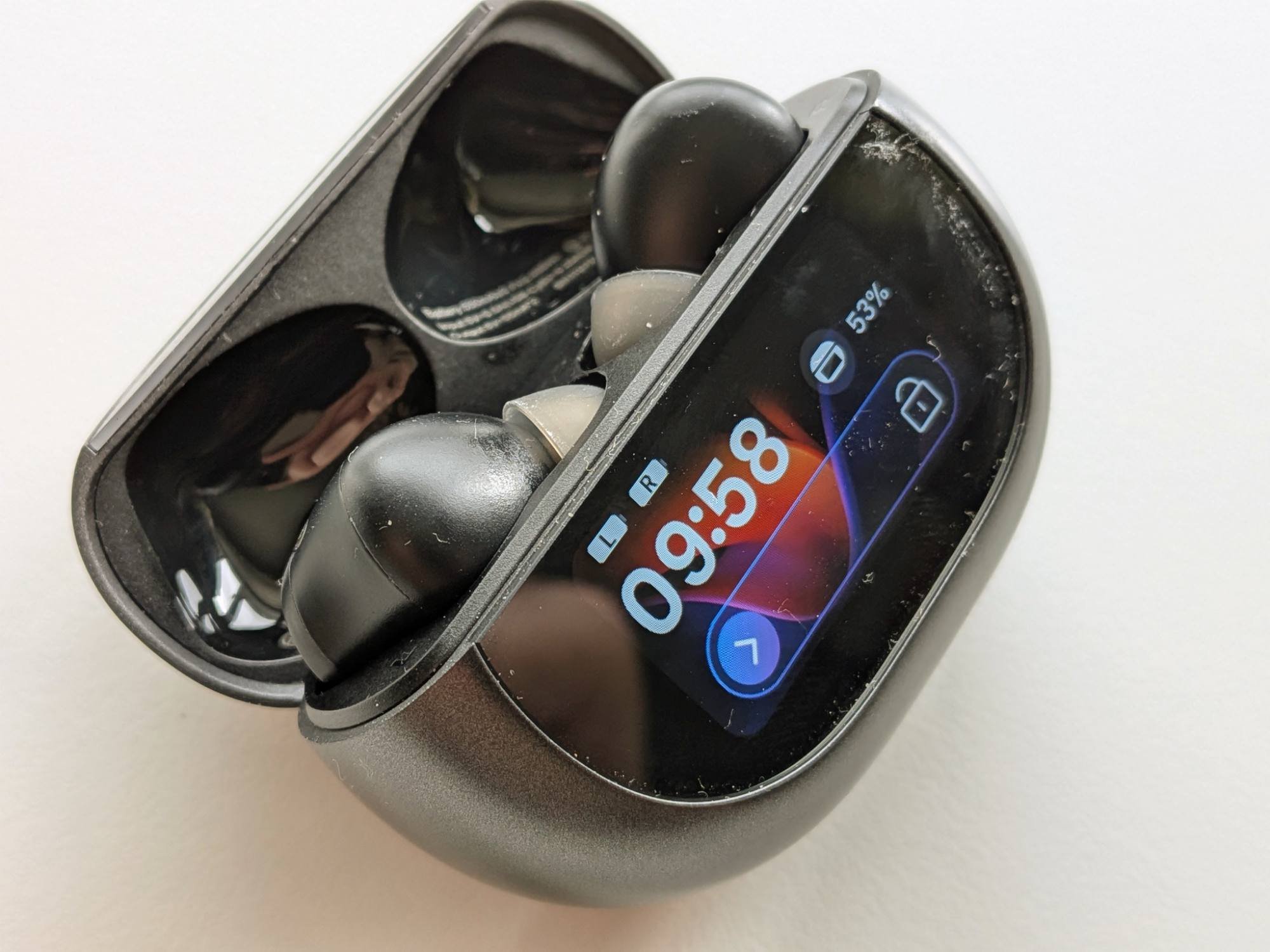
| Touchscreen Case | Clever, useful, and genuinely different — not a gimmick |
| Software Experience | Settings sometimes reset — you may need to re-enable LDAC or low latency more than you'd like |
All opinions are based on three weeks of hands-on, real-world use with both iPhone and Android.
How I Tested the TOZO NC20 Pro
- Duration: Three weeks of daily use, several hours at a time.
- Devices: iPhone 15 Plus and Google Pixel 9A — tested across both ecosystems.
- Environments: Commuting, desk work, home listening, and video streaming.
- Content: Spotify, YouTube Music, YouTube, Netflix, and phone calls.
- Tested on Android: LDAC Hi-Res Audio enabled for the best possible sound quality.
- Compared against: The original TOZO NC20, which I reviewed and used extensively last year.
- What I listened for: Sound quality, ANC performance, comfort over long sessions, video latency, and how the touchscreen case works in daily life.
I spent over 20 years working in sound-focused technical roles in the entertainment industry. I know when a pair of earbuds is tuned well — and when it's just marketing.
Design and First Impressions
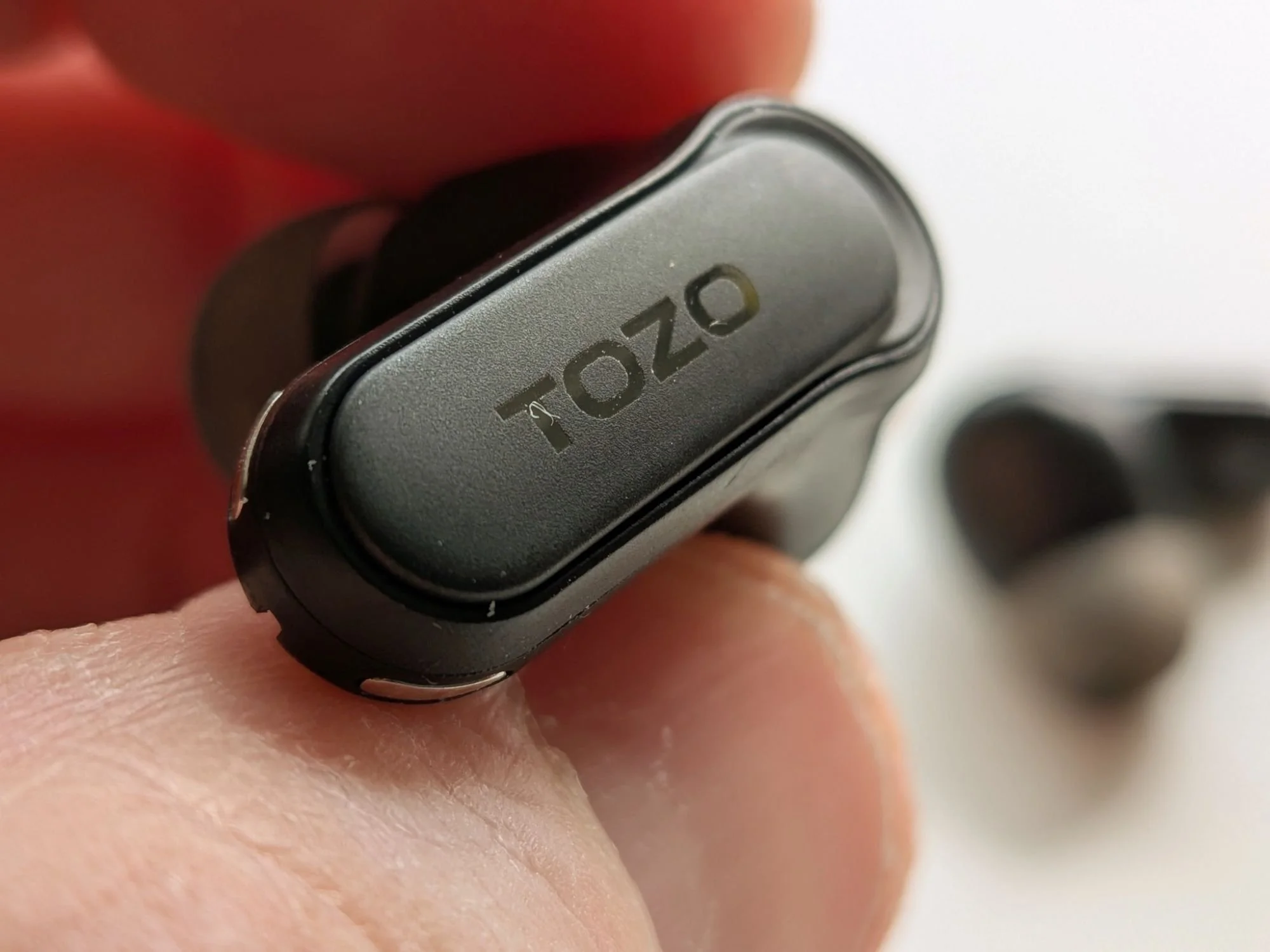
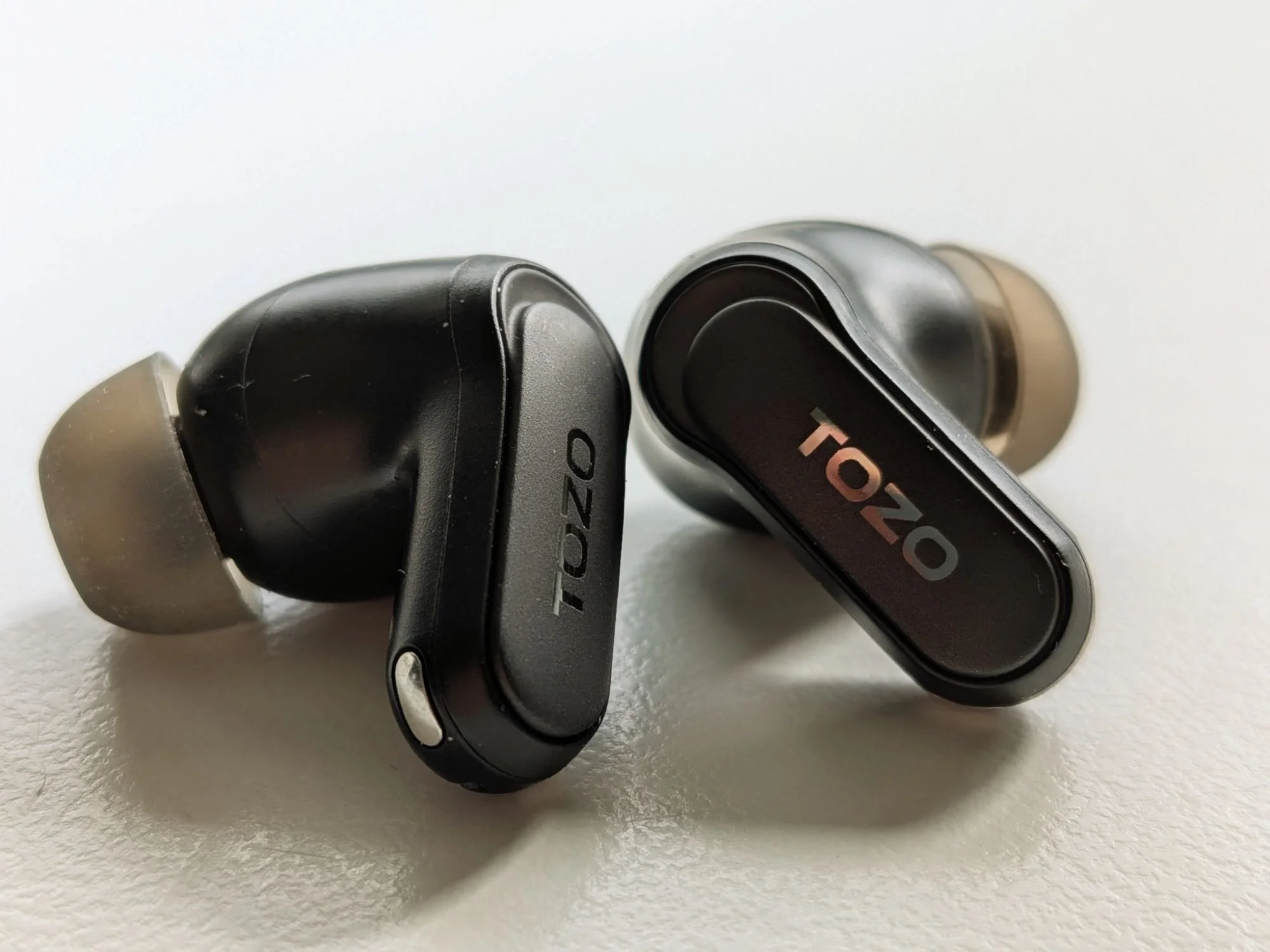
The first thing I noticed is that the NC20 Pro feels very familiar. If you used the original NC20, the shape, comfort, and general design language are all very close. That is not a bad thing. TOZO tends to get the basics right in terms of looks, and the NC20 Pro still feels like a modern, good-looking pair of earbuds without trying too hard.
The build quality is good for the price. Nothing here feels especially luxurious, but it does not feel cheap either. It feels like a well-made pair of everyday earbuds. The charging case is obviously the main talking point because of the touchscreen, and visually it helps the NC20 Pro stand out straight away from a very crowded market.
Comfort and Fit
Comfort is one of the strongest parts of this product.
I have been wearing these earbuds daily for three weeks, and they are the kind of earbuds you can forget about once they are in your ears. That matters. A lot. There are earbuds that look good on paper but become tiring after an hour. The NC20 Pro is not one of them.
For commuting, working at a desk, watching videos around the house, walking my dog Marlow or simply listening to music while getting on with the day, they are easy to live with. In that respect, they feel very similar to the NC20 I reviewed last year, and that is one area where TOZO has wisely not changed too much.
Sound Quality
For the price, I think the sound is very good.
I tested the NC20 Pro with both my iPhone 15 Plus and my Google Pixel 9A using Spotify, YouTube Music, YouTube, and video streaming in general. On both phones, the earbuds sounded rich and enjoyable, with a nice amount of bass and a warm presentation that makes everyday listening easy. They do not sound thin, harsh, or weak. They sound full enough to make music enjoyable without trying to become overly clever or analytical.
On my Pixel 9A, with LDAC enabled, the earbuds sounded better. The bass had more weight, the overall presentation felt a little richer, and there was a bit more depth to the sound. That is one of the advantages of using them with Android over iPhone. On the iPhone, they still sounded good, but Android definitely gives them a bit more room to shine.
These are not earbuds for someone chasing a highly detailed audiophile-style presentation. That is not really the point here. They are made for everyday users who want enjoyable sound, strong bass presence, and a comfortable experience — and in that respect they do a good job.
Watching YouTube and Streaming Video
This is where one of the biggest annoyances appeared.
When I watched YouTube or Netflix, I found that I had to go into the app and manually enable low latency mode. If I forgot to do that, I would notice delay between the audio and the video. And once you notice that kind of lag, it becomes hard to ignore. It is annoying, especially if you use your earbuds for video content every day like I do.
For me, this is one of the main weaknesses of the NC20 Pro. The feature is there, which is good, but it does not feel automatic or seamless enough. You should not really have to keep checking whether the right settings are active before watching something.
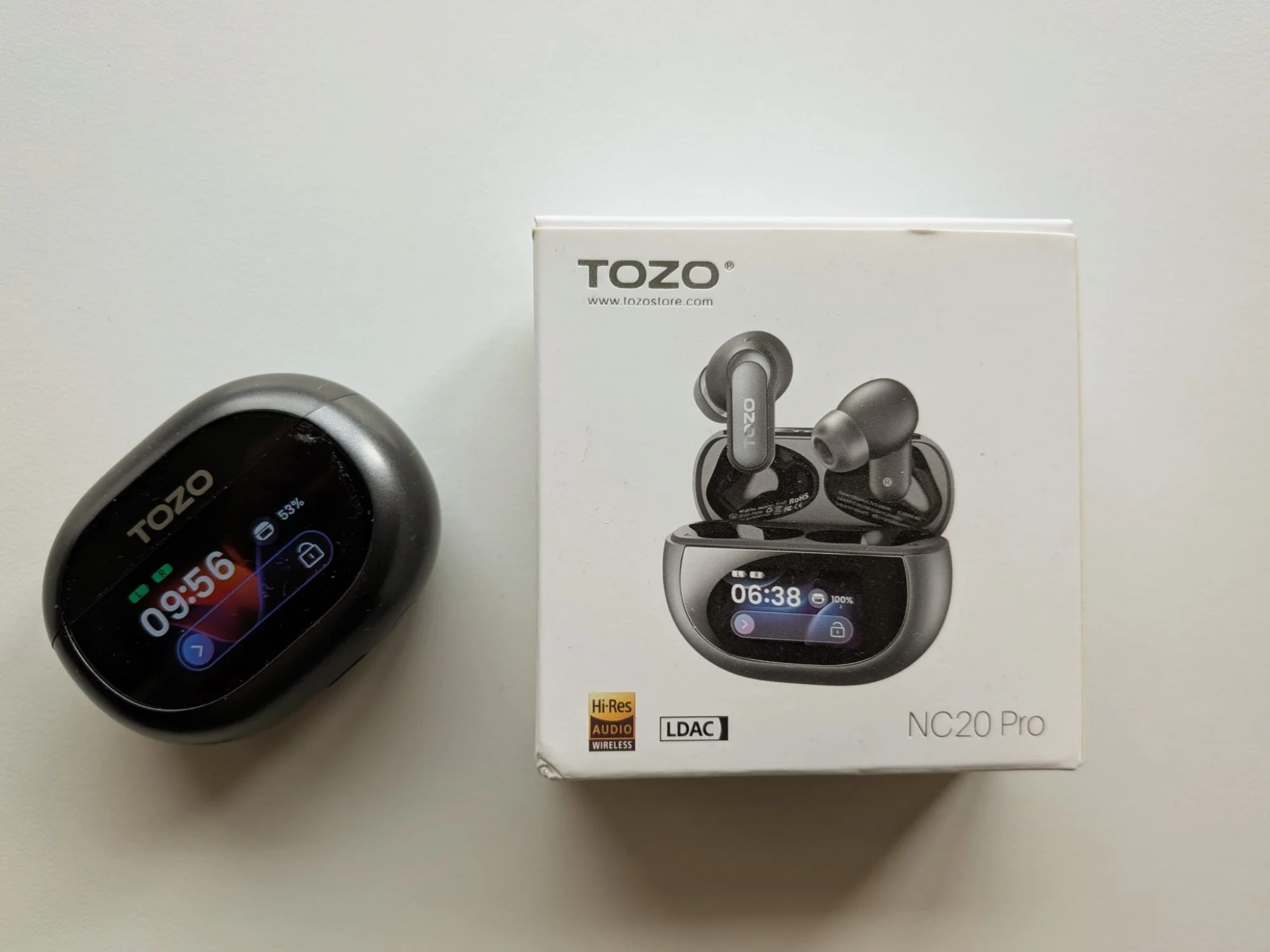
The Touchscreen Case
The star of the show here is the touchscreen charging case.
It is the one feature that gives the NC20 Pro its own identity. In a market full of earbuds that all start to look and feel the same, TOZO has added something that actually feels different. Being able to access settings directly from the case is clever, useful, and, in my opinion, pretty well done.
It makes the NC20 Pro feel more premium than a lot of earbuds around this price point. It is not just a gimmick. It adds convenience and gives the whole product a more modern feel. That is what makes the NC20 Pro interesting.
App, Settings, and Everyday Usability
This is really where the NC20 Pro loses a few points.
Each time I used them, it often felt as though some settings had gone back to default. So if I wanted to listen with LDAC on Android, or if I wanted the best possible experience for YouTube and video streaming with low latency, I had to go back into the app and re-enable the right option.
Over time, that becomes frustrating.
I think TOZO has done a lot right with the hardware side of the NC20 Pro, but the software side needs a little more polish. If that part worked more smoothly, the overall experience would feel much stronger.
Active Noise Cancelling
The active noise cancelling is very good for this price range.
I am not comparing it to the best premium earbuds on the market because that would not be fair. But for affordable earbuds around the $80 mark, I think the ANC performs very well. It cuts down background noise enough to make music and video listening more immersive, and it helps the NC20 Pro feel like a better-value product.
If you are buying these earbuds hoping for decent everyday noise cancelling without spending premium-brand money, I think you will be pleased.
Battery Life
Battery life has been solid in my own use.
I never felt I was constantly charging them, and that is always a good sign. For a product like this, the most important thing is whether it becomes annoying to live with, and in terms of battery, the NC20 Pro has been dependable. I could use them freely without worrying too much about when the next charge was needed.
That makes them well suited to daily use, whether you are listening to music, watching videos, or switching between devices throughout the day.
Small Issue with the Case
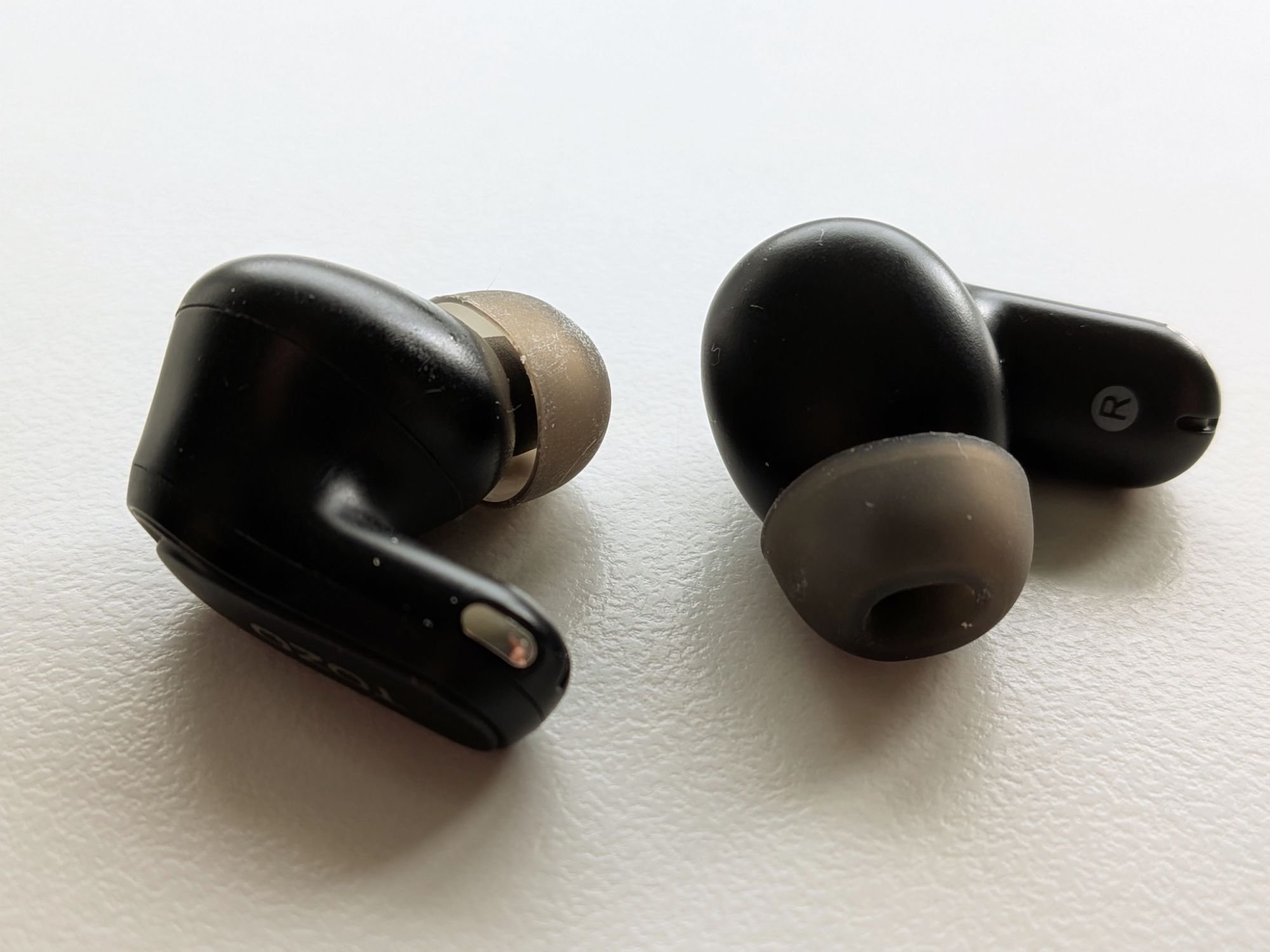
One thing that was already true of the NC20, and is still true here, is that the earbuds can be a little awkward to remove from the case.
It is not a major flaw, but it is worth mentioning because it keeps happening. You notice it more than you should. It does not ruin the experience, but it is one of those little details that reminds you this is not a perfect product.

TOZO NC20 Pro vs NC20: What's the Difference?
I reviewed the original TOZO NC20 last year and used them extensively. So the question I kept asking myself during these three weeks was simple: is the Pro worth the extra money?
The core experience is very similar. Both are comfortable, both sound good, both have solid ANC and excellent battery life. If you own the NC20 and you're happy with them, the Pro is not a must-upgrade — the fundamentals haven't changed dramatically.
But there are differences worth understanding.
The touchscreen case is the obvious one. The NC20 Pro's case gives you quick access to settings without opening the app. It's genuinely useful and makes the Pro feel more premium. The standard NC20 case is perfectly fine, but it's basic by comparison.
Sound quality is close. Both support LDAC and both sound rich and warm. The Pro has a slightly fuller bass, but it's a subtle difference — not night and day. On iPhone, they sound very similar. On Android with LDAC enabled, the Pro has a small edge in depth and weight.
The software experience is actually better on the original NC20. This surprised me. The standard NC20 just works — settings stay where you left them. The Pro, for all its hardware advantages, has that frustrating habit of resetting settings, which means you might find yourself re-enabling low latency mode for videos or toggling LDAC back on more often than you should.
Battery life is strong on both. Neither feels like a downgrade. Both last well through daily use.
So here's the simple breakdown. Get the NC20 Pro if you want the touchscreen case and don't mind occasionally checking your settings. Stick with the original NC20 if you want the more polished, set-and-forget experience — and if you'd rather save a bit of money.
Personally, I enjoy the Pro for what it offers. The case is clever. But the software quirks stop it from being the clear winner I expected.
Are They Worth Buying?
Yes, I think they are.
At around $80, the TOZO NC20 Pro offers a lot. You get a comfortable fit, strong everyday sound, better audio on Android with LDAC, good battery life, very decent active noise cancelling, and a touchscreen case that genuinely makes the product feel different.
The main thing holding them back is the software experience. If TOZO could improve the way settings are remembered, the NC20 Pro would feel much more polished and much easier to recommend without any hesitation.
Still, even with that issue, I think these are a solid pair of affordable earbuds. They look good, they sound good, and they are easy to enjoy. If you want a new pair of earbuds that offers something a little smarter than the average budget model, the NC20 Pro is well worth considering.
Final Thoughts
After three weeks of daily use, I think the TOZO NC20 Pro is a very solid pair of earbuds for the money. They are comfortable, they sound rich and enjoyable, the noise cancelling performs well for this price range, and the touchscreen case gives them something a bit different from the usual affordable earbuds on the market.
They are not perfect, but what matters most is that the NC20 Pro gets the basics right. They look good, feel good in the ears, offer strong battery life, and deliver a listening experience that is better than you might expect at this price.
Why You Can Trust This Review
I've been reviewing audio gear for over 12 years, and before that I spent 20 years in sound-focused technical roles in the entertainment industry. I don't rely on spec sheets — everything in this review reflects three weeks of real-world use with the TOZO NC20 Pro on both iPhone and Android, including daily listening, video streaming, and calls.
FAQ: TOZO NC20 Pro
-
Yes. Comfort is one of its strongest points. I found them easy to wear for long periods without discomfort.
-
It sounds good on both, but better on Android if you enable LDAC, which gives the sound a bit more depth and weight.
-
Yes, especially for the price. It is not flagship-level ANC, but it performs very well for affordable earbuds.
-
Yes. It is not just there for show. It gives you quick access to settings and helps the NC20 Pro stand out from many rivals.
-
For me, it is the way some settings seem to go back to default, which means you may need to re-enable low latency or LDAC more often than you should.
-
The Pro adds the touchscreen case and slightly fuller bass. The original NC20 has a more polished software experience with fewer quirks. If you want the smart case, go Pro. If you want the smoother, set-and-forget experience, the original is still excellent.
About the author: I'm Jerome, founder of Dapper & Groomed. I've spent the past 13 years testing and reviewing speakers, earbuds, headphones, skincare products, fragrances, grooming products, and men's lifestyle gear on this blog and on my YouTube channel. My reviews are never approved or previewed by brands — just honest, real-world testing from a dad who's been at this since 2013.

Final VR3000 review after testing with PS4, PS5, Apple Music and CapCut. Excellent gaming sound, a surprisingly good mic and a few small flaws.