
Edifier R1280DB Review: Still Worth It in 2026?
This post contains affiliate links. As an Amazon Associate, I earn from qualifying purchases. All opinions are my own and based on over a year of real-world daily use.
Post updated: 22nd of June 2026
I've been reviewing audio gear for years, but the Edifier R1280DB is one of those rare products that earned a permanent spot in my life — not because it's flashy, but because it just works. I've lived with these speakers for over 14 months now, using them daily with my turntable, TV, and streaming. They've become the benchmark I compare everything else to.
I spent over 20 years working in sound roles in the entertainment industry, and I've been reviewing audio gear for over a decade. Here's my honest take after 14 months of daily use — and whether they're still worth buying in 2026.
Quick Verdict
| Best for | Small to medium rooms, vinyl beginners, TV audio upgrades, desktop setups |
| Sound signature | Warm and balanced — great for vocals, podcasts, and relaxed listening |
| Bass | Clean and controlled — don't expect subwoofer-style rumble |
| Power output | 42W RMS total — enough to fill a medium room comfortably |
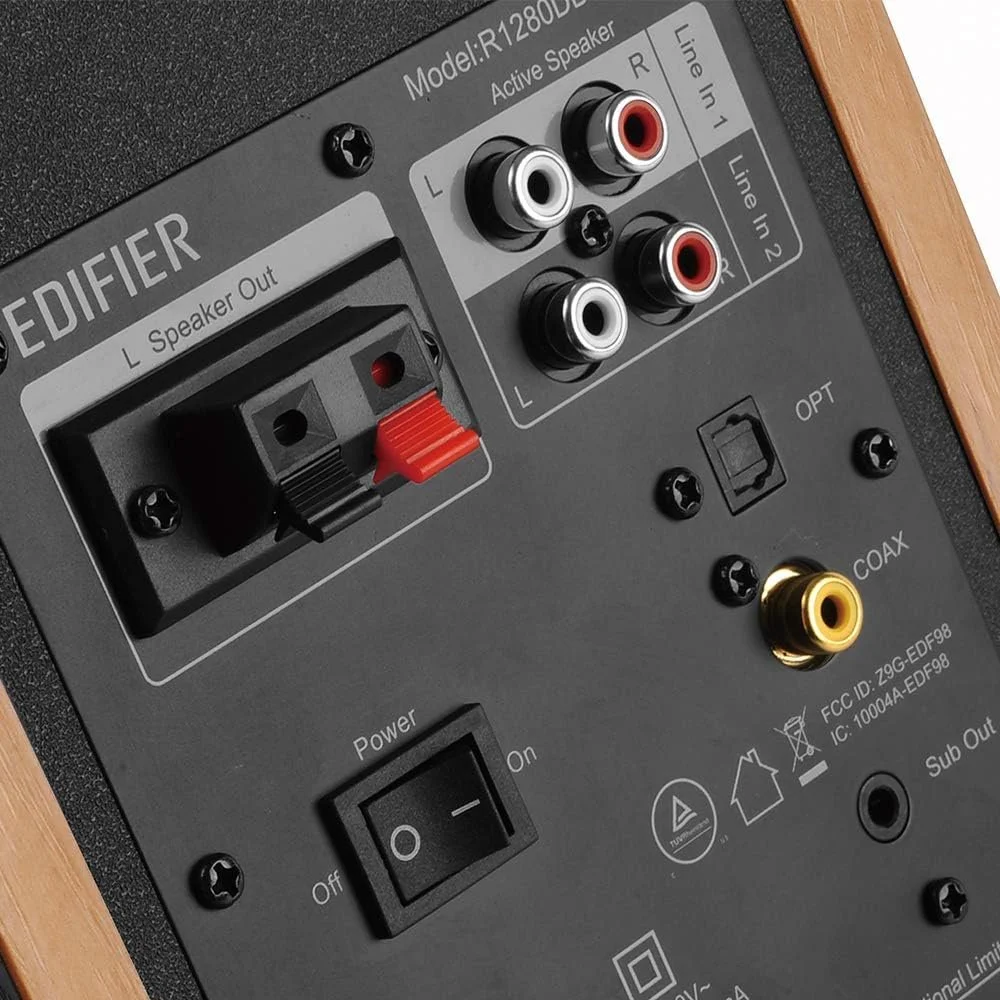
| Inputs | Bluetooth 4.0 + optical + coaxial + dual RCA, plus a remote |
| Worth it in 2026? | Yes — if you want the easiest "good sound for the money" active speaker setup |
How I Tested
I tested the Edifier R1280DB the way I actually use bookshelf speakers in real life: in my living room (approximately 16m²), with day-to-day listening, vinyl sessions on my Audio-Technica AT-LP120X turntable, and TV audio in the evenings. This wasn't a five-minute sound test — I've lived with these speakers for over 14 months, switching between sources daily and listening across dozens of genres.
Setup & placement: How easy they were to set up, how forgiving they are with placement, and how they sounded at sofa distance (approximately 2.5 metres)
Inputs & switching: Bluetooth for quick listening, RCA for vinyl, optical for TV — plus how smooth it felt to switch between sources
Sound balance: Overall tuning across jazz, indie rock, electronic, hip-hop (Kendrick Lamar, J Dilla), and classical (Glenn Gould's Bach recordings)
Dialogue clarity: TV and YouTube speech clarity at normal volume — and whether voices stay clear without having to crank the sound
Bass control: Not just "how much bass," but whether it stays tight and clean across different genres and volumes
Remote & daily use: Volume changes from the sofa, quick mute, and how often I actually used the remote versus getting up
Long-term reliability: Any issues after months of daily use? (Spoiler: none.)
Design & Build: A Touch of Retro with Practical Elegance
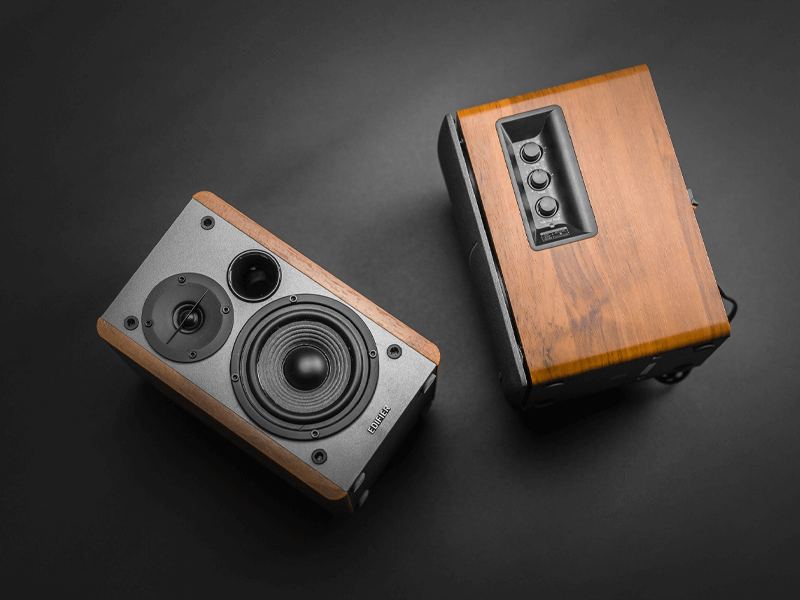
One of the things I love most about Edifier is that they don't try too hard to impress with gimmicks. The R1280DB have a timeless look — matte wood finish on the sides (available in black or brown walnut), black front panel, simple yet elegant branding.
They're the kind of speakers that blend into your interior effortlessly, whether you've got a modern setup or something more vintage. The volume and EQ dials are neatly hidden on the side of the right speaker — a brilliant decision that keeps the front clean. And I'll say this: the moment you touch those dials, you can feel the quality. It's smooth, tactile, and oddly satisfying to adjust your bass manually. There's something about physical controls that just feels right when you're listening to vinyl.
Each speaker measures 146mm (W) × 196mm (H) × 233mm (D), which makes them compact enough for a desk but substantial enough to look proper on a bookshelf or TV stand. They're not trying to disappear like some modern minimalist speakers — they have presence, but in a classy, understated way.
The build quality is solid for the price. MDF cabinets with wood veneer feel sturdy, not hollow or cheap. The front grille is removable if you prefer the exposed driver look (I keep mine on — cleaner aesthetic). The 4-inch bass driver and 13mm silk dome tweeter are well-integrated, and there's a bass reflex port on the back for extended low-frequency response.
One small gripe: the speaker wire connecting the two units is a bit short (around 2 metres). If you're placing them wide apart, you might need an extension. Not a deal-breaker, but worth noting.
Connectivity: Where These Speakers Truly Shine
Here's where the Edifier R1280DB really shine — and honestly, this is one of the main reasons they've stayed relevant in 2026 despite being a few years old now.
Inputs include:
Bluetooth 4.0 (stable connection up to about 8 metres in my testing, no dropouts)
Optical input (great for TV, consoles, or streaming boxes)
Coaxial input (less common these days, but useful for older CD players or DACs)
Dual RCA inputs (perfect for my turntable, or you could connect two analogue sources)
This range of connectivity makes them ideal for multi-purpose setups. I switch from my Audio Technica turntable to my phone (via Bluetooth) in seconds. And if I want to play something from my laptop at my desk, Bluetooth handles it without fuss.
Also worth mentioning — the included remote. It's small, IR-based (so you need line of sight), responsive, and covers all essential functions: volume up/down, input switching, Bluetooth pairing, mute. You won't think much of it… until you realise how convenient it is to have. I use it constantly — adjusting volume from the sofa, muting when someone calls, switching from vinyl to Bluetooth without getting up.
The only thing missing here is Wi-Fi streaming (Spotify Connect, AirPlay, etc.) or smart assistant integration. But honestly? For a sub-$200 speaker, I don't miss it. If you want those features, you're looking at a different price bracket entirely.
Sound Quality: Rich, Room-Filling, and Surprisingly Refined
Now to the heart of the review — how do they sound?
Let's be clear: these are not party speakers. You're not going to rattle the windows or feel the floor shake. But that's not their purpose. The R1280DB are tuned for listening, not showing off. And they deliver a sound signature that I'd describe as warm, balanced, and forgiving — the kind of tuning that makes long listening sessions genuinely enjoyable rather than fatiguing.
The Midrange: Where They Shine
Mids are where they shine — vocals, acoustic instruments, spoken word. Podcasts, jazz, classic rock — everything sounds articulate and natural. There's a slight warmth in the midrange that gives voices body without sounding boxy or nasal. When I'm listening to Chet Baker's vocals, there's an intimacy and presence that more clinical speakers sometimes miss.
This is also why they're brilliant for vinyl. The R1280DB handle those analogue textures beautifully. That slight warmth in Edifier's sound signature complements vinyl's natural richness without adding artificial colouration.
Highs: Crisp But Never Harsh
Highs are crisp but not piercing. The 13mm silk dome tweeter delivers detail without the harshness you sometimes get from cheaper metal tweeters. Cymbals have shimmer, acoustic guitar strings have texture, but I've had no ear fatigue even after hours of listening at moderate volume.
The treble extension goes up to 20kHz, which is perfectly adequate for most music. Audiophiles might notice a slight roll-off in the very top end compared to more expensive speakers, but in real-world listening, it's not an issue. If anything, it makes them more forgiving with poorly-mastered tracks or compressed streaming audio.
Bass: Clean, Controlled, and Honest
Bass is clean and punchy. It won't please bass-heads looking for sub-level thump, but it's balanced enough to give presence to electronic and hip-hop without overwhelming the mids. The frequency response starts at 55Hz, which means you get solid low-end extension for bookshelf speakers of this size — enough to feel kick drums and bass guitars, but not enough to shake your chest on trap or dubstep.
What really impressed me is how controlled the bass stays, even at higher volumes. There's no boominess or port chuffing. The 4-inch driver and rear port work together to deliver bass that's tight and musical rather than bloated.
If you're a bass-head, you'll want to add a subwoofer (the R1280DB don't have a dedicated sub-out, but you could split the signal before the speakers). For everyone else — casual listeners, vinyl enthusiasts, TV watchers — the bass is perfectly adequate.
Soundstage & Imaging
At mid-volume (around 40-50% on the dial), the speakers fill my 16m² living room without distortion. The soundstage is reasonably wide for near-field or mid-field listening (I sit about 2.5 metres away), with decent stereo separation. You can pick out individual instruments in a mix, and there's a sense of depth when listening to well-recorded jazz or classical.
Push them to the limit (80%+ volume), and yes — you'll start to hear some compression and the sound gets a bit congested. But they're not meant to blast. For casual, everyday listening at sensible volumes? They're flawless.
Power & Volume
With 42W RMS total output (21W per channel), they have enough power for small to medium rooms. I've never felt the need to push them beyond 60-70% volume, even when I want things loud. They get surprisingly punchy at higher volumes without distorting, which is impressive for speakers at this price.
Why the R1280DB Still Win in 2026
Versatility. The combination of Bluetooth + optical + dual RCA makes them more flexible than almost anything else at this price.
Sound tuning. The R1280DB hit a sweet spot between "fun" and "accurate." They're not as clinically flat as studio monitors (which can sound boring for casual listening), but they're not overly coloured either. They just sound... nice. Musical. Easy to live with.
Reliability. These have been on the market for years, and they've built a reputation for lasting. No known widespread issues, solid warranty support from Edifier, and a huge user base means plenty of reviews and troubleshooting help if you need it.
The market has evolved — there are now speakers with Alexa built-in, Wi-Fi streaming, room correction, and all sorts of bells and whistles. But here's the thing: most people don't need that stuff. They just want speakers that sound good, connect easily, and don't cost a fortune. That's still the R1280DB in 2026.
What Could Be Better?
Of course, nothing's perfect. Here are the honest limitations worth noting:
No aptX or LDAC. While Bluetooth is solid and stable, audiophiles might notice the lack of high-resolution wireless codecs. If you're streaming lossless audio from Tidal or Qobuz, you'll want to use the optical or RCA inputs instead.
Short speaker wire. The cable connecting the two speakers is only about 2 metres, which limits placement flexibility. Not a huge issue for most setups, but worth noting.
Remote requires line of sight. It's IR-based, not RF, so you need to point it at the speakers. Minor inconvenience, but I've gotten used to it.
For me personally, these are not deal-breakers. But it's good to be aware depending on your expectations.

Frequently Asked Questions
-
Absolutely. The optical input makes them perfect for connecting to a PlayStation, Xbox, or gaming PC. Dialogue clarity is excellent (important for story-driven games), and the soundstage gives you decent positional audio. They won't give you the surround sound of a proper gaming headset, but for casual gaming or single-player experiences, they're brilliant.
-
Yes — this is one of their best use cases. The dual RCA inputs are perfect for turntables. I use mine with an Audio Technica AT-LP120X (which has a built-in preamp), and the sound is warm, detailed, and musical. If your turntable doesn't have a built-in preamp, you'll need to add one between the turntable and the speakers.
-
For pure dialogue clarity and ease of setup, a decent soundbar might edge them out slightly. But for music listening and overall sound quality, the R1280DB are miles better than most soundbars under £200. If you watch TV and listen to music, these are the better choice. If you only watch TV and want something that sits under your screen, a soundbar might be more convenient.
-
Perfect for small to medium rooms. They don't need to be cranked to sound good, which makes them ideal for apartments where you can't blast music. At low to moderate volumes, they still deliver full, balanced sound without sounding thin or lifeless.
-
Yes, and many people do. They're a bit larger than typical desktop speakers, so make sure you have the space. The Bluetooth connection makes it easy to switch between your computer and phone, and the side-mounted volume dial is handy when you're sitting at a desk.
-
Nope. These are active/powered speakers, which means the amplifier is built-in. You just plug them into the wall and connect your source. That's part of what makes them so convenient — no need for separate components.
Who Should Buy the R1280DB (And Who Shouldn't)
Buy these if you:
Want versatile, easy-to-use speakers that "just work"
Listen to a mix of music, podcasts, TV, and vinyl
Value warm, musical sound over clinical accuracy
Want multiple input options (Bluetooth + optical + RCA)
Have a budget of around $150-£130 and want the best value
Appreciate physical controls and a remote
Don't care about smart features or voice assistants
Skip these if you:
Need Alexa, Google Assistant, or AirPlay integration
Want the absolute flattest, most accurate studio sound (get Presonus Eris or JBL 305P instead)
Need massive bass without adding a subwoofer
Require aptX or LDAC Bluetooth codecs for hi-res wireless
Final Verdict: Are the Edifier R1280DB Still Worth Buying in 2026?
Absolutely. These speakers have aged like fine wine — reliable, beautifully tuned, and still one of the best value-for-money bookshelf speakers out there.
They're ideal for people getting into vinyl, those upgrading from small Bluetooth speakers or laptop audio, anyone wanting better sound for home use without going full audiophile, and multi-purpose setups (TV + music + turntable).
If you've got a turntable — especially something like the Audio Technica AT-LP60X or AT-LP120 — these are a perfect match. I've used them daily for over a year, and I don't see myself replacing them anytime soon.
The market has changed. There are fancier speakers now, smarter speakers, more feature-packed speakers. But the R1280DB still do what they've always done: deliver warm, engaging, versatile sound at a price that makes sense. They're not trying to be everything to everyone — they're just trying to be really good at the basics. And they succeed.
For the price, you're getting speakers that sound like they should cost way more, with connectivity that puts them ahead of most competitors, and a build quality that'll last years. That's still a winning formula in 2026.
Final thought: The R1280DB aren't perfect. But they're honest, versatile, and genuinely enjoyable to live with. And in a world of overhyped, overpriced audio gear, that's worth a lot.
— Jerome
About the author: Jerome is the founder of Dapper & Groomed. He spent over 20 years working in sound roles in the entertainment industry and has been reviewing audio gear, tech, and men's lifestyle products since 2013. His reviews are never approved or previewed by brands — just honest, real-world testing.
I’ve tested these Edifier headphones and speakers myself. Here are 5 Prime Big Deal Days 2026 deals worth checking out, with discounts up to 33%.