
Noble Sceptre Review: Unlock Hi-Res Audio on Your iPhone
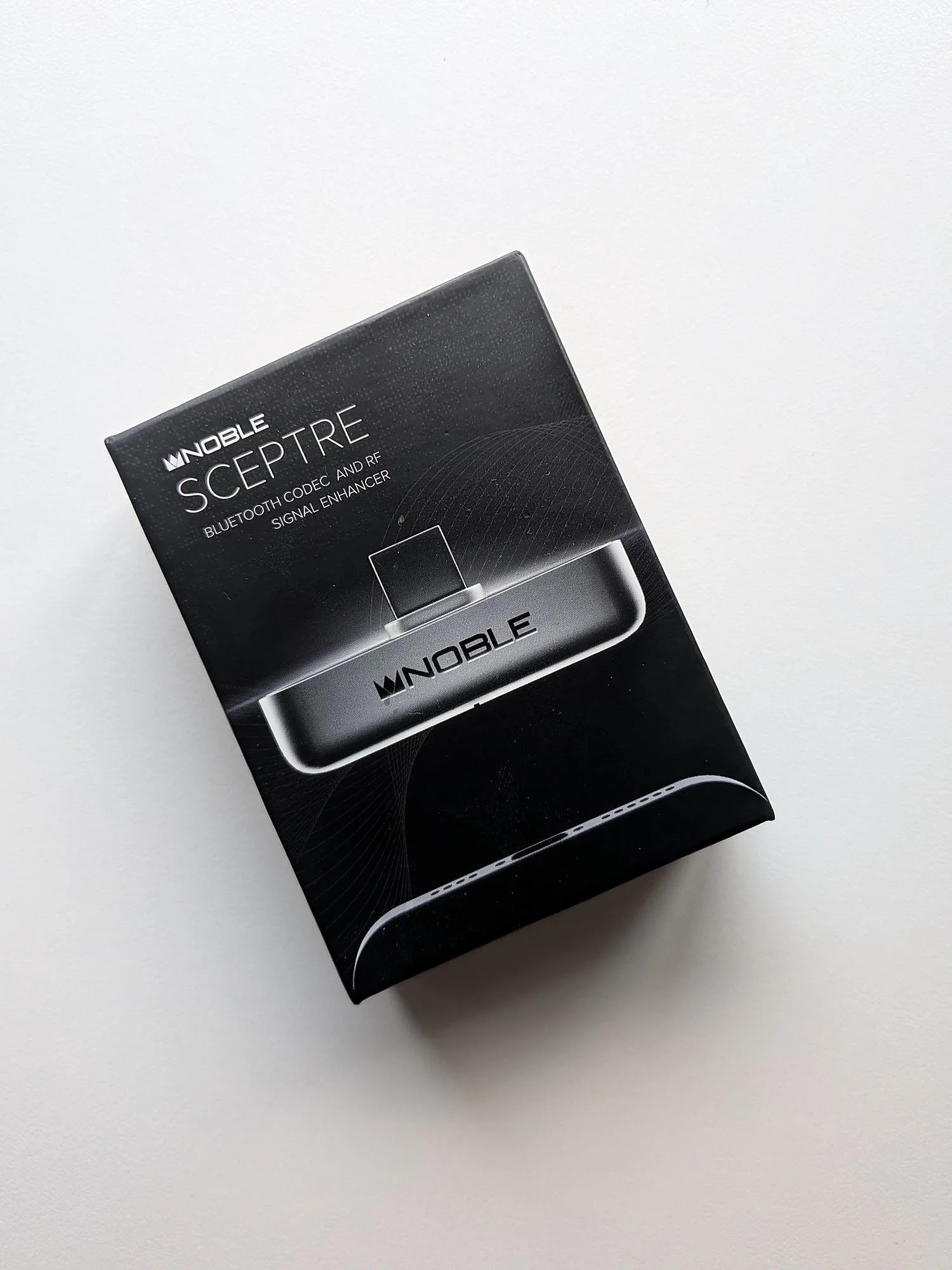
At Dapper & Groomed, we cover two things with genuine obsession: grooming — skincare, fragrance, the rituals that make a man feel put together — and audio tech. Not as a checkbox, but because sound quality is something I've cared about deeply for a long time. Before launching this site, I spent twenty years working in the entertainment industry in Spain, where audio wasn't background noise — it was the job. I've reviewed dozens of headphones, earbuds, and speakers since, and that professional foundation informs every listening test I run.
So when I tell you that plugging the Noble Sceptre into my iPhone 15 Plus and switching from AAC to LDAC/Aptx was a genuinely startling moment, I want you to understand that I don't use that word lightly.
There's an irony sitting at the heart of Apple's audio story that has quietly frustrated me for years. This is the company that gave us the iPod and Airpods. The company that built iTunes and essentially dragged the music industry into the digital age. And yet, in 2026, Apple continues to cap Bluetooth audio transmission at AAC — a perfectly competent codec, but one that puts a hard ceiling on what your headphones can actually deliver.
To understand why that matters, you need to know what a codec actually does. When your phone sends audio wirelessly to your headphones, it compresses that signal for transmission. AAC, the codec Apple defaults to, does this reasonably well — but it operates at a maximum bitrate of around 250kbps. LDAC, Sony's hi-res wireless codec now widely adopted across the Android and headphone ecosystem, can transmit at up to 990kbps. AptX Adaptive pushes further still. The difference in raw data being sent to your ears is not trivial.
If you're streaming on Spotify, you might not lose sleep over this. But if you're a Qobuz subscriber and you're listening through an iPhone, there's a painful irony at work. You're paying for a Ferrari and Apple is quietly fitting a speed limiter you didn't ask for.
I've tested some exceptional earbuds on this site over the years — the Status Pro X, currently my favourite pair of earbuds on the market, and the planar magnetic Edifier Stax S10 among them — and each time I've connected them to my iPhone for review purposes, there's been a low-level frustration humming in the background. These are LDAC-capable devices being asked to perform with one hand tied behind their back.
The Noble Sceptre is, in essence, the device that unties that hand. A compact Bluetooth dongle that plugs into any USB-C device — iPhone, Android, Mac, Windows laptop — and handles Bluetooth transmission externally, bypassing your device's built-in limitations entirely. With it, your iPhone can suddenly transmit in LDAC or aptX Adaptive, exactly as a high-end Android flagship would natively.
I tested it. The difference was not subtle.
What the Sceptre Actually Is?
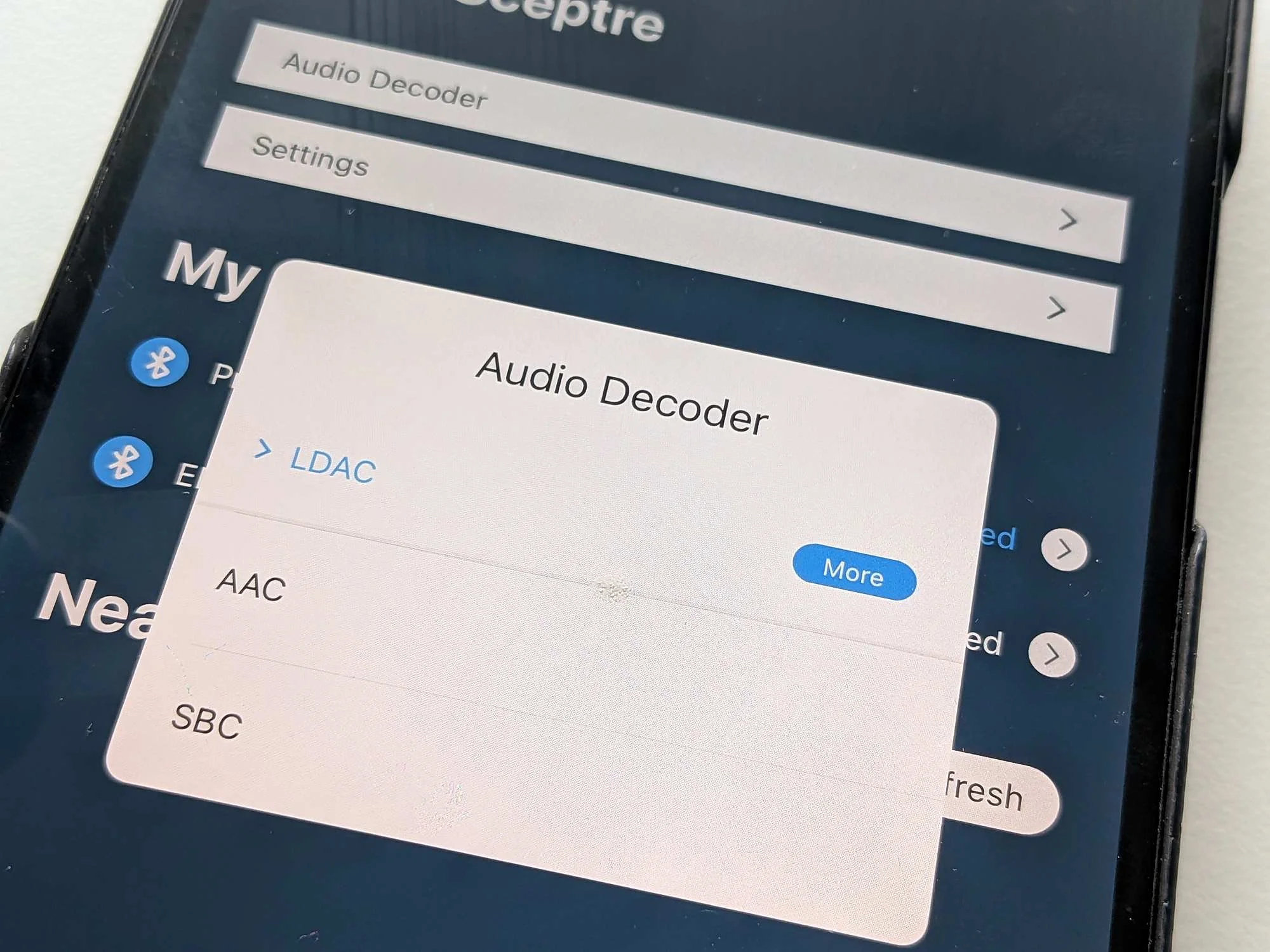
Physically, it's a small, well-built dongle — compact enough to forget it's there — that plugs directly into your USB-C port and takes over Bluetooth transmission from your device entirely. At its core sits Qualcomm's QCC5181 chipset running Bluetooth 5.4. Supporting LDAC, aptX Adaptive, AAC, and SBC, codec selection is handled through the Noble app. Range sits at 20 metres, which comfortably covers real-world listening scenarios. Setup beyond the initial pairing is minimal: once configured, you simply plug it in and it remembers what you need it to do.
Who is it for?
Let me be clear about who this review is written for. If you're an iPhone user who has grown tired of being locked out of truly high-quality wireless audio — if you've invested in a great pair of headphones or earbuds and suspect your phone is quietly undermining them — this section is for you specifically.
The Sceptre makes most sense in two scenarios. First, if you're someone who refuses to default to AirPods and wants to use genuinely high-performing third-party earbuds or headphones with your iPhone at their full capability. Second, if you're a hi-res audio enthusiast — a Qobuz subscriber, say — who wants every bit of that investment to actually reach your ears rather than being compressed into submission somewhere between the app and your headphones.
What makes the Sceptre particularly compelling in both cases is that it asks nothing of you beyond $69.99. You don't need to switch phones. You don't need to replace your Hi Res Audio compatible headphones . You simply plug it in, select your codec, and your iPhone suddenly behaves like the audiophile-friendly device it probably should have been all along.
Android users with a modern flagship that already transmits natively in LDAC or aptX Adaptive — a recent Samsung, Xiaomi, or Google Pixel — likely don't need this. Your phone is already doing what the Sceptre does. But if you're an iPhone user who cares about sound quality, read on.
Design and Built
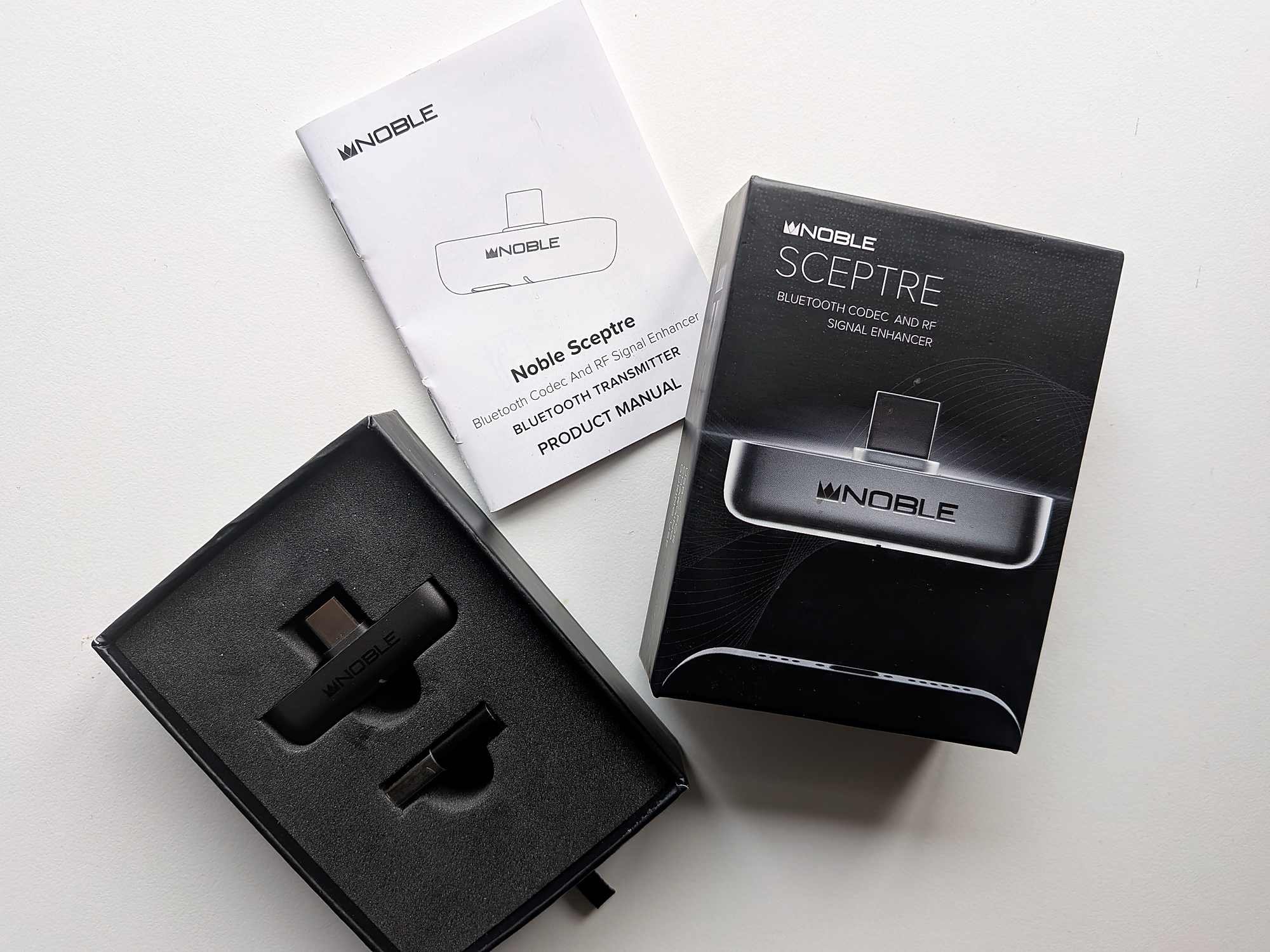
The Sceptre arrives in a small, neat box — minimal, well packaged. Inside you'll find the dongle itself and a small leaflet. One minor observation: the font size on that leaflet could generously be described as optimistic. Whether that's a Noble decision or simply my eyes reminding me of my age, a slightly larger font would be appreciated!
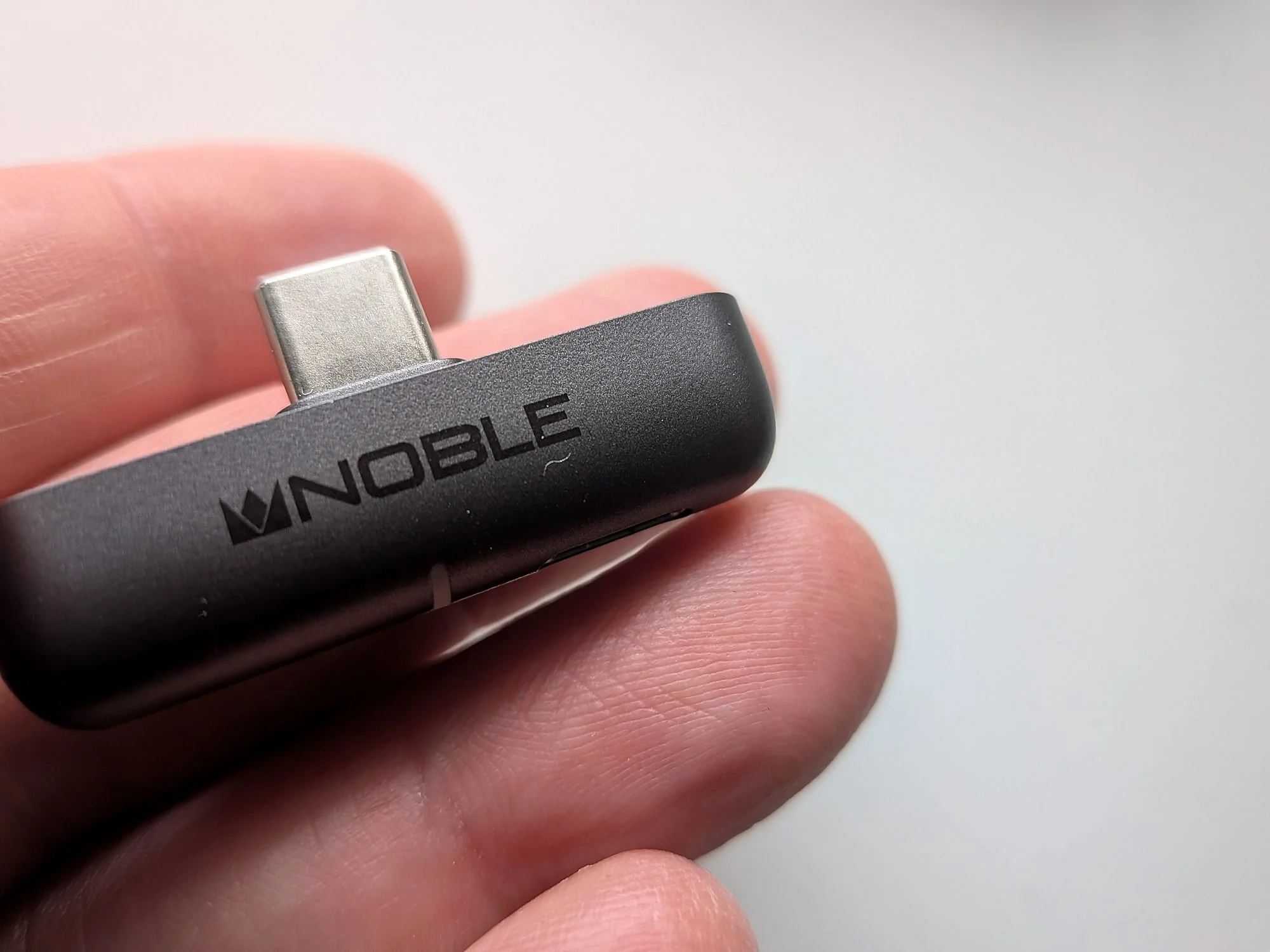
The dongle itself is another matter entirely. For something this compact, the build quality is genuinely impressive — solid, reassuring in the hand, and finished with a clean Noble branding detail. Plugged into the iPhone it disappears almost entirely, adding no meaningful bulk. The USB-C connection feels secure and well-engineered — this doesn't feel like something that will develop a worrying wobble after a few weeks of daily use. It's also remarkably light, which matters more than you'd think when it's hanging off your phone for hours at a time.
Setup & The Noble App
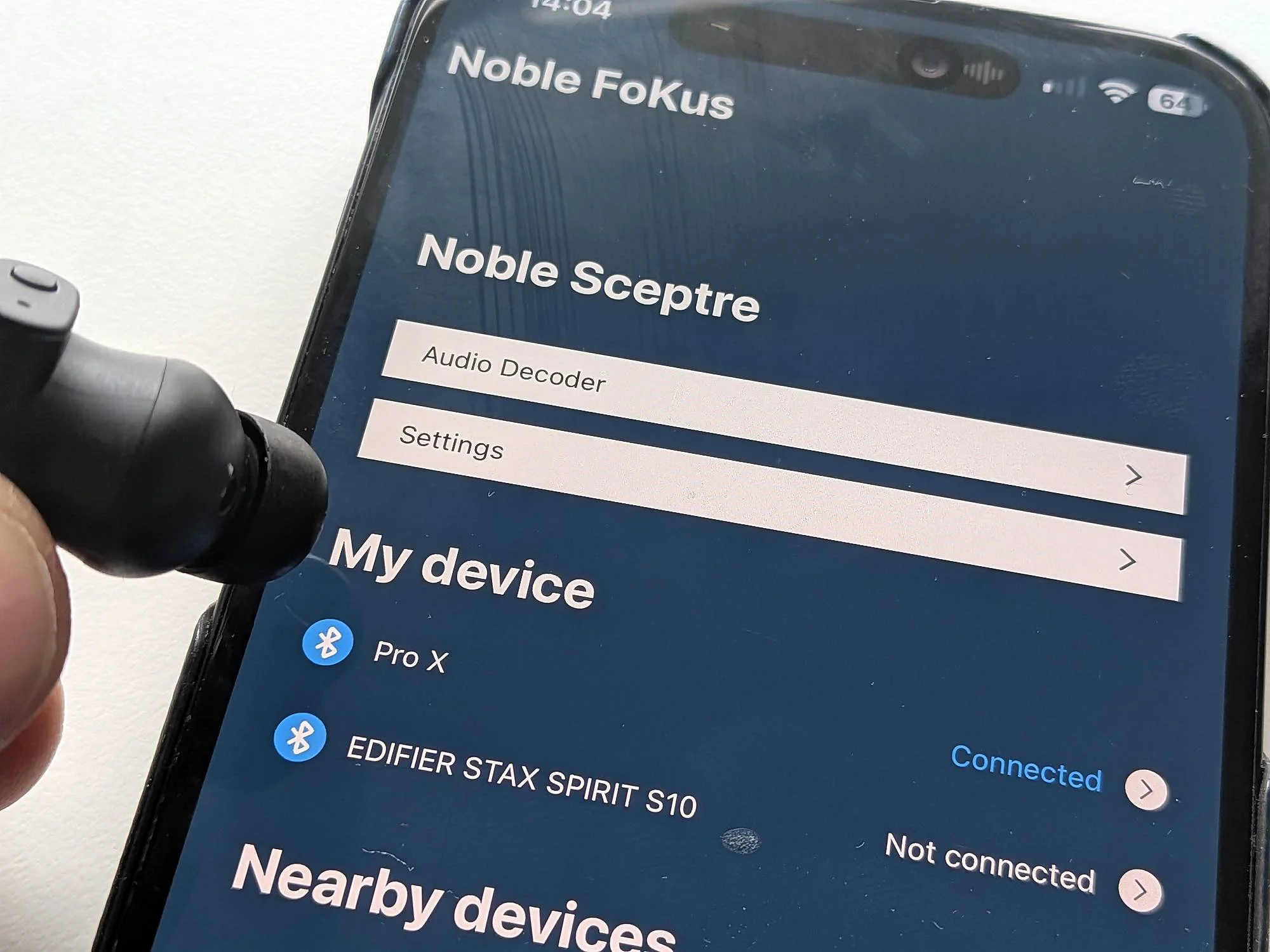
There are two types of hardware companies. The first takes as much pride in the software experience as the hardware itself — the app is an extension of the product philosophy, not an afterthought. The second builds something genuinely excellent, then hands you a slightly underwhelming piece of software to control it with. Noble, on the evidence of the Sceptre, sits closer to the second camp.
The Noble app is clean and well designed. Selecting your codec is simple and satisfying, and the overall interface is pleasant enough to navigate. Where things get complicated is the initial pairing process, which proved genuinely frustrating. Getting the Sceptre to recognise the Status Pro X and the Edifier Stax S10 for the first time required considerably more patience than it should — multiple attempts, a factory reset, and the kind of low-level irritation that makes you question whether a product is worth the effort. Eventually it connected, and from that point forward the experience was faultless. Plug the dongle in and it recognises your headphones immediately, every single time, without hesitation. But that first pairing session needs work, and Noble should know it.
There's another point worth flagging for anyone who relies on their headphone manufacturer's companion app. During testing I found that the Status Audio app remained fully accessible while the Sceptre was connected — ANC levels, EQ settings, all of it controllable as normal. With the Edifier Stax S10, however, the Edifier app became entirely unreachable the moment the dongle was in use. Reconnect directly to the iPhone without the Sceptre and access was immediately restored. This isn't necessarily a Noble problem exclusively — Bluetooth routing between a dongle and a companion app sits in complex territory — but it's a practical limitation that Edifier users specifically should be aware of before purchasing.
Sound Quality
I tested primarily with two tracks chosen specifically because they reward high-resolution audio. Money by Pink Floyd was my anchor throughout. If you're not familiar with why it's such a revealing test, consider the opening: the cash register, the coins, the isolated bass line, Gilmour's guitar carving its own space in the mix. It's a recording that was engineered with almost surgical separation between instruments, and it exposes immediately what a codec is or isn't doing with stereo imaging and detail retrieval.
I ran the tests across two platforms — Spotify Premium with their lossless option enabled, and Qobuz. A brief word on that comparison before we get to the dongle itself: even with Spotify's lossless tier, Qobuz sounds better to my ears. More open, more resolved, more like the recording actually sounded in the studio. Spotify's lossless offering is impressive for what it is, and vastly more popular, but if you're investing in a device specifically to unlock hi-res wireless audio, Qobuz is the platform that will show you what you're actually unlocking.
Now, the Sceptre.
Paired with the Status Pro X and switching from my iPhone's native AAC to LDAC/Aptx adaptive through the Sceptre, the difference was immediate and frankly impressive. The first thing I noticed was volume — the sound became noticeably louder at the same output level, which itself tells you something about how much information AAC was previously discarding. Then the separation hit. On Money, the bass, the guitar, the vocals, and those iconic opening sound effects suddenly occupied distinct, clearly defined spaces in the mix. The overall clarity, the retrieval of fine detail in the high frequencies, the tightness in the low end — all of it improved in a way that wasn't subtle or imagined. This was night and day.
The Edifier Stax S10 told a similar story, though with a slightly less dramatic conclusion. The improvement over AAC was still immediately apparent and genuinely impressive — better separation, more detail, a more authoritative sound overall. But the ceiling felt lower than with the Status Pro X. My suspicion, given what we discovered in the app section, is that this is at least partly attributable to the inability to access the Edifier Connex app while the dongle is in use. Without the ability to fine-tune EQ settings, the Stax S10 isn't quite operating at its full potential. It's a strong performance — but the Status Pro X, fully controllable through its companion app, was the clearer demonstration of what the Sceptre is genuinely capable of.
The bottom line is this: if you have a great pair of LDAC-Hi Res Audio compatible headphones or earbuds and an iPhone, the Noble Sceptre will almost certainly make them sound better than you've ever heard them through that phone. Not marginally better. Meaningfully, audibly, immediately better.
Real world use and battery
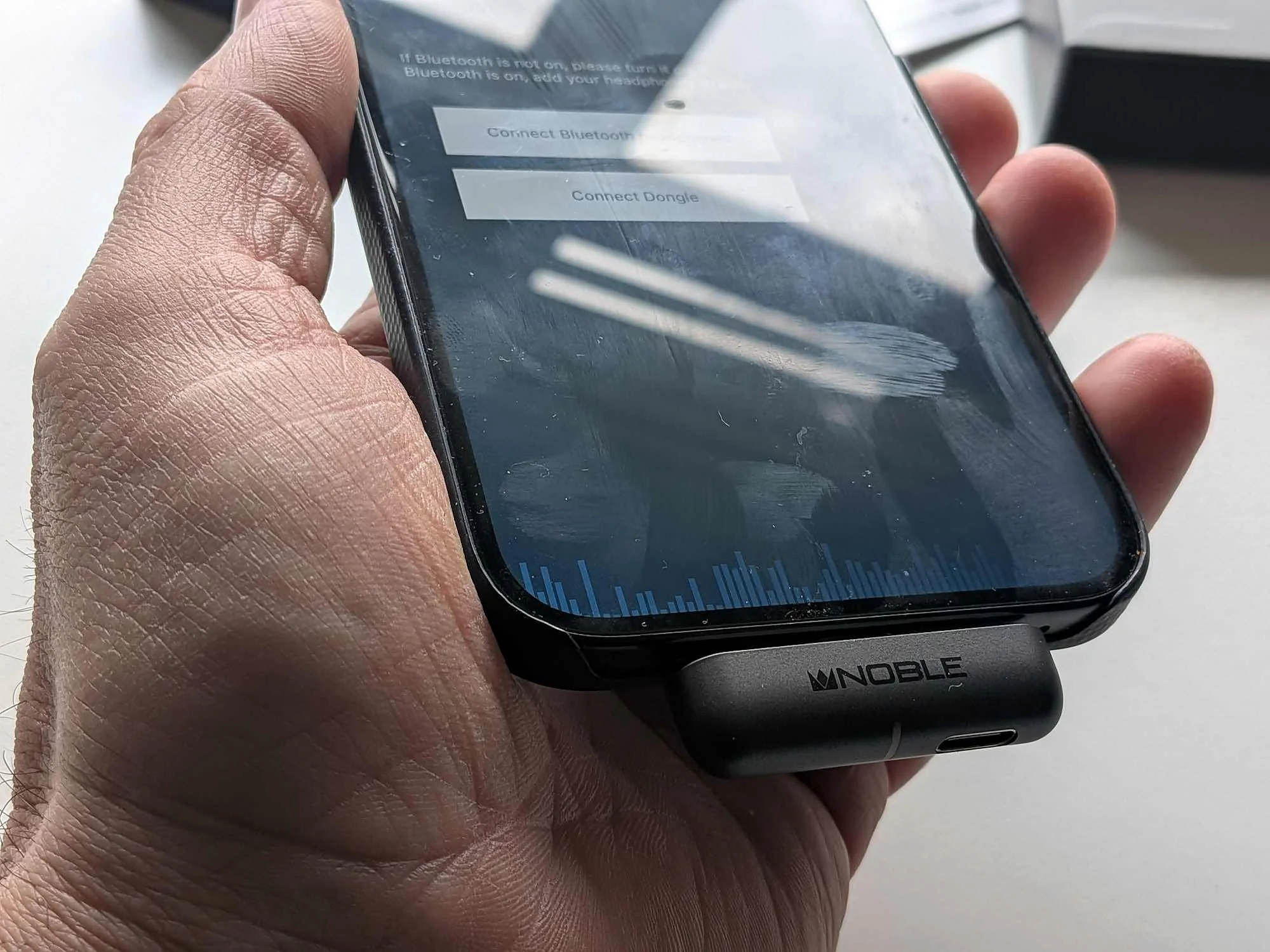
The Sceptre by Noble Audio has quietly become a fixture in my daily listening. Working from home on the blog, the sound quality was so enjoyable that I found myself reaching for it without thinking — which is probably the most honest endorsement a piece of audio equipment can receive. I also took it out with Marlow, my cocker spaniel, for our regular walks, iPhone in pocket, Status Pro X in ears, and the addition of the dongle was genuinely a non-issue. No awkward bulk, no connectivity drop, no reason to leave it at home.
On battery, I'll be transparent: I haven't personally noticed a dramatic drain on my iPhone during normal use. But I should note that I don't typically listen for extended consecutive hours, so your experience may differ. Active Bluetooth transmission does draw power, and if you're a heavy daily listener it's worth keeping that in mind.
Final thoughts
The Noble Sceptre is, quietly, one of the most impactful audio upgrades an iPhone user can make in 2026 — and at $69.99, it's also one of the most affordable.
The build quality is exceptional for the price point. The sound quality improvement, particularly paired with high-performing Hi Res Audio-compatible earbuds like the Status Pro X, is not incremental — it's transformative. If you've invested in great headphones and an iPhone is your primary listening device, the Sceptre will make you hear that investment properly for the first time. That's not a small thing.
The initial pairing experience is a frustration that Noble needs to address, and the inconsistency around third-party companion app access is a real-world limitation worth knowing before you buy. Neither is a dealbreaker — once the Sceptre is set up, it is faultless — but they prevent this from being a perfect recommendation rather than a very strong one.
For iPhone users tired of being quietly short-changed on wireless audio quality, for Qobuz subscribers who want their subscription to actually deliver what it promises, and for anyone who has ever looked at their great headphones plugged into an iPhone and suspected the phone was the weakest link — the Noble Sceptre is your answer. It does exactly what it promises, sounds remarkable doing it, and fits in your pocket without complaint. The noble Sceptre is available at Noble Audio (click here)
Jerome.
About the author: Jerome is the founder of Dapper & Groomed and has been reviewing men’s fragrances, grooming products, and lifestyle essentials for over a decade. With a background in pharmacy and years of hands-on testing, he brings a practical, experience-led approach to every review. He focuses on helping men find products that work in real life, not just on paper.

I’ve tested these Edifier headphones and speakers myself. Here are 5 Prime Big Deal Days 2026 deals worth checking out, with discounts up to 33%.